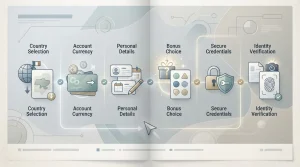

A casino’s enabled cashier routes determine whether Klarna is available; card-network support alone does not confirm it.
Can Klarna Be Used to Fund a UK Casino Account?
The short answer is that a Klarna logo or account does not, by itself, establish that a UK casino accepts Klarna. The relevant test is whether the casino’s own cashier offers a Klarna payment route for that account. A site may support Visa or Mastercard deposits without offering Klarna as a named option; those are not interchangeable claims.
I have seen payment wording blur two separate things: the service a customer expects to use and the route a merchant actually processes. A cashier might list a card network, a bank-payment service or a named wallet. That list describes the routes enabled by the operator and its payment providers. It does not confirm that every card, account or feature associated with a brand will work through them.
That distinction matters with Klarna. A casino accepting debit cards does not necessarily accept a Klarna-branded card, and a payment made through a card route is not automatically a Klarna checkout. The transaction may be assessed as a card payment by the casino’s processor, while the customer’s relationship with the card issuer or payment service sits separately. The cashier’s available options—not a general claim that the casino “takes cards”—are the useful evidence.
When looking for UK casinos that accept Klarna, check that the payment method is available to you before choosing a site. The notes below provide the payout-speed information available for each listed operator; they do not confirm Klarna acceptance.
1. Zombillion
Payout speed: 1-3 business days
Zombillion has a stated payout speed of 1–3 business days.
2. SlotoSport
Payout speed: 1-3 business days
SlotoSport lists payouts at 1–3 business days.
3. Dieselwin
Payout speed: 1-3 business days
Dieselwin’s stated payout speed is 1–3 business days.
4. WinBeast
Payout speed: 1-3 business days
WinBeast lists a payout speed of 1–3 business days.
5. Britsino
Payout speed: 1-3 business days
Britsino has a stated payout speed of 1–3 business days.
6. Revery Play
Payout speed: 1-3 business days
Revery Play lists payouts at 1–3 business days.
7. NightLuck
Payout speed: 1-3 business days
NightLuck’s stated payout speed is 1–3 business days.
8. NightWin
Payout speed: 1-3 business days
NightWin lists a payout speed of 1–3 business days.
9. BeOnBet
Payout speed: 1-3 business days
BeOnBet has a stated payout speed of 1–3 business days.
10. Chanze
Payout speed: 1-3 business days
Chanze lists payouts at 1–3 business days.
There is also a UK gambling restriction in the background. Remote gambling operators cannot accept credit-card payments for gambling, including credit-card funding routed through a money service business. So a payment route cannot be treated as suitable simply because it carries a familiar brand or appears to offer a way to pay. Its actual funding method and the casino’s rules matter. No workaround should be inferred from a different label.
A specialist review may list Visa and Mastercard among a casino’s payment methods, but that is not proof of current UK availability or of eligibility for a particular card product. Payment arrangements can change, and a general list may not reflect what appears for a specific account. The cashier is the operative check.
In practice, “Klarna accepted” should mean that Klarna itself is shown as a usable payment choice in the casino’s live cashier, not merely that the casino accepts a card or bank payment that someone associates with Klarna. If it is not listed, there is no sound basis for assuming that a Klarna account can fund the balance. If a card route is listed, that still does not settle whether the particular card product is eligible.
This is why lists described as the best Klarna casinos can be misleading when they rely on a broad card logo or an old payment-method page. The wording may describe a brand relationship, not a supported casino deposit route. The difference is operational, not cosmetic.
Casinos that accept Litecoin in the UK: what to check
For a UK player, the defensible answer is conditional: Klarna can be used only where the casino’s cashier explicitly provides a compatible Klarna route and the payment complies with UK gambling rules. A debit-card option is not confirmation. A brand mention is not confirmation. The live cashier decides.
What the Cashier Accepts—and What a Klarna Card Means
A payment method named in a casino cashier and a card carrying Klarna branding are not the same thing. “Klarna accepted” can mean the operator has integrated a Klarna payment service, or it can be shorthand for someone trying a Klarna-issued card through a card network. The distinction matters: a cashier listing Visa or Mastercard does not, by itself, confirm that Klarna is supported.
A specialist review may list Visa and Mastercard among a site’s payment methods, but that does not establish current UK availability or eligibility for every card product. Cashiers can change, and their listed networks describe only part of the decision. The operator’s payment rules and the card issuer’s product terms also matter.
In practice, a card transaction is assessed through the route presented to the casino. A card can carry a familiar network logo while its underlying product, issuer controls or transaction classification affects whether it is eligible. So the fact that a Klarna card displays Visa or Mastercard does not settle whether a particular UK casino will accept it. Nor does a successful card payment prove that the casino has a separate Klarna integration.
UK Credit Ban
UK-licensed casinos are prohibited from accepting credit-card payments for gambling, including those routed through money service businesses.
This is where promotional wording can mislead without being strictly false. “Card payments accepted” describes a category; it is not a promise that every card in that category works. I have seen payment decisions turn on the difference between the network shown on the front of a card and the way the issuer has configured the account behind it. Branding is not a compatibility test.
The UK restriction on credit-card gambling is central to that distinction. The regulator prohibited credit-card payments for gambling on 14 April 2020, and the rule has not been relaxed. UK-licensed casinos cannot treat a credit card as an acceptable route simply because it is issued by a familiar provider or can be processed through a supported card network. The same restriction applies where credit-card funding is routed through a money service business. A branded payment product therefore needs to be considered by its actual funding and payment characteristics, not its marketing label.
That does not establish that every Klarna-branded card is a credit card, or that every one is a debit card eligible for gambling transactions. Products and controls can differ. The operator may reject a card even when the cashier lists its network; the issuer may also decline a gambling transaction. Those are separate checks.
For a cashier to show Klarna as a named option, the casino needs to offer that payment service directly. A card bearing Klarna’s name is not evidence of such an integration. Conversely, an operator may accept eligible Visa or Mastercard debit cards without naming Klarna anywhere. The practical distinction is simple: method-level support means Klarna appears as a route; card-level compatibility means a specific card product is permitted through an accepted network. Neither should be inferred from branding alone.
Casinos That Accept Solana in the UK: Key Checks
Depositing with Klarna: What to Check Before Confirming
A payment option appearing in a casino cashier is only the start of the deposit check. The amount, account currency and transaction limits still have to line up with the terms shown for that route. With a Klarna-branded option, the label alone does not establish what kind of transaction will be processed or whether the casino will accept it. The cashier’s instructions and the confirmation screen are the operative details.
I have seen deposits fail for reasons that have little to do with whether a payment brand is recognised. The selected amount can fall below the method’s minimum; the account can be set to a different currency; or a transaction can exceed a limit that applies to that payment route or account. Those checks matter before confirmation, because an incomplete or declined transaction can leave the player uncertain about whether funds have moved.
Currency comes first
GBP is listed as supported in a specialist review of casino payment arrangements, but that does not establish the currency setting for every account or every cashier. The account currency should be checked before its first transaction. If the account and payment are handled in different currencies, conversion may occur, and the amount debited may not match the amount displayed in the casino.
Currency Conversion
If the account and payment are handled in different currencies, conversion may occur, and the amount debited may not match the amount displayed in the casino.
The practical point is to compare the currency shown in the account with the currency shown on the deposit screen. A pound symbol on a general payment-information page is not enough if the individual account has a different setting. Nor is it safe to assume that the payment provider will make the conversion on the casino’s behalf at no cost. The displayed amount, the currency selected and any conversion information should be understood before the transaction is authorised.
This is especially important where a payment flow moves between the casino and another service. Each screen can present an amount in a different way. A final confirmation should be read as a transaction instruction, not treated as a routine button press.
Minimums are method-specific
A specialist casino review reports minimum deposits in the £10–£20 range, with the threshold depending on the payment method. That is a guide to the range described by that review, not a promise that a Klarna route at a particular casino will share the same minimum. The cashier’s stated minimum for the selected option is the relevant one.
The minimum can matter even when the account balance or available funds are sufficient. A deposit below the route’s threshold may be rejected, while choosing a higher amount merely to get past the threshold changes the value of the transaction. The sensible check is whether the displayed minimum suits the intended deposit, rather than treating a general casino minimum as applying to every method.
A cashier may also distinguish between a minimum for one payment route and a general account minimum. If the amount changes after selecting a method, the method-specific figure is the one to use. The difference is easy to miss when payment options are presented in a single list.
Casinos That Accept Ukash in the UK: What to Check
Maximums can depend on more than the method
There is no single maximum that can be assumed across all deposit routes. A specialist review notes that transaction, daily and monthly ceilings can vary according to both the payment method and the account’s status. The amount available at the point of deposit may therefore differ from a limit stated elsewhere or from a limit that applied to another account.
A transaction ceiling concerns one payment. Daily or monthly controls can restrict the total deposited over a period, even when an individual transaction would otherwise fit within its own maximum. Account status can also affect what the cashier permits. The limit shown during the transaction is more useful than a generic figure because it reflects the route and account being used at that moment.
If a payment is refused, repeatedly submitting the same amount is not a meaningful test of the limit. A rejection can have more than one cause, and the interface may not explain which one applies. A clear message from the cashier or provider is more useful than guessing. A deposit should not be split into multiple transactions to work around a restriction; limits and account controls are there to govern the activity, not merely to shape the payment screen.
The account and the payment should match
The name and account details used for gambling and payment should belong to the same customer. Matching ownership reduces avoidable friction when basic transaction details are checked. A mismatch can prompt questions or require further evidence, even where the payment itself appears to have been authorised.
Do
- Ensure payment details match the casino account name
- Provide consistent information across all services
Don’t
- Use payment details belonging to another person
- Provide inconsistent identification data
This is not a substitute for reading the provider’s own requirements. Payment services can have their own account rules, and a casino can ask for information needed to establish who controls the gambling account and the funds. A successful payment-provider approval does not necessarily mean every casino-side check is complete.
For a remote gambling account, age verification must take place before the operator permits a deposit. KYC can also be part of the account process. That may mean a deposit flow is interrupted while account details are checked; it is not a reason to provide different or inconsistent information across the casino and payment service. I would treat matching details as basic transaction hygiene. Avoidable mismatch creates delay.
Account limits are part of the deposit process
In Great Britain, remote gambling licensees must make financial-limit controls available at account level, and new customers must be asked to set a limit before making their first deposit. This is a separate control from the payment method’s own minimum or maximum. One concerns the amount and route of a particular transaction; the other is an account-level tool for managing gambling spend.
Casinos That Accept iDEAL in the UK: What to Check
The distinction matters if a cashier allows a deposit amount but the account’s own limit prevents it from going through. A payment method cannot override an account control. Nor should the deposit screen be treated as the only place where limits can be managed: the account should provide accessible controls for that purpose.
I have found it useful to read the two layers separately: first, what the payment route will process; then, what the gambling account permits. A mismatch between them can look like a payment failure, even though the underlying restriction is an account setting. Keep them distinct.
Before confirming
The final review is short, but it should cover the details that can change the transaction:
- The casino account and deposit screen show the intended currency.
- The amount meets the minimum displayed for the selected route.
- It does not exceed any transaction, daily or monthly ceiling shown for the account.
- The casino account and payment details identify the same customer.
- The amount and terms on the final confirmation screen match the intended transaction.
- Any account-level financial limit has been considered separately from the payment method’s limits.
A Klarna label does not settle these questions. The relevant conditions are those attached to the route as it appears in the live cashier, together with the account’s own settings. If any amount, currency or ownership detail differs between screens, pausing is better than confirming and sorting it out afterwards.
Casino Bonuses, Slots and Payment Eligibility
A payment route can affect a casino bonus even when the deposit itself is accepted. The cashier answers whether a transaction can be made; the promotion’s terms answer whether that transaction qualifies for an offer. Those are separate decisions, and a successful deposit is not proof that bonus credit will follow.
I have seen this distinction get lost in promotional wording. “Welcome bonus” sounds like a feature attached to an account, but the offer is a set of conditions, not a blanket entitlement. The terms may identify eligible payment methods, exclude particular routes, or set out what happens when a deposit is made with a method outside the promotion. The cashier and the offer terms need to agree. If they do not, the deposit may go through while the bonus does not.
Bonus Eligibility
A successful deposit does not guarantee bonus credit; the payment route must be explicitly permitted by the promotion’s terms.
That is the central point for anyone looking at a Klarna-funded casino deposit or account: the payment label alone does not establish bonus eligibility. A casino must show Klarna as an available route before it can be treated as an accepted payment method, and the bonus rules must separately allow that route. I would not infer either point from a general claim about a casino’s promotions.
Payment eligibility is offer-specific
Payment exclusions are often about the promotion’s rules rather than a judgement about the customer or the games. The operator may define which deposits count, and a method can appear in the cashier without appearing among the eligible routes for a particular offer. Conversely, a promotion may be available to an account while a particular payment method is excluded from it.
This matters with e-wallets. A specialist casino review has reported that PayPal can be excluded from bonus eligibility, despite its appeal as a quick and convenient payment option. That is a report about the conditions found in some coverage, not a rule that applies to every casino or every offer. The operator’s live terms remain decisive.
The same caution applies to Skrill and Neteller. A specialist casino review has described these methods as available at some sites while often excluded from promotions. “Often” in that review is not a universal market rule: an offer can have its own list of eligible methods, and the terms can change. It would be a mistake to treat any e-wallet brand as automatically bonus-eligible or automatically disqualified.
Casinos That Accept AstroPay in the UK
For a Klarna-related offer, the wording needs to be especially clear. It should explain whether a deposit made through the route qualifies, and whether any separate conditions apply. A headline that associates a casino with Klarna and a bonus does not answer those questions. If the offer terms do not mention the relevant route, the safer reading is not to assume eligibility.
There is no need to make the payment choice fit the promotion at any cost. Bonus value depends on its conditions, while the deposit is real money. A headline can be attractive; the detail decides.
What a bonus changes about play
A bonus is not simply extra cash that can be used without restriction. Its terms determine how it is credited and what conditions attach to it, including which games count towards any requirements. Those details matter once play begins. A slot can be available in the casino while contributing differently to a promotion—or not qualifying under that promotion at all.
The game catalogue and the payment route are therefore related only through the offer’s rules. A payment method does not unlock a particular slot, and a slot’s presence does not establish that a deposit qualifies for a bonus. Each question has its own answer: the cashier lists payment routes, the game lobby shows available titles, and the promotion terms describe eligibility and play conditions.
Game Contribution
A slot can be available in the casino while contributing differently to a promotion—or not qualifying under that promotion at all.
This is why broad claims about the “best” slots with Klarna are not a dependable way to assess a casino. The practical distinction is more modest: access to a game is not the same thing as bonus eligibility, and neither is proof that Klarna is accepted.
The same applies to accounts. An account may be able to use a casino’s games while remaining ineligible for a specific promotion because of the payment route or another stated condition. Promotional eligibility should not be assumed from the fact that an account exists, a deposit has been accepted, or a slot can be opened.
Slots remain subject to UK rules
Promotions do not override the rules that apply to online slots in Britain. Autoplay is prohibited, and each online slot spin must last at least two and a half seconds. These are features of the regulated play environment, not bonus conditions that a casino can waive.
Stake limits also apply to online slots. The maximum per game cycle is five pounds for customers aged twenty-five and over, while customers aged eighteen to twenty-four are subject to a two-pound maximum. The five-pound limit for all adults took effect on 9 April 2025. A bonus does not remove those restrictions, and a payment method does not alter them.
The regulatory frame matters because an offer should be read as part of a licensed gambling service, not as a shortcut around safeguards. In Great Britain, remote gambling licensees serving customers must hold the relevant UK Gambling Commission licence. A payment brand or promotional label does not establish that status. Nor does a claim that a casino accepts Klarna say anything about whether it is part of the regulated system.
Casinos That Accept Boku in the UK: How It Works
I keep the categories separate: payment acceptance, bonus qualification, game availability and regulatory rules. Promotions often place them close together on a page, but proximity is not evidence that one guarantees another.
Reading the offer without relying on its headline
The headline is designed to make the offer legible quickly. The terms are where the operator records the boundaries. The useful checks are whether the named payment route is eligible, what the offer says about the games, and what conditions apply before any bonus balance can be used or withdrawn. Those are not interchangeable questions.
If the terms list excluded payment methods, the exact wording matters. A route may be excluded outright, or the offer may define qualifying deposits in another way. If the terms are unclear about Klarna, an assumption based on a card brand, a marketing page, or another casino’s policy has no solid footing. Policies are operator-specific.
The same discipline applies to slots. A casino may advertise a broad selection, but no promotion should be treated as covering every game unless its terms say so. Game availability and promotional contribution can differ. When a bonus is the reason for choosing a payment route, it is the written eligibility rule—not the visual pairing of a payment logo and an offer—that determines the outcome.
Bonus Terms
Read the specific conditions of an offer rather than relying on promotional adjectives like "free."
I have found that this is where “free” can mislead. The word describes how an offer is marketed; it does not make its conditions disappear. A deposit may be required, a payment method may be excluded, and play may be limited by the offer’s own rules as well as by the general slot regulations. Read the condition, not the adjective.
For a Klarna-linked casino bonus, the sound conclusion is narrow: the payment route must be genuinely available, and the particular promotion must permit deposits made through it. Neither a casino’s game catalogue nor a bonus headline settles those points. The terms do.
Paying Without Klarna: Deposit and Withdrawal Alternatives
When Klarna is not listed in a casino cashier, the practical alternatives are not interchangeable. Some routes are built for moving money both ways; others are simply a way to fund an account. I compare them by what the cashier actually permits, not by how broadly a payment brand is advertised.
A debit card is a familiar alternative. UK casinos commonly accept Visa and Mastercard debit cards, but the cashier must confirm that the particular card and transaction are eligible. Credit-card payments for gambling are prohibited at UK-licensed casinos, including where credit-card funds are routed through a money service business. A card logo alone does not settle the question.
Open banking and bank transfers may suit someone who wants a route connected directly to a bank account. A specialist review describes these methods as supporting instant deposits and fast withdrawals at many sites; that is not a promise for every casino or account. Bank transfer availability, processing and payout support should be checked separately in the cashier and the payment terms. The route’s name is not enough.
Casinos that accept POLi in the UK: payment guide
E-wallets offer another category. Skrill and Neteller are available at some sites, according to specialist reviews, but their presence is operator-specific. Their deposit and withdrawal functions should be checked independently, rather than assumed from the fact that an e-wallet appears beside the deposit button. Any account used for gambling transactions should belong to the same customer as the casino account. Cleaner records, fewer avoidable ownership questions.
PayPal can also appear as a casino payment option, though a specialist affiliate review has reported that it may be excluded from bonus eligibility. That is a claim to verify against the casino’s own current promotion terms, not a fixed rule across the market. Payment availability and promotional eligibility are separate checks.
For a deposit-only route, Paysafecard is a prepaid voucher. It can fund deposits but does not provide a withdrawal route, so another method may be needed to receive winnings. Some UKGC-licensed casinos also accept Apple Pay for deposits; its appearance does not establish that it can be used for cash-outs.
The useful comparison is therefore not simply “Which alternative is quickest?” A route can be convenient for funding but unsuitable for withdrawals, or available for both while subject to different processing. The cashier and the casino’s payment terms determine the actual arrangement. I would treat a payment method as a complete alternative only after confirming both directions and checking whether the account’s payment details match the casino account. No shortcut.
Debit Cards
Commonly accepted Visa and Mastercard debit cards, subject to eligibility checks.
Open Banking
Direct bank account routes supporting instant deposits and fast withdrawals at many sites.
E-wallets
Operator-specific services like Skrill, Neteller, and PayPal, often subject to bonus exclusions.
Prepaid Vouchers
Paysafecards allow for deposits but do not provide a withdrawal route.
Why Casino Withdrawals Usually Do Not Go Back Through Klarna
A deposit and a payout are separate transactions, even when they appear in one casino account history. UK anti-money laundering rules generally require winnings and returned funds to go back to the original payment source. That closed-loop approach helps the operator establish where money came from and where it is being sent. It does not mean every method displayed for deposits can receive withdrawals.
That distinction matters with Klarna. A casino might process a payment through a card or another route associated with Klarna, but the name on the deposit receipt does not establish that Klarna itself is the payout destination. The casino’s payment records, the underlying card or bank route and its own cashier rules determine where a withdrawal can be sent. A Klarna-branded card is not, by itself, proof that a casino supports withdrawals to Klarna.
In practice, the casino may return funds to the eligible original source, or request another route if the original one cannot receive a payout. Any alternative can trigger additional checks. The account holder’s details and payment ownership need to match; inconsistent names or source information can create avoidable friction. A request to withdraw through a different method is not necessarily a rejection, but it should be explained through the casino’s official account or support channels.
Timing is a separate issue from routing. A payment method being listed for withdrawals does not mean a payout is instant. A specialist review notes that processing can include the casino’s own approval stage, and that first withdrawals may take longer while verification is completed. The operator’s internal process and the status of KYC affect how quickly a withdrawal is released; after that, the receiving provider may have its own handling time. There is no reliable inference from how quickly a deposit appeared.
Casinos that accept Maestro in the UK: what to check
I have seen the word “instant” used as if it described the whole journey. It may describe only one step, not approval, verification and delivery combined. The relevant withdrawal terms should identify eligible destinations, any route restrictions and the stages that affect timing. If Klarna is not explicitly shown as a withdrawal method, a Klarna deposit should not be treated as evidence that a casino offers withdrawals to Klarna.
The useful distinction is simple: return-to-source is a control, while payment availability is a cashier decision. Keep the receipt and transaction record, and rely on the casino’s confirmed withdrawal instructions rather than the branding attached to a deposit. No shortcut.
Klarna, GamStop and UK Casino Payment Rules
Klarna’s appearance in a payment description says nothing about whether a casino is connected to GamStop. They are separate things: Klarna is a payment brand, while GamStop is a self-exclusion service. A casino cannot be classified as covered or uncovered by looking at its payment options, and a Klarna-labelled route is not evidence that a site sits outside UK safeguards.
The more useful distinction is regulatory. In Great Britain, a remote gambling operator offering real-money play must hold the relevant licence from the UK Gambling Commission. That requirement applies regardless of where the operator is based. A site that lacks a UKGC licence is outside that regulatory system; a payment method does not make it a UK-licensed casino or provide the protections attached to one. The Gambling Act 2005 governs England, Wales and Scotland, but not Northern Ireland.
Regulatory Status
A payment method’s availability does not establish an operator’s UKGC licence status or GamStop connection.
I have seen payment branding used as a shortcut in casino descriptions. It is a poor one. The cashier describes a transaction route; it does not establish the operator’s licence, GamStop status, complaint arrangements or safer-gambling controls. Those are separate checks.
UKGC requirements include controls before gambling begins. Remote operators must invite new customers to set a financial limit before they make their first deposit, and account-level limit settings must remain accessible. Licensed casinos must also provide responsible-gambling tools, including self-exclusion, and access to an internal complaints process and an approved Alternative Dispute Resolution service.
That does not make a payment provider a safeguard. Nor does a claim that a site is “not on GamStop” establish that it is lawful for the British market. The practical test is the operator’s current status on the UKGC public register, not whether Klarna, a card or another payment logo appears on the page. Credit-card payments for gambling are prohibited at UK-licensed casinos; payment branding cannot override that rule.
Casinos that accept Monzo UK: what to verify
Separate the questions. Is the operator licensed for the market? What protections and complaint routes does it provide? Is the payment route actually available? One logo answers only the last question—and sometimes not even that.
Checking Klarna Claims Against the Casino’s Actual Payment Routes
A page saying that a casino accepts Klarna is a lead, not confirmation. I treat the live cashier as the practical test: it shows which routes are available for that account at that moment. A general payment logo, an old review or a promotional claim does not establish that Klarna can fund a particular casino account.
The wording matters. A named Klarna option in the cashier is different from a casino listing Visa or Mastercard and a customer holding a Klarna-branded card. Even if a card appears to fit the listed network, that alone does not prove the casino or card issuer will accept the transaction. The cashier, its terms and any message shown during the payment attempt are more relevant than a broad claim about casinos that accept Klarna in the UK.
Casinos That Accept Zimpler in the UK: What to Check
Before depositing, I check that the route is displayed after signing in, that the casino identifies it as available for deposits, and that the payment page names the intended provider. A route that appears only in an article or an image may be out of date. If the cashier does not show Klarna, I do not infer support from a card logo or assume another Klarna product will work.
Account details are another quiet source of friction. The payment account and casino account should belong to the same customer, with names and other basic ownership details consistent. That does not guarantee a transaction will be approved, but it reduces avoidable questions about who owns the funds. One named account used consistently for deposits and withdrawals is often the cleanest record.
Payout arrangements need checking before the first payment, not after a balance has accumulated. Casinos apply closed-loop rules and may return funds to the original source as an anti-fraud and anti-money-laundering control. If the deposit route cannot receive a payout, the casino may require another route or additional verification. The cashier terms should explain how that situation is handled; an advertised deposit method is not proof of a matching withdrawal route.
I also verify the operator, not just the payment branding. Remote gambling licensees serving Great Britain must hold the relevant UK Gambling Commission licence, and the licence number can be checked on the Commission’s public register before depositing. A polished payment page does not replace that check.
“Instant” describes a claim, not a complete transaction record. I keep the cashier confirmation and any payment-provider receipt, and avoid entering account credentials through a link sent in an unsolicited message. If the route, ownership details or payout explanation conflict, I stop and seek clarification through the casino’s official support channel. Better to pause than guess.
Why must withdrawals return to the deposit method?
Returning funds to the original payment source is a common anti-fraud and anti-money-laundering control. An alternative payout route may require extra verification.
What is the fastest withdrawal method for UK casinos?
PayPal, open banking services and debit cards linked to fast payout systems are generally among the quickest options. The casino’s approval process and your verification status also affect the wait.
Do UK casino withdrawals require verification?
Yes, verification may be required, particularly before a first withdrawal. Payouts can take longer while the casino completes those checks.
Why can a fast payout casino still delay my withdrawal?
A casino must approve the withdrawal, and first payouts may take longer while verification is completed. A fast payment method does not remove those steps.
Are fast casino withdrawals guaranteed?
No. The time depends on the casino’s internal approval, whether your account is verified and the payment method’s processing time.
Are Visa and Mastercard deposits definitely debit cards?
No. Visa and Mastercard are card networks, and their logos do not confirm that a particular card is a debit card or eligible for gambling payments. Check the cashier and the card’s terms.
Can I deposit in GBP?
Yes, GBP is supported at the sites covered. Confirm the account currency before depositing to avoid currency conversion.
Material created by the team Golden Mister