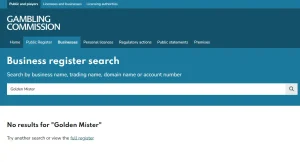
A licence brings an operator under UKGC oversight, but does not guarantee suitability, profits or freedom from disputes.
What a UK Casino Licence Actually Guarantees
A UKGC licence is the legal basis on which an online casino can offer gambling to players in Great Britain. The UK Gambling Commission regulates operators serving this market; a casino without the required licence cannot legally operate for UK players. That is the central point behind claims about safe UK online casinos: licensing places the operator inside a defined regulatory system, rather than proving that a particular site is automatically suitable for every player.
The distinction matters. A licence is not a quality award or a promise that gambling will be profitable, harmless or free of disputes. It means the operator is subject to UKGC requirements and oversight. In my experience, promotional language often makes “safe” sound like a broad guarantee. The more useful question is what the regulator’s framework requires of the business behind the casino.
The legal baseline
The Gambling Commission’s role is to regulate gambling operators serving British players. For a casino, holding the appropriate UKGC licence is a condition of operating legally in this market. The rule applies to the operator, not just to the design or branding of its website: a polished interface cannot replace the required authorisation.
That baseline also helps separate legal status from appearance. A site may use reassuring language, display familiar payment marks or describe itself as trustworthy, but those features do not establish that it is permitted to serve players in Great Britain. The licence is the relevant regulatory foundation. Whether a particular operator has a current licence, and whether the details match the site in question, is a separate check.
A licensed operator must follow the requirements attached to its permission to offer gambling. This creates accountability that is absent from a simple marketing claim. It also gives the regulator a role in supervising the operator’s conduct. These are meaningful protections, but they are protections within a regulatory framework—not a guarantee of an individual outcome.
What the licence does not promise
“Safe” is an appealing label, but it can conceal several different ideas: legal operation, secure handling of an account, clear terms, responsible gambling controls or a smooth withdrawal. A UKGC licence speaks first to the operator’s regulatory status. It should not be read as a blanket assurance that every customer will have the same experience, or that every complaint will be resolved in the customer’s favour.
Gibraltar casino licence in the UK: what it means
Nor does licensing remove the risks inherent in gambling. A regulated casino still offers games in which a player can lose money. The licence does not turn gambling into a reliable way to earn, and it cannot make individual play risk-free. That is why I treat the word “safe” as a starting point for scrutiny, not a verdict.
Licensed operators must also verify a customer’s age before allowing access to gambling-related content, including free game demos, and before permitting a deposit. New customers must be prompted to set a financial limit before their first deposit, with account-level limit controls available. Those are practical parts of the regulated environment, rather than decorative promises. They do not remove the need for informed decisions.
A licence, then, guarantees something specific: the operator has the legal permission required to serve British players and falls under UKGC regulation. It does not certify every feature of the site or guarantee a particular result. The distinction is easy to miss in an advert. It is the baseline.
Checking the Operator Behind the Casino Site
A licence badge is a claim, not proof. I have seen how easily a logo can be copied or placed beside a trading name that tells only part of the story. The useful check is the operator’s entry in the UK Gambling Commission’s public register, matched against the site that is actually taking deposits.
Start with the licence number and follow the working link beside the casino’s licence information to the Commission’s official register. Then compare three details: the exact website domain, the trading name shown to customers and the legal business named as the licence holder. A genuine operator may use a brand name that differs from its company name, so the connection between them needs to be visible in the register or supported by the listed business details. A similar name, a copied badge or a generic statement that a site is “licensed” does not establish that the domain is covered.
Licence Verification
Step 1: Find the licence number
Locate the licence number and follow the link to the UK Gambling Commission’s official register.
Step 2: Compare the domain
Check that the exact website domain matches the entry in the register.
Step 3: Verify the company
Match the trading name and the legal business named as the licence holder to ensure the connection is visible.
The check needs to be current and completed before depositing. A licence can change status, and a register entry for one company or domain does not automatically confirm another site with a similar brand. If the domain or legal entity cannot be matched confidently, the licence claim remains unresolved. That is not a technicality. The licence is tied to the operator’s permission to serve Great Britain, not to a design element on a page.
I treat this as a comparison, not a glance. The site should identify the business responsible for the gambling service, and the register should make it possible to connect that business to the brand and domain. If those details conflict, or the link leads nowhere useful, the badge has done no verification work.
Age controls are another part of the basic test. On licensed platforms, age verification is required before gambling-related content can be accessed, including free-play demos; an operator must also verify a customer is old enough before allowing a deposit. These are separate gates, not a single check that can be postponed until a withdrawal. A demo being free does not make it exempt from the access rule.
The wider legal position is straightforward: real-money casinos serving British customers need a current UKGC licence. That makes the register more than a directory; it is where the site’s claim can be tested against the regulator’s record. The same discipline applies when a casino uses a parent company name or several brands: verify the exact entry, rather than assuming one licensed name covers every domain.
No badge shortcut.
How to Read Casino Bonus Terms Before They Cost Anything
A welcome offer has two separate values: the credit displayed and the amount of wagering required before any resulting balance can be withdrawn. The second figure is often the more useful one. I have seen promotional copy make a bonus look simple while placing its real conditions in a table of terms; the calculation changes according to whether the wagering requirement applies to the bonus alone or to the deposit and bonus together.
Consider a £100 deposit matched with a £100 bonus, with a 35x wagering requirement. If the multiplier applies only to the bonus, the required turnover is £3,500. If it applies to the combined £200, the turnover becomes £7,000. The offer has not changed in appearance, but the amount of eligible betting needed to meet its condition has doubled.
These are illustrations of how the two calculation methods work, not a claim that either multiplier is a standard offer. The precise wording in the terms decides which balance is multiplied. A phrase such as “bonus funds” points to one calculation; “deposit plus bonus” points to the other. If the wording does not make the base clear, the headline value cannot answer the important question.
Do
- Identify the balance used for the multiplier
- Check the game contribution table
- Find the eligible-bet cap
Don’t
- Rely on the promotional headline
- Assume a universal wagering schedule
- Ignore the precise wording in the terms
What counts as turnover
Turnover is not necessarily credited pound for pound across every game. Promotional terms assign contribution rates to products, and that rate determines how much of a stake counts towards the requirement. A specialist review sample reports slots contributing the full stake, while table games contribute a smaller share, in the range of 5% to 10%. Those figures should be treated as a description from that review material, not as a universal schedule: the operator’s own bonus rules determine the rate for a particular offer.
That distinction can make a preferred game a poor fit for clearing a bonus. If a table-game stake counts only partially, more actual wagering may be needed to produce the same credited turnover. A safe online casino bonus is therefore not judged only by the advertised amount or multiplier; the eligible games and their contribution rates matter just as much.
The same specialist review material describes a £5 ceiling on eligible spins while bonus credit is active. That is not a rule to assume for every casino. It is a condition worth checking in the offer itself: a bet above the stated cap may fail to count, and some terms can attach further consequences to exceeding it. The operative question is not simply how much can be staked, but how much of that stake qualifies.
The limits behind the headline
For incentives offered by UK-licensed operators, the wagering requirement must not exceed 10x. A separate rule limits the structure of an incentive: one offer must not bundle different gambling product types, such as betting, casino, bingo and lottery, into a single promotion. These limits do not remove the need to read the terms. They define boundaries; they do not make every offer equally clear or equally useful.
The label “no deposit bonus” also says little about the conditions attached. Where an offer involves promotional credit, the same details still matter: what amount is multiplied, which games qualify, how much each game contributes and whether a maximum eligible stake applies. A small headline offer with restrictive conditions may demand more effort than its wording suggests.
In practice, I read the calculation in this order: identify the balance used for the multiplier, check the game contribution table, then find the eligible-bet cap. Only after that does the advertised bonus amount mean anything. For people comparing real-money casino play, the useful comparison is the turnover demanded under the exact terms—not the promotional headline.
Highest-paying online casinos UK: understanding RTP
That is the mechanism. The small print carries the price.
Safe Casino Sites: What the Site Itself Can—and Cannot—Show
A casino site is a shop window, not an independent audit. Its layout can reveal whether the business explains itself clearly; polished design cannot establish that every claim is true. I have seen how easy it is for a page to make ordinary information look like a special assurance. The useful question is not whether a site looks reassuring, but whether its structure makes important details easy to find and understand.
Look for a business that identifies itself
A credible presentation does not hide the company behind a brand. The site should make clear which legal business operates the casino, how the brand relates to that business, and where official regulatory information can be found. Those details belong in accessible areas such as the footer, account information or dedicated company pages—not only in promotional copy.
The way information is presented matters. A generic statement that a casino is “licensed” says little by itself. A working route to the regulator’s official registry beside the licence information is more useful than a badge that cannot be followed or checked. That does not replace independent verification; it gives the site a transparent starting point. A badge alone is decoration.
The same principle applies to terms and policies. A site that separates its rules into readable pages is easier to assess than one that buries material conditions in dense blocks or scatters them across unrelated links. Consistency is another practical signal: the operator name and contact details should not change between the footer, terms and privacy information. Conflicting names or vague descriptions make it harder to tell who is accountable.
Casino Without a UK Licence: What It Means
Judge the way the site explains its rules
The design can also show whether the operator treats important information as part of the service or as an obstacle to conversion. Clear navigation to account rules, privacy terms and responsible-gambling information is more meaningful than a prominent slogan about being “trusted”. That word is a claim. The placement and clarity of the underlying information are what can be assessed.
I pay attention to what happens when a page explains a condition. Is the language specific enough to understand what applies, or does it rely on broad assurances? Are relevant pages easy to reach from the main site, or does each path lead back to a promotion? The presentation cannot prove that the operator will handle every situation well, but evasive wording and missing explanations are reasons to be cautious.
The same restraint applies to visual security cues. A lock symbol or secure-connection indicator can say something about the connection to the page; it does not certify the operator’s conduct, the fairness of a commercial promise or the strength of every internal process. A slick interface is not a substitute for clear ownership and policies.
What segregated player funds means
There is a more substantial protection behind the presentation. UKGC-licensed operators must keep player funds separate from the money used to run the business. In other words, customer balances are not meant to sit in the same pool as ordinary operating capital.
That separation matters because it concerns how funds are handled, not how reassuring the homepage looks. It is still not a promise that a player will never face a delay or problem, nor does it mean that every displayed balance is instantly available in every circumstance. It describes a required separation of funds. The site’s wording should not turn that specific safeguard into a sweeping guarantee.
Segregated Funds
UKGC-licensed operators are required to keep player funds separate from the money used for ordinary operating capital.
A page may explain how it treats customer money, but the explanation remains the operator’s presentation of its own arrangements. The practical signal is whether the information is clear and consistent with the operator’s stated identity—not whether the page uses elaborate language about protection. “Your money is safe” is too broad to do much work. The meaningful detail is the separation of player funds from operating capital.
Read the whole site, not just the front page
The front page is built to attract attention. The less promotional pages often reveal more about how the service is organised: whether company information is visible, whether policies are legible, and whether the site distinguishes factual explanations from sales language. A safe casino site is not identified by a colour scheme or a row of familiar logos. It is assessed through what the operator chooses to disclose and how consistently it does so.
That is why “secure” and “trusted” are weak conclusions when they stand alone. They may describe a design intention, but they do not establish accountability. On the other hand, an orderly site with clear operator information and accessible rules gives a firmer basis for scrutiny, even though it cannot settle every question about the business behind it.
For anyone comparing safe casino sites in Great Britain, the site itself is best treated as evidence of presentation, not proof of safety. Good structure makes relevant information findable. It does not make every claim true. The distinction is important.
Reliable Operators and the Checks That Can Interrupt Play
A reliable account is not necessarily one that lets every session continue without interruption. In Great Britain, compliance can mean an operator asking questions about spending while play is under way. That is different from confirming identity to release a withdrawal: an affordability check concerns whether a customer’s gambling activity meets criteria for further review.
UKGC-licensed platforms must carry out enhanced affordability checks when customers meet certain criteria. The spend thresholds that can trigger them are not disclosed, so there is no public figure that reliably predicts when a particular account will be reviewed. A smooth run of deposits does not establish that no check will follow. Nor does an interruption, by itself, show that an operator is unreliable.
The purpose is to seek income verification where the relevant criteria are met. That request can make an account feel less convenient, particularly if it arrives during active play. From the operator’s side, however, a frictionless account is not the only measure of service. A process that asks for information when required is part of operating within the regulatory framework; avoiding the request merely to keep play moving would not be a sign of dependable conduct.
There is an important distinction between a clear process and a predictable trigger. An operator can explain what a check involves without publishing a spend threshold that customers can use as a personal allowance. Since the trigger is undisclosed, reviews, mobile-site design and reports of uninterrupted play cannot establish a safe spending point. “Reliable” should not be read as a promise that checks will never interrupt an account.
Anjouan Casino Licence and UK Market Access
I look at the handling, not just the interruption. Does the explanation make clear that the request relates to affordability? Is the customer told what income information is needed and how to provide it? Does the account communicate what happens while the check is pending? These are useful questions when weighing safe and reliable online casinos, because a polished interface says little about how a compliance request is managed. They are questions about the quality of communication, not a guarantee of a particular outcome.
A safe mobile casino follows the same basic principle as a desktop account: the smaller screen does not make affordability checks disappear. A compact message can still leave the reason for the request unclear, so the wording and the route for responding matter more than how quickly the app loads. Smooth access is not the same thing as reliable handling.
There is also a limit to what outside reviews can tell. Safe casino reviews may describe an individual account experience, but an account that has not met the relevant criteria cannot show how the operator handles an enhanced check. A report of uninterrupted play is not proof that no review can occur later. Conversely, a request for income verification is not evidence that a withdrawal has been rejected; that is a separate process.
In practice, checks are part of the account relationship, not a defect in the games or payment interface. The threshold remains undisclosed. That is the point.
Payments, Withdrawals and the Identity Check at the End
A payment method affects more than how money enters an account. It can also shape the withdrawal route and the checks needed before funds are released. A secure casino payment process is therefore not just a matter of seeing a familiar logo at the cashier: the important details are which methods the operator accepts, whether the account holder can verify ownership, and what documents are required for a payout.
In Great Britain, remote gambling operators cannot accept credit-card payments for gambling. The restriction also covers credit-card funds routed through a money service business and wallets that allow credit-card money to be used for gambling. It has applied to UK casino deposits since April 2020. A payment option appearing on a site does not override that rule; the funding source matters.
Withdrawals commonly involve an identity check before the operator releases funds. Every licensed operator must verify identity before processing a withdrawal, so a request for documents at that point is part of the transaction process, not by itself evidence that something has gone wrong. The check can delay access to a balance if documents have not already been provided.
From working around account processes, the avoidable friction is often timing: a player waits until a payout is requested, then discovers that the account details and documents still need review. The practical approach is to submit a government-issued photo ID and proof of address immediately after creating the account, before depositing. A passport or driving licence can serve as photo ID; proof of address may be a utility bill or bank statement dated within the previous three months. In some cases, the operator may also ask for confirmation that the payment method belongs to the account holder.
Account Verification
- Submit a government-issued photo ID (passport or driving licence)
- Provide proof of address (utility bill or bank statement from last 3 months)
- Confirm ownership of the payment method
A typical route is to request a withdrawal through the account’s cashier using an available method, then complete any outstanding verification. The exact options and handling depend on the operator and payment method. Do not treat a displayed payout estimate as a promise that the funds will arrive at that point: the operator’s processing and the bank’s own handling are separate stages.
For bank transfers, a specialist review of selected casino brands reported a processing-to-arrival window of 3–5 banking days. That is a reported range across those reviewed brands, not a fixed timetable for every operator or transfer. The stated timing may not describe how long an identity review takes before a withdrawal can be processed.
A fast-looking cashier does not settle the wider question of whether an online casino is safe. Payment mechanics show how deposits and withdrawals are handled; they do not establish the operator’s regulatory status. Keep those checks separate. A smooth transaction is useful. It is not proof of the rest.
Casino Games, Spin Speeds and the Rules Behind “Fast Play”
“Fast play” is often presented as a feature: fewer pauses, more rounds, less interruption. In Britain, licensed online slots have limits designed to prevent the game interface from turning that promise into continuous automatic play. The rules affect how a slot behaves, not whether a particular game is safe in every other sense.
Autoplay is banned on British online slots. A player cannot set a slot to run a sequence of spins unattended while the game continues without a fresh input for each one. UKGC-licensed slot games had autoplay removed in 2021. That change made the player’s involvement explicit: each spin needs a separate action.
Online Casino No Registration UK: How Play Works
The control may seem small, but it changes the rhythm of a session. Autoplay can make repeated bets feel like one long action; removing it puts a decision point between rounds. That does not guarantee that someone will pause or stop. It does remove a shortcut that could otherwise carry play forward with little attention.
A minimum duration applies too. Each online slot spin in Britain must last at least 2.5 seconds. The interval is intended to slow the pace of play and reduce session intensity. It is a floor, not a promise that every spin lasts exactly that long: game animations and the route from one round to the next can take longer.
The rule also means that a slot cannot be made faster simply by tapping repeatedly or selecting a rapid-play setting. A quick interface response is not the same as a completed spin. The game still has to observe the required interval before another round can proceed.
I have seen “instant” used as if it described the whole experience. Usually it describes a button response or a visual effect, not the time between eligible rounds. The distinction matters: presentation can feel brisk while the underlying game remains subject to the same minimum pace.
Book of Dead is one recognisable slot title that can be used to picture the format: a player starts a round, watches its result, then makes a new decision before the next spin. Naming it is not a ranking or a claim about its odds. The same British slot rules apply across licensed titles, regardless of their theme or appearance.
Merkur Casino Online UK: Games, Login and Site Checks
These controls concern slots, not every casino game in the same way. A table game has different round mechanics, and the slot spin interval should not be treated as a general timing rule for all casino play. Nor does compliance with a game-speed rule establish that every other part of an online casino’s operation is sound. It answers a narrower question: how quickly a regulated slot may let one round follow another.
That is the practical limit behind “fast play” on British licensed slots. No autoplay. A fixed minimum interval. The pace is constrained, even when the graphics are not.
Licensed and Offshore Casinos: Different Protection, Different Rules
An offshore licence can show that an operator is answerable to a regulator somewhere; it does not put the casino inside the British system. Remote operators serving Great Britain need a UKGC licence, wherever the business is based. A site authorised abroad but lacking that UKGC authority is therefore not a licensed route for serving British players.
That distinction matters when something goes wrong. A complaint about a UKGC-licensed operator can use the UK’s regulated dispute-resolution framework. A non GamStop casino sits outside those UK dispute channels, so a player should not expect the same route to be available. A foreign regulator may have its own process, but that is not a substitute for UKGC oversight.
The same caution applies to safeguards attached to local regulation. Offshore operators are not required to connect to GamStop. An operator’s own exclusion tool, if offered, should not be mistaken for a GamStop exclusion. Without an identifiable UKGC licence entry, there is also no basis for assuming UKGC-regulated dispute resolution, UK-specific consumer-funds protections or GamStop coverage applies.
I have seen the licence badge do a lot of work in a site’s presentation. It can make an unfamiliar operator look locally accountable, even when the licence belongs to a regulator outside the British system. The regulator’s name is not decorative: the rules and remedies depend on which authority actually supervises the operator. Offshore licences do not carry the same player-protection framework as authorisation from the UKGC or the Malta Gaming Authority.
Curacao casino licence in the UK: what it means
Payment options can expose the difference too. The UKGC’s ban on credit-card gambling deposits took effect in April 2020; it does not govern operators outside that regulatory scope. Credit cards may therefore remain available at offshore sites. Availability is not evidence that a site is authorised to serve British customers, nor does it bring the transaction under UKGC protections.
“International licence” is often presented as reassurance. In practice, it says little by itself about which complaints can be escalated, whether local safeguards apply, or whether an exclusion system covers the account. A polished live-casino lobby or the option to use Bitcoin changes none of that. The relevant distinction is regulatory, not the game format or payment method.
For a casino to operate legally for British players, it needs a current UKGC licence. If no identifiable entry for the operator can be found in the Commission’s register, the safer assumption is not that another licence supplies equivalent UK rights. Different regulator. Different recourse.
What “Best” Means When No Safe Casino Fits Everyone
For a UK casino, safety matters as much as the games or payments on offer. Use this list as a starting point, and check the relevant safety and licensing information before signing up.
1. Zombillion
Payout speed: 1-3 business days
Zombillion lists a payout speed of 1–3 business days. That is the available payment detail to consider when assessing it.
2. SlotoSport
Payout speed: 1-3 business days
SlotoSport lists a payout speed of 1–3 business days. This gives a stated timeframe to factor into your assessment.
3. Dieselwin
Payout speed: 1-3 business days
Dieselwin lists payouts as taking 1–3 business days. No other operator details are provided here.
4. WinBeast
Payout speed: 1-3 business days
WinBeast has a stated payout speed of 1–3 business days. Consider this alongside any safety information you verify independently.
5. Britsino
Payout speed: 1-3 business days
Britsino lists a payout speed of 1–3 business days. This is the only specific detail available for this listing.
6. Revery Play
Payout speed: 1-3 business days
Revery Play lists payouts as taking 1–3 business days. The supplied information does not establish other features.
7. NightLuck
Payout speed: 1-3 business days
NightLuck gives a payout speed of 1–3 business days. Treat this as a payment detail, not as evidence of safety.
8. NightWin
Payout speed: 1-3 business days
NightWin lists a payout speed of 1–3 business days. Further safety details are not included in the available information.
9. BeOnBet
Payout speed: 1-3 business days
BeOnBet lists payouts as taking 1–3 business days. This is the only specific attribute supplied.
10. Chanze
Payout speed: 1-3 business days
Chanze lists a payout speed of 1–3 business days. Verify its safety and licensing details separately before deciding whether to play.
“Best” sounds like a single answer, but a casino can suit one person’s preferences and be a poor fit for another’s. I treat the label as a judgement about identifiable conditions, not a promise that one operator is safest for every player. A polished offer or confident headline cannot settle that question.
A useful comparison starts with what matters to the individual: the games available, the account features and the terms attached to an offer. Those details can be checked; broad claims such as “trusted” or “top-rated” say less unless the basis for them is clear. No league table can remove the need to judge whether the underlying conditions fit.
There is also a commercial interest to make visible. Golden Mister may receive a commission if someone registers with a partner casino. That relationship does not by itself establish that a casino is unsuitable, but it does mean a recommendation should not be read as independent proof of quality. Incentive matters.
A dated check is a useful warning against assuming a brand is licensed because it appears in a comparison or carries a badge. A specialist review records that the UK Gambling Commission register dated 26 September 2026 did not identify a LuckyPays licence entry under that brand or its stated domain. That is a specific register result, not a timeless verdict about every business using a similar name. The absence of an identifiable entry is reason not to treat the brand as a licensed option on the strength of promotional wording.
The phrase “best safe online casino” therefore has to mean a fit supported by evidence, not a universal guarantee. I have seen how quickly a ranking can make a commercial preference look like an objective finding. The distinction matters.
Offshore Casinos for UK Players: Licensing Explained
Security Is More Than a Lock Icon
A padlock in a browser says little about how a casino handles the moments when play needs to stop. In my experience, the more useful test of a secure online casino is whether its account controls are visible and usable before spending begins.
UKGC-licensed operators must prompt new customers to set a financial limit before the first deposit. They must also provide accessible account-level limit controls. A limit turns a general intention to keep spending in check into a boundary attached to the account. Its value depends on being easy to find and understand, not on promotional language around responsible play.
Time-outs serve a different purpose. They give a player a way to step away from the account for a period, rather than continuing through the same session by default. Self-exclusion is the stronger barrier: UKGC-licensed platforms must provide access to self-exclusion through GamStop. These are not decorative features. They are practical controls that should be part of the account, rather than buried behind a support request.
“Safe” can sound like a broad promise. In practice, these tools address specific points of risk: spending, uninterrupted play and access to gambling. They do not make every decision harmless, and their presence is not a guarantee against loss. They do mean that a licensed platform has to offer ways to set limits, pause and exclude.
The distinction matters. Security is not only about protecting account details; it also concerns the controls built around play. A site with polished graphics but hard-to-find account settings offers less practical help than one where the financial limit, time-out and GamStop options are plainly accessible. Look at the controls, not the icon.
Is it safe to play at online casinos in the UK?
Yes, a current UKGC licence means the operator is authorised to serve British players and must follow regulatory requirements, including offering deposit limits, time-outs and self-exclusion. It does not make gambling risk-free or guarantee a particular outcome.
How do I verify whether a UK online casino is safe before depositing?
Check the UK Gambling Commission’s official register using the link beside the casino’s licence details. Confirm that the registered licence holder, trading name and exact website domain match the site you plan to use.
What does a dependable online UK casino combine?
It combines a current UKGC licence with practical player protections, including deposit limits, time-outs, self-exclusion and segregated player funds. The licence and protections do not guarantee that gambling is harmless or that every dispute will be resolved in your favour.
What determines how an online casino bonus works in practice?
The wagering requirement depends on whether it applies to the bonus alone or to the deposit and bonus together; at 35x, a £100 bonus requires £3,500 in turnover, while a £100 deposit plus £100 bonus requires £7,000 if both count. Game contributions and eligible-bet limits also matter: slots typically count fully, table games count less, and most operators cap bonus bets at £5 per spin.
What exactly are non GamStop casinos and are they legal in the UK?
Non-GamStop casinos operate outside UKGC oversight and are not required to connect to GamStop. A casino must hold a UKGC licence to operate legally for players in Great Britain, so an offshore operator without that licence is not authorised to serve them legally.
Material created by the team Golden Mister