

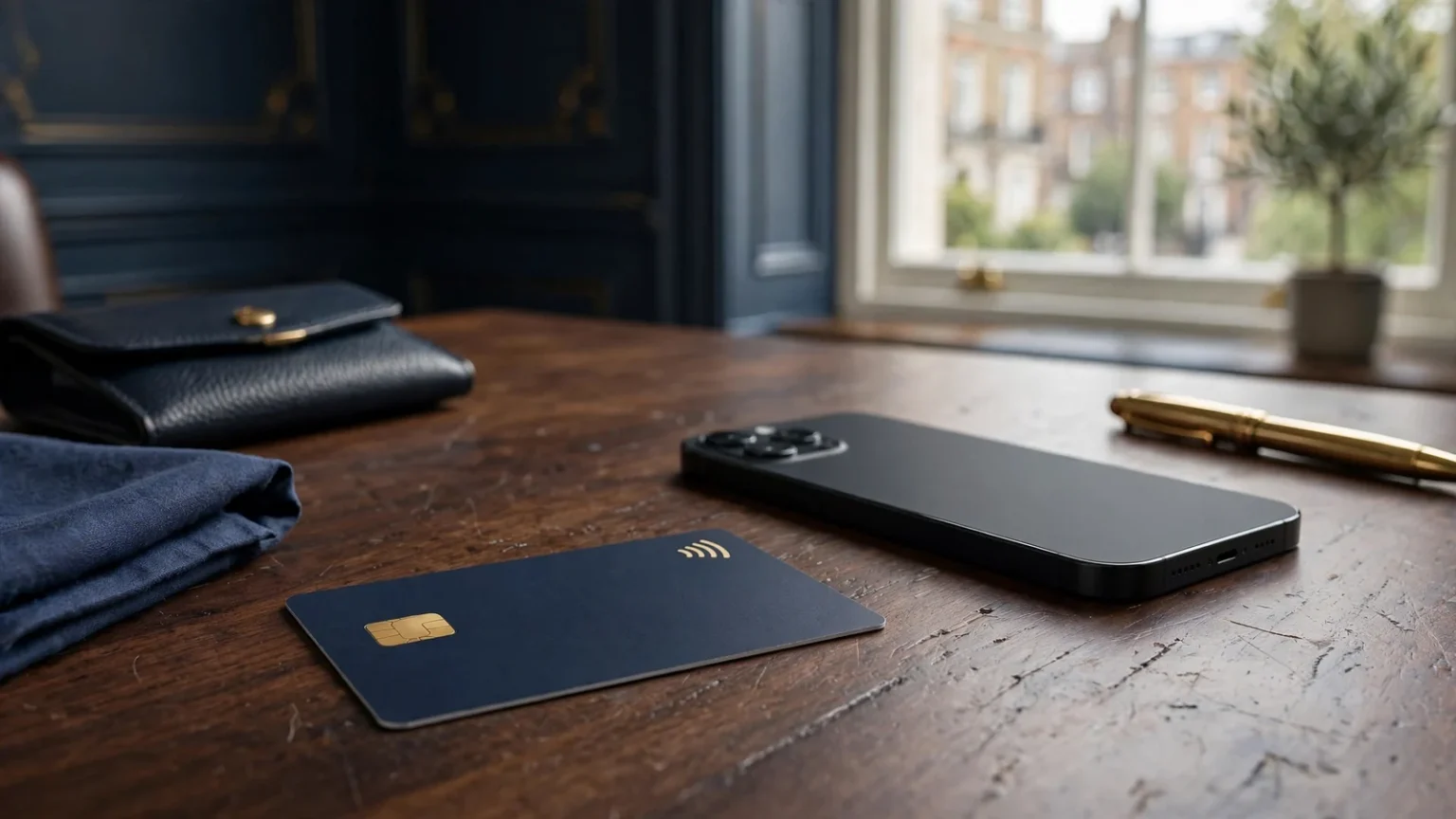
Debit cards fund the casino account, while the cashier, card eligibility and account controls determine how the payment works.
How Debit Cards Fit into UK Online Casino Payments
A debit card is a familiar way to move money from a bank account into an online casino account. UK casinos commonly accept debit cards, including Visa and Mastercard, so the option appears in many cashiers. That does not make every card interchangeable or guarantee that a particular casino will accept every card product. The cashier sets out the methods available for that account.
I have found it useful to separate the payment method from the gambling account itself. A card is a route for funding the account; it is not a separate kind of casino or a feature attached to a particular game. Once the money is in the account, the card has done its immediate job. The casino’s own terms and controls govern what happens in the account.
The important distinction is between debit and credit. A debit-card payment draws on funds held in the linked bank account, while a credit-card payment uses borrowed credit. That difference matters in Britain because remote gambling operators cannot accept credit-card payments for gambling. The ban took effect on 14 April 2020 and remains in force. A UK-licensed casino therefore cannot treat a credit card as an ordinary alternative to a debit card.
The restriction is not avoided by sending credit-card funds through a money service business or a wallet that permits credit-card money to be used for gambling. The point is the source of the gambling payment, not simply the label shown on the final transaction. A wallet may be a separate payment route in the cashier, but that does not make credit-funded gambling acceptable under the rules. The distinction is practical, not cosmetic.
A debit card sits on the permitted side of that divide when it is being used as a debit card. That makes it a straightforward option for people who prefer to pay from their bank balance rather than borrow. It does not mean that a casino must accept every debit-card transaction, or that the presence of a Visa or Mastercard mark settles every question about a card’s eligibility. Those details belong to the casino’s available payment arrangements.
The phrase “online casino with debit card” can sound as though the card changes the casino experience. It does not. The casino remains the service holding the customer’s gambling account; the debit card is one way to put funds into it. The payment option is part of the cashier, alongside any other methods the operator makes available. The card itself does not establish that an operator is licensed, nor does its acceptance tell anything about the casino’s games or account terms.
In Britain, real-money casino services are subject to local licensing requirements. Remote gambling licensees serving customers in Great Britain must hold the relevant UK Gambling Commission licence. That legal framework sits behind the cashier: payment acceptance is not a substitute for the operator’s licence or its obligations. A familiar card logo may make a payment route recognisable, but the logo alone is not evidence that the gambling service is authorised.
From the operator’s side of the counter, payment labels are easy to overread. “Debit card accepted” describes a method the cashier may offer; it is not a blanket promise about all cards, all accounts or every transaction. Equally, the presence of a credit-card brand name in a broad payment discussion should not be read as permission to use credit for gambling. In the UK market, the credit-card prohibition draws a firm line.
This is why the basic question is not simply whether a casino takes cards. It is whether the payment being made is a debit-card payment through a route the casino offers, rather than credit being used to fund gambling. That distinction keeps the terms clear. Debit is not credit by another name.
A debit card can therefore be understood as a common funding route, not a guarantee of universal acceptance or a shortcut around the rules. UK casinos commonly list Visa and Mastercard debit payments, while the credit-card ban continues to rule out credit-card payments for gambling at UK-licensed sites. The cashier is where the available method is presented; the licence and the payment rules define the boundaries. Simple, but not interchangeable.
Credit Card Ban
Remote gambling operators in the UK cannot accept credit-card payments for gambling, a restriction in force since 14 April 2020.
What Makes a Debit-Card Casino a Better Fit
A casino described as “best” for debit-card payments may simply have a familiar card logo in its cashier. That says little about what a transaction costs in practice. I would judge the payment route by the amount that leaves the bank account and the value that reaches the casino balance, not by the confidence of a headline or the number of payment badges on a page.
The difference matters because a card payment can pass through several pricing layers. A specialist payment review identifies possible charges from the casino, the payment provider, the card issuer or bank, and the payment network. If the account balance and the card transaction use different currencies, exchange-rate pricing adds another consideration. Not every transaction attracts every charge, and a charge shown by one party does not reveal the whole cost.
Look beyond the visible fee
A stated fee is easy to compare, but it is only one part of the calculation. A transaction with no obvious fixed charge may still be less favourable if the exchange rate includes a wide spread: the gap between the rate used for the conversion and a reference market rate. Specialist payment reviews warn that this difference can outweigh a flat fee that is clearly displayed.
That is why “free” needs careful reading. It may mean that the casino does not add a fee, not that the cardholder’s bank, provider or network has no charge. Nor does a fee-free label explain how a currency conversion is priced. The payment screen and the account terms may describe different parts of the same transaction.
Casinos That Accept Diners Club in the UK
I have found it useful to separate the costs rather than treating the cashier’s headline as the final figure. The casino’s charge is one line; provider or bank pricing may sit elsewhere. Conversion is another line, even where it is built into the rate rather than presented as a separate amount. The network may also have a role. A clean comparison asks what the complete route costs for the transaction being considered.
Compare like with like
A payment method cannot be declared the cheapest in every case. The total depends on the casino’s terms, the provider’s pricing, the applicable exchange rate and any network cost. The amount being moved matters too, because a fixed charge and a percentage-based cost do not affect every transaction in the same way. A specialist review makes this point when comparing payment routes: the calculation has to use the actual amount, rather than an abstract label such as “low fee”.
For a debit-card deposit, the practical comparison is between what is debited and what is credited, with any charges and currency conversion made visible where possible. If the casino balance is in pounds and the card account is also in pounds, there may be no card-to-account currency conversion on that leg of the transaction. The account’s stated currency still matters: a mismatch can bring conversion into the route, and the rate may be more consequential than a small displayed charge.
Payment Costs
A total transaction cost can include charges from the casino, the payment provider, the card issuer or bank, and the payment network, as well as potential currency conversion spreads.
This is not a claim that one currency arrangement or card is automatically cheaper. The issuer’s terms and the casino’s payment setup both affect the outcome. A cashier that lists no casino fee cannot establish what a bank will charge; equally, a bank’s fee schedule cannot show the casino’s own conditions. The comparison has to include the parties involved.
What “better fit” means
For one player, a suitable debit-card casino may be the one whose cashier sets out charges plainly and whose payment route avoids unnecessary currency conversion. For another, a different card or account arrangement may make more sense. There is no single lowest-cost method across all casinos and transactions, so a broad “best debit card casino” claim is not a substitute for checking the actual terms.
Clarity is part of value. A payment page that distinguishes casino charges from external costs gives a more useful basis for comparison than one that relies on a general “no fees” message. If the pricing is unclear, that uncertainty is itself relevant: the final cost may not be apparent from the promotional wording alone.
In my experience, payment decisions go wrong when a familiar logo is treated as proof of a favourable deal. Acceptance and cost are separate questions. A card may be listed, while the full price of using it depends on the account currency, the issuer’s rules and the route through the payment network. The useful comparison is therefore specific: the same transaction amount, the same currency assumptions and the complete set of charges.
Casinos That Accept Wirecard in the UK: What to Check
A shorter cashier journey can feel better, but convenience does not erase pricing. Nor does a low visible fee prove that the exchange rate is competitive. The sensible measure is the net value after the transaction’s costs, assessed from the terms that apply to that route. No universal winner.
Making a Debit-Card Deposit: Limits and Account Controls
A debit-card deposit has two separate boundaries: the amount the cashier will accept in one transaction, and the amount the customer has chosen or is permitted to spend over time. They can look like one restriction when a payment is declined, but they are set for different reasons. The cashier limit belongs to the payment route and account conditions; a financial limit is an account-level control on gambling spend.
Specialist casino reviews describe minimum deposits commonly starting in the £10–£20 range, with the precise entry point depending on the selected method. That range is a guide to what such reviews report, not a promise that every casino or every debit card will accept the same minimum. The amount shown in the live cashier is the operative condition. A deposit below it may be rejected even when the card itself is supported.
Do
- Check the live cashier for the operative minimum deposit
- Set a financial limit before the first deposit
- Read the unit and scope of transaction ceilings
Don’t
- Assume a general review range is a guarantee
- Treat a transaction maximum as a target
- Use splitting payments as a reliable workaround for limits
The maximum can be less straightforward. A casino may set a ceiling for a single card transaction, while separate daily or monthly limits apply to total deposits. Those ceilings can differ by payment method and account status. Specialist payment guides also describe this variation, so a figure found on a general information page should not be treated as a fixed allowance for every account. The cashier may state one amount, while controls attached to the account impose another.
That distinction matters when a planned deposit exceeds the transaction ceiling. Splitting it into several payments is not a reliable workaround: cumulative account limits may still apply, and the operator’s controls remain in force. A declined transaction is therefore not always evidence of a card problem. It may reflect the transaction cap, a wider account limit, or an incomplete account process.
In Britain, a financial limit is not simply an optional feature hidden among account settings. UKGC rules require remote gambling operators to prompt new customers to set a financial limit before they make their first deposit. Operators must also provide accessible account-level limit controls. The prompt comes before funding, making the control part of the deposit journey rather than an afterthought that only appears once money is in the account.
These controls are distinct from the cashier’s minimum and maximum. A cashier may allow a deposit amount in principle, but an account limit can still prevent it. Conversely, setting a financial limit does not change the payment method’s minimum transaction requirement. If the chosen limit leaves less room for a deposit than the cashier minimum, the transaction cannot simply be reduced to an amount the card route does not accept. The two conditions have to be read together.
Casinos That Accept Bitcoin in the UK: Payment Checks
The wording around limits can also matter. A per-transaction maximum describes one payment; a daily or monthly cap measures activity across a period. An account-level financial limit is another layer, set through the customer’s controls. Confusing these labels can lead to a mistaken impression that a casino has changed its terms when, in practice, different controls are being applied. Read the unit and scope, not only the number.
I have seen payment journeys become needlessly confusing when a customer treats a displayed maximum as a target rather than a boundary. It is a ceiling, not an invitation to deposit that amount. The relevant figure is the one that applies to the actual account and selected method, alongside the customer’s own limit. A general payment page can explain the structure, but it cannot establish what the cashier will permit at the point of deposit.
Before funding, the practical check is therefore modest: identify the minimum for the selected debit-card route, note any transaction or period-based maximum, and understand which account-level financial limit governs the deposit. The operator must make those controls accessible, but the labels and placement can differ between account areas. Where the cashier and account screen appear to conflict, the transaction should not be assumed to proceed at the higher figure.
This is the part of a debit-card deposit that advertising tends to compress into “easy funding”. In practice, the card is only one gate. The cashier’s conditions and the account’s controls both have to allow the payment. That is the working limit.
Deposit Boundaries
- Cashier limits are set by the payment route and account conditions
- Financial limits are account-level controls on gambling spend
- UKGC rules require operators to prompt new customers to set financial limits
- Transaction caps and account limits must be read together to determine the working limit
Checking Whether a Casino Accepts the Card in Hand
A cashier listing Visa or Mastercard is a starting point, not a guarantee that every card carrying that logo will work. A specialist review may describe a casino’s stated payment options, but card acceptance can depend on the product presented and on what the operator currently enables for UK customers. The practical check is the cashier on the account itself.
I have seen the broad payment logo do more work in promotional copy than it does at the point of payment. It signals a supported network; it does not confirm that a particular debit-card product is eligible. That distinction matters because “Visa accepted” can sound like a universal promise when it is really a summary of the payment route.
Before attempting a transaction, the cashier should be checked for the card option and any accompanying conditions. The wording may distinguish debit cards from other card types, or show only the network name. If the available information does not make eligibility clear, the operator’s own payment guidance is the relevant place to confirm it. A failed attempt is not a reliable way to discover the rule: it can leave the transaction unclear without resolving whether the card product is supported.
There is a second check that is easy to overlook: the account currency. A specialist review may state that GBP is supported, but that does not establish the currency selected for every account. The account or cashier should be checked before the first transaction. If the account is set to another currency, a card payment in pounds may involve conversion rather than being processed on a like-for-like basis.
Casinos That Accept Instadebit in the UK: What to Check
That is not just a display preference. The currency shown at the account level can affect how the payment is recorded and whether conversion enters the transaction. Confirming it before funding avoids treating a pound-denominated card as proof that the casino account itself is also denominated in pounds. Logo and currency are separate checks.
A sensible check therefore has two parts: establish that the cashier currently offers the relevant card route for UK customers, then confirm the account currency before submitting payment details. A general list of accepted brands can help narrow the question, but it cannot settle either point on its own. The cashier is the live indication of what the account can use.
This is where “accepted” needs a precise reading. It may refer to a payment network in general, not to each product issued under that network or to every customer account. Where the cashier presents only a broad label, the operator’s payment information should clarify its scope. Where the account currency is shown separately, that setting deserves an equally deliberate check.
The extra step is modest, but it prevents a familiar mismatch: the card carries a recognised logo, while the cashier’s current options or the account’s currency do not match the assumption. Check the actual route. Then check the currency.
Card Acceptance Check
- Verify the card option is available in the account cashier
- Review the operator’s payment guidance for product eligibility
- Confirm the account currency matches the card currency to avoid conversion
Why Debit-Card Withdrawals Can Take Longer than Deposits
A debit-card deposit and a casino withdrawal do not travel through the same process in reverse. A deposit can appear in the gambling account as soon as the payment is authorised. A withdrawal first has to be reviewed by the casino, then sent through an eligible payout route. The card transaction may therefore feel immediate on the way in and slower on the way out.
UK anti-money-laundering rules generally mean that a casino must return funds to the original payment source. This is why a debit-card casino withdrawal may be routed back to the card used for funding rather than paid to any destination selected at withdrawal. The cashier’s available options and the account’s payment history determine what can be requested; the existence of a card deposit does not, by itself, establish that every card supports withdrawals.
There are two parts to the wait. First, the casino processes the request. It may need to review the account and complete checks before approving the payment. Specialist casino reviews describe withdrawal speed as dependent on this internal approval and on whether verification is complete. The same type of review notes that an initial withdrawal can take longer while checks are being finished. That delay is not necessarily a card-network delay.
After approval, the payment still has to be handled by the payment system. A casino’s stated processing time may cover its own review rather than the whole journey to the card account. It is worth separating “pending” from “sent”: the first describes a request still with the casino, while the second indicates that the casino has released it to the payment route. Those are different stages. Not interchangeable.
Casinos That Accept iDEAL in the UK: What to Check
A fast withdrawal debit card casino claim needs that distinction. A specialist review may place debit cards connected to fast payout systems among the quicker withdrawal methods, alongside PayPal and open banking services. That is a comparison of payment routes, not a promise that every card withdrawal will be fast. Account checks and the casino’s approval queue remain relevant, and the route available at one site may not be offered at another.
For a casino withdrawal to a debit card in the UK, the practical details are in the cashier’s withdrawal terms: whether card payouts are supported, whether the original card is the required destination, and how the site defines its processing stage. If verification is incomplete, the request may not move forward until the casino has finished reviewing the account. Once approved, the time shown by the casino should not be read as a guaranteed arrival time unless it expressly includes the payment provider’s part of the journey.
This is the reason “fast” is a narrow description. It may refer to the casino’s approval, the payment system’s handling, or the whole period until funds appear. A card deposit that is credited promptly says little about how quickly a later payout will complete. The withdrawal route has its own checks and stages.
Keeping Debit-Card Transactions Consistent
A casino account and its payment route form one transaction trail. When the account details and the debit card belong to the same customer, the basic ownership information aligns. That reduces the chance of avoidable questions or delays caused by a mismatch.
Consistent Details
Using a single named route where the card and account belong to the same customer reduces avoidable friction and manual checks.
I have seen how a small inconsistency can turn a routine transaction into a manual check. A different name on the payment method, or details that do not match the casino account, can make it harder to establish that the funds belong to the account holder. Matching details do not guarantee that every transaction will pass without review, but they remove a straightforward source of friction.
The same principle applies across the payment journey. A single named route used for both funding and payouts is often the cleanest arrangement, where that route supports both directions. This is not a promise that a debit card will always be the casino’s payout method. The cashier’s terms determine which routes are available, and the route shown for a deposit should not be assumed to work for a withdrawal.
Consistency matters more than switching methods to solve a one-off inconvenience. Moving between payment routes can make the transaction history less straightforward, particularly when the account holder’s details differ between them. The casino may need to establish how each method relates to the customer before it can process a transaction. Keep the trail legible. That is the point.
Casinos That Accept USDC in the UK: What to Check
For a debit-card casino account, the practical check is whether the card and account are in the same customer’s name and whether the chosen route is permitted for both deposits and withdrawals. A card belonging to someone else does not become an appropriate route merely because the account holder has permission to use it. Payment ownership should match the gambling account.
There can still be cases where a casino directs a payout through another method, or asks for further checks. That does not make the original deposit inconsistent; it means the operator is applying its payment process to the account. The useful distinction is between a casino-directed alternative and switching routes without a clear reason. Where the original named route remains available, keeping to it leaves fewer ownership details to reconcile.
This is why a UK debit-card casino should be judged not only by whether a card appears in its cashier, but by whether the account and payment route can remain coherent from deposit through withdrawal. A tidy trail cannot remove every check. It can avoid creating an unnecessary one.
Why “Top” Depends on the Payment Route
When choosing a UK casino for debit card use, check that your preferred card is supported and review the withdrawal terms. The payout details below offer one practical point to consider.
1. Zombillion
Payout speed: 1-3 business days
Zombillion lists a payout speed of 1–3 business days.
2. SlotoSport
Payout speed: 1-3 business days
SlotoSport lists a payout speed of 1–3 business days.
3. Dieselwin
Payout speed: 1-3 business days
Dieselwin lists a payout speed of 1–3 business days.
4. WinBeast
Payout speed: 1-3 business days
WinBeast lists a payout speed of 1–3 business days.
5. Britsino
Payout speed: 1-3 business days
Britsino lists a payout speed of 1–3 business days.
6. Revery Play
Payout speed: 1-3 business days
Revery Play lists a payout speed of 1–3 business days.
7. NightLuck
Payout speed: 1-3 business days
NightLuck lists a payout speed of 1–3 business days.
8. NightWin
Payout speed: 1-3 business days
NightWin lists a payout speed of 1–3 business days.
9. BeOnBet
Payout speed: 1-3 business days
BeOnBet lists a payout speed of 1–3 business days.
10. Chanze
Payout speed: 1-3 business days
Chanze lists a payout speed of 1–3 business days.
A casino can accept debit-card deposits and still be a poor fit for a particular payment journey. “Top” is not a property of the cashier in isolation; it depends on what a transaction costs and when the funds become usable. I have seen a payment look straightforward on the deposit screen, then become less attractive once the account currency and the route’s delivery conditions are taken into account.
The visible charge is only one part of the calculation. A specialist payment review identifies possible costs at several points: the casino, the payment provider, the card issuer or bank, currency conversion, and the payment network. Not every transaction attracts every charge, so the useful comparison is the total for the intended amount, not a headline claim that a method is free.
Conversion deserves particular attention. If a casino account is not held in pounds sterling, a deposit or later transfer may involve an exchange rate as well as a stated fee. A specialist payment review notes that the conversion spread can outweigh a flat charge. The practical cost may therefore be less obvious than the cashier’s fee line suggests.
Currency Conversion
Attention: Currency conversion spreads can outweigh flat fees, making the practical cost of a transaction less obvious than the cashier’s fee line suggests.
Timing also changes the value of a route. A specialist review of payment processing reports that open banking and bank transfers can support instant deposits and fast withdrawals at many sites. That does not make every transfer immediate: bank-transfer delivery can depend on the bank’s cut-off time, weekends and currency conversion. A transfer initiated outside a processing window may not follow the same timetable as one made during it. The detail matters when funds are needed for a specific purpose.
For a debit-card casino, the sensible test is therefore not simply whether the card logo appears. It is whether the complete route suits the account: the currency, any charges that apply, and the stated timing for the relevant transaction. A low visible fee cannot compensate for an unexpected conversion cost, just as a fast deposit does not establish that every other movement of funds will be equally quick.
There is no universal winner. The best-rated option on a general list may not be the most practical route for a pounds account or for a transfer made near a bank’s cut-off. Read the cashier terms as a payment itinerary, not a badge.
Casinos That Accept Upaycard in the UK: What to Check
Debit Cards and Online Slots: The Payment Is at Account Level
“Slots with debit card” is convenient shorthand, but the card does not connect to an individual game. It is used at the casino cashier to add funds to a gambling account. Once the balance is there, it can be used across the games the account makes available, subject to the casino’s rules.
That distinction matters when comparing debit card casino sites in the UK. A slot does not accept Visa or Mastercard directly, and its payment options are not separate from the casino’s cashier. The cashier handles funding; the game uses the account balance. From the other side of the counter, I have seen this confusion lead people to look for a card symbol on a game page when the relevant information sits in the account’s payment area.
UK casinos commonly accept debit cards, including Visa and Mastercard. That describes a payment route offered by casinos, not a promise that every card product works at every site or that every game has a card-specific feature. The practical question is whether the casino accepts the card for the account, not whether a particular slot is labelled as accepting it.
The same applies to searches for debit card slots in the UK: the wording points to casino games played using funds deposited by card. It does not identify a special class of slots. Game availability and payment acceptance are separate matters, even when both appear on the same casino website.
How payments work with slots
A debit card is used at the casino cashier to add funds to a gambling account; the account balance is then used to play the games. There is no direct link between a card and an individual slot game.
Keep the distinction plain. Card at cashier; balance in account; game played from that balance. No card-to-slot link.
Other Payment Options Shown in Casino Cashiers
A casino cashier can offer more than a debit-card button, but the menu is not a promise that every method will work for every account or for both directions of payment. The practical distinction is between a way to add funds and a route that can also return them.
Paysafecard is a prepaid voucher for deposits only. It should therefore be treated as a funding option, not as a complete payment loop. Apple Pay is another deposit route at some UKGC-licensed casinos; its presence does not, by itself, establish that withdrawals can be sent back through it.
Some sites also make Skrill or Neteller available. Specialist reviews have reported that these e-wallets may be excluded from promotions, so the payment method and the bonus terms need to be read together rather than as separate offers. PayPal is described by specialist reviews as popular for speed and convenience, but those reviews also note that bonus eligibility can differ. That is a condition to verify, not a universal rule.
The cashier is the useful record of what is currently enabled. A method mentioned on a general payments page may not appear for a particular account, and a deposit-only option should not be assumed to support withdrawals. The same distinction matters when comparing live-casino access: the games do not change the payment route; funds are handled at the account level.
“Best” or “top” can obscure this basic point. A longer menu is not automatically a better fit if the preferred route cannot handle both deposits and payouts, or if its terms affect a promotion. Nor does a site advertising card payments establish that every card product is accepted. For UK play, the relevant boundary is a current UK Gambling Commission licence; non-GamStop branding does not replace that requirement for operators serving the British market. Check the cashier and the terms. Availability varies.
Casinos That Accept Tether in the UK: Payments
Visa Debit, Card Ownership and Payment Security
A Visa debit card is a payment route, not a security guarantee. The Visa name alone does not confirm that a particular card will be accepted or that a casino’s payment process is safe. Acceptance depends on the cashier’s current terms and the card product; security also depends on how the account and transactions are handled.
The basic ownership check is straightforward: the gambling account details and the card should belong to the same customer. When names or other account details do not line up, a payment may need further checks before it can be processed. That is not necessarily an accusation of wrongdoing. It is a way to establish who controls the funds and whether the transaction fits the account.
I have seen payment rules that look like routine administration from the outside but serve a clear fraud-prevention purpose. Returning funds to the original payment source is a common anti-fraud and anti-money-laundering control. If that route cannot be used, an alternative may trigger additional verification. More steps, not a shortcut.
This is why a safe debit-card casino cannot be judged by a card logo or a reassuring phrase on a payment page. A UK-facing casino serving customers in Great Britain must hold the relevant UK Gambling Commission licence. Checking the operator’s licence on the Commission’s public register is part of assessing the site; it does not replace checking the cashier’s terms or understanding how the payment route works.
For Visa debit payments, the practical safeguards are ownership and traceability: the cardholder should be the account holder, and the route should remain clear through the transaction. A familiar brand is only one detail. The controls around it matter more.
Are Visa and Mastercard deposits definitely debit cards?
No. Visa and Mastercard are commonly accepted for debit payments, but the logo alone does not confirm that a particular card product is eligible; check the casino cashier.
Why must withdrawals return to the deposit method?
Returning funds to the original payment source is a common anti-fraud and anti-money-laundering control. Using another route may require additional verification.
What is the current minimum deposit?
The minimum deposit usually starts at £10–£20, depending on the payment method.
Which payment methods are accepted in Great Britain?
UK casino cashiers may offer Visa and Mastercard debit cards, PayPal, bank transfers and open banking, Paysafecard, Skrill, Neteller, Apple Pay or Jeton. Availability varies by site, so check its cashier.
Which method has the lowest fees?
There is no universally cheapest method. Compare the casino’s charges, provider and bank fees, currency-conversion spread and any network costs for your transaction.
Is Skrill available?
Yes. Skrill is available at some UK-friendly casino sites, though it may be excluded from promotions.
What is the fastest withdrawal method for UK casinos?
PayPal, open banking services and debit cards linked to fast payout systems are generally among the quickest. The casino’s approval process and your verification status also affect the time.
Do UK casino withdrawals require verification?
Verification may be needed, particularly before a first withdrawal, and can delay processing while it is completed.
Material created by the team Golden Mister