French roulette’s La Partage rule returns half the stake on zero for covered even-money bets, while other bets and formats follow different maths.
French Roulette’s Zero Rule Is the Point
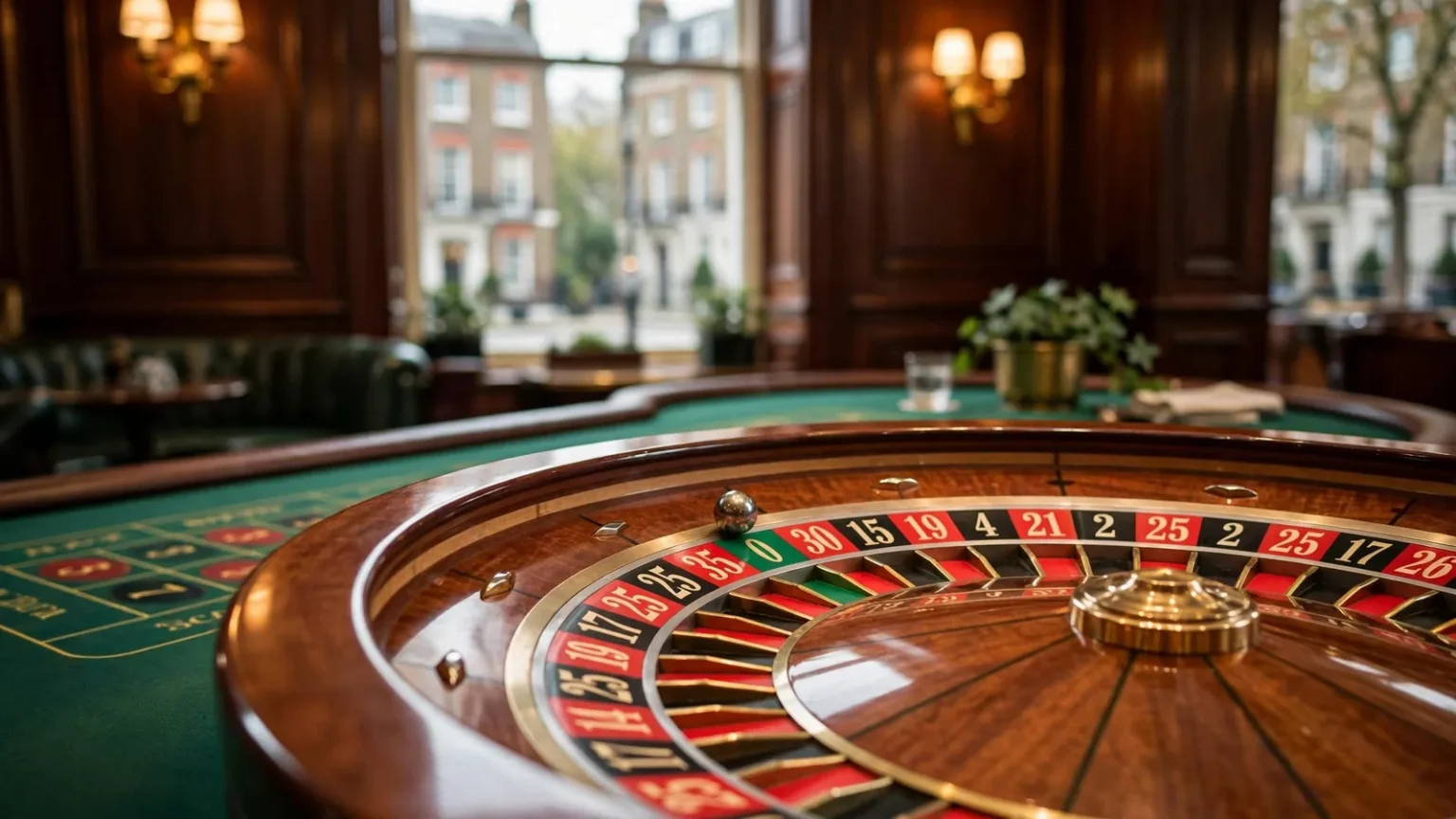
French roulette’s advantage is not a special betting pattern or a more generous payout on a winning number. It comes from what happens when the ball lands on zero. The wheel has the European layout: numbers 1 to 36 and one green zero, making 37 pockets in total. French rules then soften the effect of that zero on certain bets.
That distinction matters because zero is not red or black, odd or even, high or low. On an ordinary even-money bet, a zero result would normally take the stake. La Partage changes that outcome: when the ball lands on zero, half the stake on an even-money bet is returned. The other half is lost. The rule does not turn a losing spin into a win, but it reduces the cost of that particular result.
Across the standard single-zero game, the house edge is 2.70%. For even-money bets covered by La Partage, it falls to 1.35%. That is a meaningful difference in the underlying maths, not a promotional feature. The return applies because the game rules reduce the loss on zero; it does not depend on a bonus or a casino crediting extra funds afterwards.
Why one pocket changes the calculation
A roulette bet is exposed to every pocket on the wheel, including zero. The player may choose a bet that covers many numbers, but the zero remains a result that can defeat it. In a single-zero game, that one pocket is the source of the house’s mathematical advantage on even-money bets.
Fruit Machine Slots UK: Reels, Bonuses and Free Play
La Partage gives back half the stake only when the bet is an eligible even-money wager and zero appears. It does not refund half of every losing bet, and it does not change the settlement of a bet on an individual number. The rule is narrow by design. Its value lies in reducing the damage from the specific outcome that otherwise makes even-money bets less than an even proposition.
This is why the wording on a table matters. “French roulette” points to a ruleset, not merely a wheel with a French label or a particular visual style. The practical advantage depends on La Partage being in force for the relevant bet. I have seen game names do more work than their rules; the table’s information panel is where the distinction becomes concrete.
En Prison is the other part
En Prison provides another way of treating an even-money bet when zero appears. Rather than settling it as an immediate full loss, the stake is held for the next spin. If the bet wins on that spin, the stake is returned; if it does not, it is lost. The bet is therefore not simply paid as a normal loss on the zero result.
The detail is easy to miss because the stake is neither available for another wager nor a settled win while it remains imprisoned. It is still tied to the original choice, and the next spin decides what happens to it. That changes the experience of a zero result: the bet is unresolved rather than immediately gone.
French roulette’s lowest house edge among standard variants comes from these zero rules, La Partage and En Prison. The advantage should not be stretched into a claim that every bet has the same reduced edge. La Partage’s stated reduction applies to even-money bets, and En Prison also concerns how those bets are handled after zero. A straight-up number wager does not receive the same half-stake treatment.
Attention: La Partage and En Prison rules apply specifically to even-money bets; they do not provide the same half-stake treatment for straight-up number wagers.
The advantage is mathematical, not predictive
A lower house edge describes the rules’ long-run effect; it does not tell anyone what the next spin will do. Zero can still appear, and a run of outcomes can still go against a player. The rules reduce the casino’s edge on the qualifying bets, but they do not remove uncertainty or create a reliable sequence.
That is the point I would keep separate from the language used to sell a table. “French” is not a promise of better luck. It identifies a wheel and, where the rules are applied, a less costly treatment of zero on even-money bets. The difference is built into settlement, not into the ball’s chances.
For anyone assessing an online French roulette casino, the central check is therefore not the artwork or the dealer’s presentation. It is whether the game information confirms a single-zero wheel and specifies La Partage or En Prison. The name alone is not the rule. The rule is the value.
What “Best” Means When the Game Is the Same
When choosing a UK casino for French roulette, check that the game is available and consider how withdrawals are handled. The list below notes the payout-speed information available for each operator.
1. Zombillion
Payout speed: 1-3 business days
Zombillion has a stated payout speed of 1–3 business days. Check whether French roulette is available before choosing it for this game.
2. SlotoSport
Payout speed: 1-3 business days
SlotoSport has a stated payout speed of 1–3 business days. Check whether French roulette is available before choosing it for this game.
3. Dieselwin
Payout speed: 1-3 business days
Dieselwin has a stated payout speed of 1–3 business days. Check whether French roulette is available before choosing it for this game.
4. WinBeast
Payout speed: 1-3 business days
WinBeast has a stated payout speed of 1–3 business days. Check whether French roulette is available before choosing it for this game.
5. Britsino
Payout speed: 1-3 business days
Britsino has a stated payout speed of 1–3 business days. Check whether French roulette is available before choosing it for this game.
6. Revery Play
Payout speed: 1-3 business days
Revery Play has a stated payout speed of 1–3 business days. Check whether French roulette is available before choosing it for this game.
7. NightLuck
Payout speed: 1-3 business days
NightLuck has a stated payout speed of 1–3 business days. Check whether French roulette is available before choosing it for this game.
8. NightWin
Payout speed: 1-3 business days
NightWin has a stated payout speed of 1–3 business days. Check whether French roulette is available before choosing it for this game.
9. BeOnBet
Payout speed: 1-3 business days
BeOnBet has a stated payout speed of 1–3 business days. Check whether French roulette is available before choosing it for this game.
10. Chanze
Payout speed: 1-3 business days
Chanze has a stated payout speed of 1–3 business days. Check whether French roulette is available before choosing it for this game.
When comparing French roulette offers, the useful question is not which casino has the most persuasive label. It is whether the game’s rules and return information are clear enough to assess before a bet is placed. The wheel may be familiar across different sites, but the presentation can make important details easy to miss.
I would start with the table rules, not the promotional copy. A game described as French roulette should explain which zero-related rules apply and how they affect bets. La Partage and En Prison are not interchangeable labels for a general “better return”: the table’s rules should say what happens to an eligible bet when the ball lands on zero. If those terms appear only in a short game description, with no explanation in the rules, the offer is harder to evaluate.
The point is not to demand identical wording from every operator. It is to find the operative detail without having to infer it from a game name or an image of a French-style layout. A rules panel that explains the settlement of bets is more useful than a banner calling a table “premium” or “classic”. Advertising language is cheap. Clear settlement terms are not.
Fastest Payout Online Casinos in the UK: What Counts
Return information should be visible
UKGC-licensed operators must make RTP information accessible. That matters because return information gives a more complete picture than a table name or a general claim about fairness. The information should be findable from the game or its accompanying rules, rather than buried in material unrelated to the specific roulette title.
RTP and house edge describe the same long-run relationship from different sides: RTP expresses the share of stakes returned in the model, while house edge describes the casino’s mathematical share. European roulette has a house edge of 2.70%. That figure is a useful reference point, but it should not be treated as a promise about an individual session. Short-term results can differ sharply from a theoretical return.
If a site displays a return figure, the surrounding explanation should make clear which game and rules it applies to. A number shown for one roulette title does not automatically describe another, even when the tables look similar. Nor does an attractive return figure tell the whole story if the game’s zero rules are unclear. Read the figure alongside the table rules.
Separate the game from the offer
Casino pages often place game details beside welcome promotions, loyalty language or claims about a “best” experience. Those are separate decisions. A bonus does not change the roulette wheel’s underlying probabilities, and a polished interface does not establish which rules govern a spin. Keeping those elements apart prevents a promotion from doing the work of evidence.
Do
- Check the table rules for specific zero-related settlements
- Verify the RTP and house edge for the specific game title
- Ensure the rules panel matches the actual betting interface
Don’t
- Rely on marketing labels like “premium” or “classic”
- Assume a “French” label guarantees specific rules
- Infer game mechanics from the artwork or layout image
I look for consistency between the title, the rules panel and the actual betting interface. If the rules describe one treatment of zero but the game screen gives no indication of it, that mismatch deserves attention before play. The same applies when the rules are accessible only through a general help page that does not identify the relevant game. Details should connect to the table being offered.
This is also where vague labels can mislead without making a direct false claim. “French” may identify a style, but the practical question is how the particular table settles bets. “Fair” is not a substitute for a return figure. “Best” is not a rule. The useful evidence is specific and attached to the game.
Compare clarity, not adjectives
A sound comparison gives each offer the same scrutiny: locate the rules, confirm how zero is handled, find the applicable RTP information, and check that the details refer to the same roulette title. If any of these pieces is difficult to locate, that is relevant information about the offer’s transparency, even if the game itself remains recognisable.
I would not rank casinos by presentation alone. Bright graphics, a prominent table tile or a confident headline can make a game feel more attractive, but none answers the basic questions about its rules and stated return. The strongest offer, in practical terms, is the one that makes those mechanics legible before play rather than expecting the player to rely on assumptions.
Betsoft Casinos in the UK: What Can Be Verified
That is a modest standard, but it is the one that separates a comparable French roulette table from a marketing description. Same game family. Different levels of clarity.
Live Roulette: A Real Wheel, a Different Pace
In live French roulette, the spin is not generated on screen by a random number generator. A camera streams a studio table, a dealer sets the wheel in motion and a physical ball drops into a pocket. The software carries the broadcast and records bets; the visible result comes from the wheel. That distinction is the point of the format.
From the other side of the counter, I found that “live” sells an impression as much as a game. The dealer’s presence and the wheel’s movement make each spin feel like an event, while the betting interface still handles the practical work: displaying the layout, accepting stakes and closing betting before the ball lands. It is a studio product, not a private table. The pace is shaped by the presenter, the table’s betting window and the time needed to settle each result.
RNG roulette removes those pauses. Its software simulates the spin, so a new round can begin without a dealer resetting a physical wheel. For American roulette, RNG tables typically produce 150 to 200 or more spins per hour; live-dealer play is commonly described at 50 to 60 spins per hour. The exact pace depends on the table, but the structural difference is clear: a broadcast has to allow time for a real sequence of actions.
RNG Roulette
Software-simulated spins without a dealer, offering the fastest pace and often lower minimum stakes.
Live Dealer Roulette
Physical wheels streamed from a studio, providing a slower, event-like pace shaped by a human presenter.
Speed Roulette
A live format designed for high turnover, reporting over 150 spins per hour.
Auto-Roulette
Uses a physical wheel but automates the process, sitting between live-dealer and RNG experiences.
Speed roulette is another live format, designed to shorten the interval between rounds. A specialist review reports more than 150 spins per hour for speed roulette, compared with 80–100 at a standard table. Those figures describe a reported comparison, not a promise about every studio or session. Faster turnover can make the game feel less like a hosted table and more like a continuous stream of betting opportunities. The wheel remains physical; the rhythm changes.
Auto-roulette sits between those experiences. A physical wheel is used, but the process is automated rather than led through each round by a dealer in the usual way. A specialist review reports UK live-table minimums beginning at 10p, while auto-roulette and speed formats can sometimes start at 5p. These are entry points reported for some tables, not a fixed market-wide tariff. The minimum is only one part of the experience: the time available to place a bet and the rate at which rounds follow can matter just as much.
That distinction is useful when comparing a live French roulette table with an online live French roulette casino listing. The label alone does not tell the whole story. A table may offer the familiar French layout, but the presentation, pace, minimum stake and betting window belong to that specific table. A live casino French roulette stream can feel measured beside RNG play, yet a speed table can narrow the gap. Physical wheel, different tempo.
Top Rated Online Casinos UK: Ratings and Amatic Slots
There is also a practical side to live play that promotional descriptions tend to compress into a small tools menu. UKGC-licensed live casino operators must provide deposit limits and loss limits, along with session time reminders and reality checks. They must also offer cool-off periods and access to GamStop self-exclusion. These controls matter because live tables combine a continuous broadcast with repeated betting windows; the format itself does not create a natural stopping point.
I treat those features as part of the table environment, not as decoration around it. A reality check interrupts play with a reminder of time spent, while account limits can restrict deposits or losses. A cool-off period and GamStop address different needs: one pauses access for a chosen period, the other supports self-exclusion across participating gambling sites. None changes the wheel or guarantees a particular outcome. They change how access is managed.
For anyone comparing live French roulette casinos in the UK, the meaningful difference is therefore not simply “real” versus “virtual”. It is the combination of a physical wheel, a human or automated presentation, the pace of rounds and the controls available around play. A slower table leaves more time between decisions. A speed format removes some of that space. That is the trade-off.
Low Stakes, Table Minimums and the Cost of Speed
A low table minimum changes the price of joining a game, not the pace at which decisions arrive. That distinction matters when comparing French roulette at a small stake: a modest entry point can make a table accessible, while a rapid format can still move money through repeated spins quickly. I have seen those two features bundled together in “low-stakes” descriptions as if they meant the same thing. They do not.
Low table minimums only determine the entry cost per bet; they do not reduce the overall pace of play or the total amount wagered in a fast-format session.
RNG roulette replaces the physical wheel with a random number generator. Its simulated spins are quicker than live play, and the minimum stake can be lower; some games allow bets from 10p. That makes it a straightforward option for small-stake play, but the faster cycle means there is less waiting between decisions. The practical cost is not only the amount placed on one spin. It is also how many chances to place another bet arrive in a session.
Live tables have a different rhythm because a dealer operates a real wheel and the ball has to complete its run. UK live roulette minimums can start at 10p, so live play is not automatically reserved for larger stakes. The exact table minimum is a game setting, though: the label “live” does not guarantee a particular entry point. The stake shown on the table matters more than the format’s name.
Auto-roulette and speed roulette sit between those experiences in presentation, but their low minimums and rapid rounds can make them feel closer to a continuous stream of play. A specialist review reports that some UK tables begin at 5p in these formats, compared with live-table minimums that can begin at 10p. Those are starting points, not promises that every game will offer the same stake. Table availability and limits depend on the particular game.
Speed is the other part of the calculation. A specialist review gives speed roulette a rate above 150 spins an hour, against 80–100 at a standard table. These are reported format figures, not a fixed pace at every operator or session. Even so, the comparison shows why the minimum alone can give a misleading impression: a low stake repeated through a fast sequence can add up to more total betting than the same stake at a slower table.
Amatic Slots at UK Casinos: Games, Paylines and Offers
I treat the minimum as an entry condition, not as a measure of how affordable a session will be. It tells how little a single bet may be, but not how long the game will run, how often another decision appears, or how many bets will be made before stopping. Speed formats reduce pauses. That is their appeal—and the point that deserves attention.
A slower live table can leave more space between decisions, while RNG play removes the dealer and wheel from the process. Auto-roulette and speed roulette offer quicker rounds in a format built around continuous play. None of those labels says what a particular French roulette table’s minimum is; the displayed limits do. The useful comparison is therefore concrete: the stake floor, the pace of play, and whether the format leaves enough time to keep track of the session.
“Low limit” sounds like a settled description. In practice, it is only one setting on the table. Small entry stakes can coexist with fast play. Different trade-off.
Online Roulette Formats and the Zero-Pocket Trade-Off
The first distinction between online roulette games is the wheel, not the graphics or the name on the lobby tile. A European wheel has 37 pockets: the numbered spaces from 1 to 36 and one green zero. The American layout adds a second zero, giving it 38 pockets. That extra space changes the chance of a winning result without changing the familiar numbers or colours shown on the betting layout.
Online European Roulette in the UK: How It Works
French roulette uses the single-zero arrangement associated with European roulette. Its identity also comes from rules such as La Partage and En Prison, which affect what happens to certain bets when zero appears. That means a French table is not simply a different visual skin for an American wheel. The pocket count and the rules both matter, though they affect the mathematics in different ways.
Single zero and double zero
On standard European roulette, the house edge is 2.70%. On standard American roulette, it is 5.26%. The difference follows from the extra green pocket: the same winning numbers occupy a smaller share of the total wheel outcomes. A table can therefore look almost identical on screen while offering a materially different underlying return.
This is one detail I check before treating a game title as meaningful. “European” or “French” can signal a single-zero wheel, but the displayed rules still matter, especially where French rules are advertised. “American” generally points to a double-zero layout, and that additional pocket raises the house edge compared with standard European roulette. The label is useful; the paytable and rules panel settle the question.
Some American tables go further and show a third green space marked 000. A specialist review has reported an American format with that additional pocket and a 7.69% house edge. This is a specific variation, not a figure to assume for every American game. The wheel graphic should be checked directly: a double-zero American layout and a version with 000 are not mathematically interchangeable.
Best Fast Payout Online Casinos UK: Keno Explained
Read the wheel, not the artwork
Digital presentation can make these variants feel closer than they are. Number grids, chip controls and animated spins may be shared across several games, while the wheel’s pockets determine the base probabilities. A polished interface does not compensate for an extra zero. Nor does a French name alone confirm that every bet is treated under French rules; the rules shown for that particular game are what count.
For a fair comparison, I separate two questions. First, how many pockets are on the wheel, and how many are green? Second, which rules modify the result when the ball lands on zero? The first identifies the wheel layout; the second explains whether a particular bet receives different treatment. Mixing those questions can make two games seem equivalent when they are not.
The practical trade-off is straightforward: a single-zero wheel has fewer green outcomes than a double-zero wheel, while an added 000 increases them again. For standard versions, the published house-edge figures make the difference plain: European roulette is 2.70%, against 5.26% for American roulette. A third-zero version has been reported at 7.69%, but that figure belongs to the described format rather than every table carrying an American label.
European/French
Single-zero wheel with a house edge of 2.70%.
American
Double-zero wheel (0, 00) with a house edge of 5.26%.
Triple-Zero
American variation with three green pockets (0, 00, 000) and a house edge of 7.69%.
French roulette remains a single-zero option, with its distinctive rules layered onto that wheel. The safest comparison is therefore not based on table artwork, pace or a short game name. Count the green pockets, then read the rules attached to the specific game. Small visual difference. Real mathematical effect.
Finding French Roulette on a UK-Licensed Site
A French roulette table appearing in a casino lobby does not, by itself, show that the operator is authorised to take real-money bets from people in Britain. The relevant check is the operator’s licence, not the game’s name, presentation or location of its servers. The UK Gambling Commission (UKGC) is the sole regulator of online casino activity in Great Britain. An operator selling remote gambling to British customers must hold the relevant UKGC licence, wherever the business is based.
I treat the public register as the starting point. The operator’s legal name and licence number should be checked against the UKGC register, rather than accepted from a badge or a claim in the site footer. The details need to identify the same business that runs the casino. A foreign licence does not replace a UKGC licence: a platform without a valid UKGC licence cannot legally offer real-money live roulette to British residents. Being able to open a website is not the same as being authorised to serve the market.
Amatic Slots at UK Casinos: Games and Terms
That distinction matters because the licence attaches obligations to the operator, not just a label to the game. Before permitting a customer to deposit, the operator must verify age. UK online gambling is for people aged 18 and over, and identity checks are part of establishing that the account belongs to an eligible customer. A site that lets an account move into real-money play without completing the required checks is not offering a harmless shortcut.
The account controls are practical safeguards, not decorative menu items. UKGC-licensed operators must prompt new customers to set a financial limit before their first deposit and make account-level limit controls accessible. They must also provide responsible-gambling tools, including self-exclusion. For live casino, the available protections include deposit and loss limits, session-time reminders, reality checks, cool-off periods and GamStop self-exclusion. These controls do not alter roulette’s outcome; they give the account holder ways to restrict access and spending.
I have seen how small interface choices can make a safeguard either usable or easy to overlook. A limit buried several screens deep is less useful than one that can be found from the account area. The licence check confirms the regulatory framework; the account itself shows whether the tools are actually presented for use.
There are protections if a dispute arises, too. UKGC licensees must operate an internal complaints process and provide access to an approved Alternative Dispute Resolution service. Operators are also required to contribute to the Research, Education and Treatment levy. Those obligations sit behind the gambling product, whether the lobby promotes French roulette or another casino game.
The UKGC register is therefore more than a way to distinguish familiar names from unfamiliar ones. It establishes whether the operator has the authority to offer real-money gambling in Great Britain and whether the UK regulatory safeguards apply. Check the legal entity and licence number before depositing; then make sure the account’s limits, time controls and self-exclusion options are accessible. A polished table is not proof.
Premium Tables Do Not Change the Mathematics
A premium French roulette table changes the scale of a decision, not the chance behind it. The “VIP” label can suggest a different class of game; in practice, it describes the table’s positioning and the level of stakes, not a more favourable outcome. If the rules are the same, a larger wager does not make the wheel more predictable.
I have found it useful to separate two questions that marketing tends to blur: what does the game pay, and how much can be risked in a session? The first is set by the rules. The second is shaped by the stake size and the player’s bankroll. At a premium table, each decision can carry more weight, so a losing run may reduce that bankroll more quickly in cash terms. The sequence itself has not changed.
That distinction matters when a table is presented as “exclusive”. The word may refer to access, surroundings or service, but it is not evidence that the game has better odds. Nor does a high-stakes setting make a betting pattern more reliable. Roulette outcomes are determined by chance; no strategy can identify the final result in advance.
Classic Slots Online in the UK: How They Work
The practical pressure is often cumulative. Larger bets can make it tempting to recover losses by increasing the next stake or staying at the table longer. That response does not alter the odds. It increases the amount exposed to the same uncertainty. A losing streak can have a serious effect on a bankroll, particularly when the starting stake is already substantial.
My view is plain: premium play is a question of risk capacity, not status. A high-limit table may suit someone who has consciously set aside funds for that level of play, but the label itself offers no protection against losses. The wheel remains indifferent.
Inside a Roulette Bet: Payouts and Bet Types
A roulette bet is defined by the part of the layout it covers. Inside bets sit on the numbered grid and target specific numbers; outside bets sit around its edges and cover broader groups. The payout reflects the bet type, not a prediction about where the ball will land.
A straight-up bet is placed on one number. If that number wins, the payout is 35:1 in both European and American roulette. A split covers two adjacent numbers, using a chip on the line between them, and pays 17:1. A street covers a horizontal row of three numbers and pays 11:1. These are inside bets: narrower coverage, higher stated payouts.
Outside bets include red or black, even or odd, and high or low. Each pays 1:1. A winning even-money bet returns an amount equal to the stake as winnings; the original stake is also settled according to the table’s rules. These bets cover more outcomes than a single-number selection, but zero is not part of either colour, parity or high/low group.
Payouts for Common Bets
- Straight-up: 35:1 payout for a single number.
- Split: 17:1 payout for two adjacent numbers.
- Street: 11:1 payout for a row of three numbers.
- Even-money (Red/Black, Even/Odd, High/Low): 1:1 payout.
That distinction matters on a French roulette layout, too. The betting positions still indicate what is covered: a chip on a number is not the same bet as one placed on a line or an outside box. The game may present the layout differently on screen, but the marked area is the practical guide to the selection.
I have seen payout tables cause confusion when players read the ratio as the total amount returned rather than the winnings relative to the stake. A 35:1 payout describes the win at that rate; it does not mean the bet covers thirty-five numbers or has a thirty-five-in-one chance. Bet coverage and payout are separate pieces of information.
Before a spin is settled, the chip position determines the bet. Once the result is known, the table pays winning positions at their listed rate and removes losing stakes. Simple mechanics. The layout does the talking.
Amatic Slots at Real-Money Casinos in the UK
Playing a System Cannot Predict the Next Spin
The Martingale is easy to explain and easy to misread. After every loss, the player doubles the next stake, intending that a later win will recover the accumulated losses and leave a small gain. The sequence feels orderly: each decision appears to respond to the previous one.
That appearance is the trap. A roulette spin does not remember the last result, and a run of losses does not make a win due. The system changes the size of the next bet; it does not change the chance outcome.
I have seen the distinction disappear in the moment. A player starts with a modest stake, loses, then increases it because stopping would make the earlier losses feel wasted. If losses continue, the required stake grows quickly. A bankroll can be put under serious pressure before the hoped-for win arrives. The plan may look controlled on paper, but it depends on having enough funds to keep doubling and on the sequence ending in time.
Progressive slots online in the UK: jackpot guide
Playing French roulette online does not make that logic more reliable. A betting system can organise decisions, but it cannot predict the next spin or remove the uncertainty from a run of results. The Martingale’s neat arithmetic describes what the player will stake; it says nothing about when the ball will land favourably.
That is the limit. A system can shape behaviour, sometimes making losses larger and faster. It cannot turn chance into a schedule.
Roulette Bonuses: Contribution Is the Catch
A roulette bonus can look generous while contributing little towards its wagering requirement. Most UK operators count roulette bets at 10% to 20% game weighting: a £10 wager, for instance, would add only £1 to £2 to the qualifying total. The balance does not count. The bonus may therefore take longer to clear through roulette than through games with higher weighting.
Live roulette can be treated less favourably than RNG roulette. A specialist review reports that some operators exclude live roulette from no-deposit bonus wagering; where it is included, the stated game weighting is 0–10%. That is a condition to check in the promotion’s terms, not a rule that applies across the market. The distinction matters because a game listed in the casino does not automatically qualify for bonus play.
A specialist review also reports that, from January 2026, UK regulations cap bonus wagering requirements at 10x for UKGC-licensed operators. The cap does not make every offer equally usable: game weighting, eligible games and expiry conditions still determine how the bonus funds work in practice. Read the specific terms.
Payment rules apply separately. Remote gambling operators cannot accept credit-card payments for gambling, including credit-card funds routed through a money service business. They also cannot accept wallet payments where the wallet allows credit-card funds to be used for gambling. A wallet is not a workaround.
Can I use a casino bonus to play American roulette?
Sometimes, but roulette’s contribution to bonus wagering varies by operator and game type. Check the bonus terms: RNG roulette may count at 100%, while live roulette often counts at 10% or 20%, and some bonuses exclude it.
What is the house edge on European roulette compared to American roulette?
European roulette has a 2.70% house edge, compared with 5.26% on American roulette. On eligible even-money bets, La Partage reduces the edge to 1.35% when zero appears.
How does roulette actually work?
You place a bet on a number or group of outcomes, then the wheel is spun and the ball’s landing pocket determines whether the bet wins. European roulette has one zero; American roulette has a zero and a double zero, and roulette outcomes are random.
Material created by the team Golden Mister