VIP treatment is a commercial classification shaped by operator rules, incentives and eligibility—not a guaranteed level of service.
How UK Online VIP Schemes Work Behind the “Exclusive” Label
“Exclusive” sounds like a benefit in itself. In practice, it is a label attached to a commercial arrangement: a casino identifies certain customers as high value and offers them incentives tailored to their spending or how frequently they play. The industry also uses the term high value customer, or HVC. A casino loyalty programme can cover a broad customer base; an HVC arrangement is specifically about personalised treatment linked to high-value activity.
That distinction matters. The label does not describe a separate kind of gambling, nor does it tell anyone what a customer will receive. It describes how an operator groups and deals with some customers. The details sit in the operator’s own programme and communications. I read “VIP” as a business classification first, not as evidence of a guaranteed level of service. It is positioning. Not a promise.
The underlying activity remains remote gambling. The UK Gambling Commission regulates gambling activity in the UK, including online casinos. For remote gambling offered to consumers in Great Britain, the Commission’s remit applies whether the operator’s key equipment is located in Great Britain or elsewhere. Moving servers abroad does not, by itself, move a business outside the rules governing its service to customers in Great Britain.
The Commission is the regulator for commercial gambling in Great Britain. That is the important boundary when assessing claims about online VIP casinos: a personalised invitation or dedicated label does not put a customer relationship outside the regulated market. The same regulator’s framework continues to matter when the interaction shifts from a general account to individually tailored treatment.
Cascading Slot Games in the UK: What to Check
This is easy to miss because the customer-facing language can make a VIP arrangement look like a private club. It is not a separate regulatory category with its own exemption. It is an operator’s way of offering incentives to selected customers within the wider remote gambling business. The commercial relationship may feel more personal, but the regulatory responsibility remains with the licensed operator.
There is a practical reason for drawing that line. A general promotion is designed for a group; an HVC offer may be shaped around an individual’s pattern of spending or play. Once an operator makes that treatment personal, it cannot treat the contact as ordinary hospitality detached from gambling activity. The context is still a gambling product, and the operator remains responsible for the way it is presented and managed.
I have found the word “club” particularly useful to question. It suggests belonging, but the underlying arrangement is an incentive mechanism. A customer may be placed in a group or contacted individually because the operator considers their activity commercially significant. That does not prove the arrangement is suitable for them, or that the label reflects a formal membership with fixed terms. The substance is in the operator’s treatment of the account, not the language used in a message.
The same caution applies to claims about a “personal” relationship. A named contact can make an interaction seem informal, but it does not turn the operator’s decisions into private arrangements. The operator is still the business providing remote gambling, and the applicable regulatory framework does not disappear because communication takes place one-to-one. Personalisation changes the form of the interaction, not who is accountable for it.
The UK Gambling Commission regulates remote gambling for consumers in Great Britain regardless of where the operator’s key equipment or servers are located.
This is why the UK context is more than a footnote to the phrase “VIP casino”. The Gambling Commission’s role reaches remote gambling for consumers in Great Britain even when the equipment supporting the service sits elsewhere. An operator cannot make its regulatory position depend simply on where its platform is hosted. The focus is the service being offered into the market.
For a reader trying to understand what a VIP label means, the cleanest starting point is therefore structural: it indicates targeted incentives associated with high-value spend or frequent play. It does not, on its own, define the reward, establish a right to receive one, or show how the operator makes its decisions. Those are separate questions. The label tells little without the terms and the conduct behind it.
I do not treat “top” or “exclusive” as regulatory descriptions. They are promotional words; the regulator’s remit is determined by the gambling activity and the market being served. A polished invitation may change the tone of the relationship, but not the basic fact that the operator is offering remote gambling subject to the relevant oversight in Great Britain. That is the ground beneath the label.
What “Best” Means When There Is No Reliable VIP League Table
A VIP programme is worth assessing alongside practical details such as withdrawals. Use the available payout information as one point of reference when considering your options.
1. Zombillion
Payout speed: 1-3 business days
Zombillion lists a payout speed of 1–3 business days. This is the available practical detail to consider when reviewing it in the context of a VIP programme.
2. SlotoSport
Payout speed: 1-3 business days
SlotoSport lists a payout speed of 1–3 business days. This is the available practical detail to consider when reviewing it in the context of a VIP programme.
3. Dieselwin
Payout speed: 1-3 business days
Dieselwin lists a payout speed of 1–3 business days. This is the available practical detail to consider when reviewing it in the context of a VIP programme.
4. WinBeast
Payout speed: 1-3 business days
WinBeast lists a payout speed of 1–3 business days. This is the available practical detail to consider when reviewing it in the context of a VIP programme.
5. Britsino
Payout speed: 1-3 business days
Britsino lists a payout speed of 1–3 business days. This is the available practical detail to consider when reviewing it in the context of a VIP programme.
6. Revery Play
Payout speed: 1-3 business days
Revery Play lists a payout speed of 1–3 business days. This is the available practical detail to consider when reviewing it in the context of a VIP programme.
7. NightLuck
Payout speed: 1-3 business days
NightLuck lists a payout speed of 1–3 business days. This is the available practical detail to consider when reviewing it in the context of a VIP programme.
8. NightWin
Payout speed: 1-3 business days
NightWin lists a payout speed of 1–3 business days. This is the available practical detail to consider when reviewing it in the context of a VIP programme.
9. BeOnBet
Payout speed: 1-3 business days
BeOnBet lists a payout speed of 1–3 business days. This is the available practical detail to consider when reviewing it in the context of a VIP programme.
10. Chanze
Payout speed: 1-3 business days
Chanze lists a payout speed of 1–3 business days. This is the available practical detail to consider when reviewing it in the context of a VIP programme.
A “best” label suggests that one high-value customer programme can be ranked above another on a common scale. In practice, the label hides a more useful question: what does the programme promise, what conditions govern it, and how does the operator protect customers while delivering it?
I have seen how a comparison can go wrong when the visible offer is treated as the whole product. A prominent bonus or a named host can make a programme look generous, while leaving the important terms in the background. A sound assessment starts with the rules, not the headline.
Read the terms before weighing the offer
The written terms should make clear how a person qualifies, what can change their status, how rewards are calculated and whether an offer expires or can be withdrawn. They should also explain any restrictions attached to a benefit. If those details are hard to find or expressed in a way that leaves the operator wide discretion, the apparent value is difficult to judge.
The same applies to personal service. A VIP casino host may be presented as a dedicated contact, but the title alone says little. What matters is the role: whether the host explains terms accurately, handles routine account queries, and operates within the same customer-protection rules as the rest of the business. A personal contact is not evidence that a programme is better.
Actual use matters more than promotional language. A benefit that looks substantial on a page may be of little value if its conditions do not suit the customer’s play, or if it is difficult to redeem. Conversely, a modest, clearly explained benefit may be easier to evaluate. The comparison is between usable terms, not adjectives such as “exclusive”.
Best casino sign-up offers with no wagering in the UK
Put safeguards on the same footing as benefits
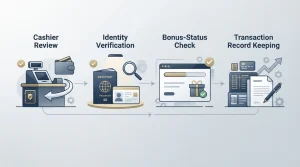
In Great Britain, remote gambling operators serving consumers must hold a Gambling Commission licence. For high value customer incentives, the regulator’s guidance sets minimum expectations: an operator should assess affordability and sustainability, consider signs of harm or vulnerability, and hold current evidence about identity, occupation and source of funds before assigning VIP treatment. Checks must continue after enrolment.
That changes what “best” can mean. A programme should not be judged only by how readily it offers rewards. The operator must be able to show how decisions were made, maintain an audit trail, and ensure commercial pressure does not outweigh welfare. If a business cannot meet the required standards, it should not run an HVC incentive programme. Those are not optional extras to be traded against a larger offer.
Nor should the people responsible for rewards be paid according to an individual customer’s losses or spend. That safeguard matters because a programme’s internal incentives affect how customer contact is handled. A polished service experience is not reassuring if the underlying commercial arrangement pushes staff towards more gambling.
Treat market figures as context, not a ranking
A report published by igamingbusiness.com said that 60% of responding operators had VIP schemes in 2024, compared with 55% in 2021 and 67% in 2020. That describes the responses in those periods; it does not establish that every operator had a programme, or that one was better than another.
VIP Scheme Prevalence
60% of responding operators had VIP schemes in 2024, compared with 55% in 2021 and 67% in 2020.
Revenue Contribution
VIP activity generated approximately 3% of overall gross gambling yield across 12 covered operators.
The same domain reported that VIP activity generated approximately 3% of overall gross gambling yield across 12 operators. That figure is specific to the operators covered. It cannot be used to estimate an individual programme’s generosity, customer service or safety. A share of revenue says nothing by itself about how rewards are structured or how carefully customers are assessed.
There is no reliable universal league table in those figures. A useful comparison therefore keeps three things separate: the clarity of the terms, the safeguards behind enrolment and continued contact, and the practical value of benefits under their actual conditions. A programme that performs well on one measure may not perform well on the others.
That distinction cuts through the “best” claim. The strongest case is not the loudest promotion or the grandest title, but a programme whose promises can be understood, whose benefits can genuinely be used, and whose operation remains accountable to customer welfare. No shortcut.
No-Wagering Casino Bonuses in the UK: Terms Explained
VIP Bonuses: The Offer Is Only Part of the Deal
A “VIP bonus” sounds like a larger version of a standard promotion. In practice, the label says little by itself. The useful detail is what the offer consists of, which games it applies to and what the accompanying terms require. A bonus, free spins or tournament entry may be presented as a tailored reward, but the headline does not explain how it will work in an account.
A specialist casino review describes VIP rewards as potentially including bonuses, free spins and tournament entry, with the selection linked to the games a member plays most. That game-specific element matters: an offer aimed at slots is not interchangeable with one connected to another type of game. The promotion may suit an established pattern of play, but it can also steer activity towards particular games. “Personalised” is not the same as automatically useful.
The same kind of review describes a wider menu of possible VIP benefits, including exclusive promotions, gifts, weekly rewards and invitations to events, alongside faster payouts, higher deposit limits and a personal VIP manager. These are reported examples, not a promise that every programme includes them. The wording can make a package sound comprehensive while leaving the practical value dependent on the individual offer and its conditions.
Online Casino with Daily Promotions in the UK
Read the offer, not the label
Terms such as “birthday bonus”, “sign-up bonus” and “reload bonus” identify different promotional occasions or formats; they do not establish the size or value of an offer. A birthday promotion may be framed around a personal date, a sign-up offer around joining, and a reload offer around a further deposit. The label alone does not show whether an offer is available to a particular member, what must be done to claim it, or how the bonus can be used.
The same caution applies to “VIP slots bonuses”. Free spins can appear straightforward because the reward is counted in spins, but the game selection still matters. A specialist review’s account of game-dependent rewards points to a basic distinction: an offer can be generous in its headline presentation and narrow in where it applies. The relevant comparison is between the actual terms and the games the promotion covers, not between promotional names.
Do
- Read the actual terms of the bonus
- Check which games the promotion covers
- Evaluate the practical value of the offer
Don’t
- Rely on the “VIP” label alone
- Assume a “personalised” offer is automatically useful
- Confuse promotional names with actual value
A bonus is also only one part of a package. Faster payouts, a higher deposit limit or a named account contact may be advertised alongside promotional rewards, but these benefits are separate from bonus funds and spins. Grouping them together under “VIP treatment” can blur what is being offered. I have found that the wording is often most persuasive where it is least precise. Read the components separately.
For a casino loyalty programme, the offer’s conditions carry more weight than its VIP label. A tailored promotion can reflect a member’s game preferences, as described in specialist reviews, but that does not make every promotion suitable or valuable. The terms determine the scope; the headline is only the wrapper.
Points, Cashback or Automatic Club: How Programmes Are Structured
A casino loyalty programme can be built around an automatic club, points earned through play or cashback calculated against losses. The distinction is not just cosmetic: each model measures activity differently, so the route to a benefit can be less obvious than the word “rewards” suggests.
An automatic club is the simplest structure to understand. Many online casinos enrol customers when they register or make a first deposit, although some require an opt-in. Once enrolled, the programme is in place without a separate points balance being the central mechanism. That does not mean every customer receives the same treatment or that participation guarantees a particular benefit. The terms determine what activity counts and what, if anything, follows from membership. The quiet part is the rulebook.
Online Casino Reload Bonus UK: How It Works
A points system makes the link between play and progress more visible. Points may be awarded according to how much a customer wagers or how frequently they play. Those are different measures: a programme can value the volume of wagering, the regularity of activity, or a combination set out in its terms. The points balance is therefore not a universal measure of loyalty. It is an operator-defined tally, and its meaning depends on the rules for earning and using it.
A specialist review describes points as potentially exchangeable for cash, bonuses, free spins or other benefits, depending on the casino. That range should not be read as a standard menu. The exchange rate, eligible activity and available options are programme-specific, so a points total alone says little about its practical value. I have found that the attractive part is often the visible balance; the less visible part is the conversion rule.
Cashback uses another calculation. Rather than accumulating points through play, a programme may apply a fixed rate to losses. “Fixed” describes the rate, not necessarily the final amount or when it is credited: those details depend on the terms. The relevant question is how the programme defines the losses included in its calculation. Without that definition, a headline rate cannot be compared cleanly with a points scheme or automatic club.
These structures can also overlap. An automatic club may be the entry mechanism while points track activity, or a programme may combine a points balance with a cashback offer. The label alone does not establish how benefits accrue. For a casino with a VIP programme, the useful comparison is the underlying mechanic: whether membership is automatic, whether activity earns points, or whether losses feed a cashback calculation.
I separate the earning rule from the advertised benefit. One tells how the programme records activity; the other says what that record may unlock. Mixing them makes two different schemes look alike. That is where the small print does its work.
Automatic Club
Customers are enrolled upon registration or first deposit; membership is governed by a rulebook.
Points System
Rewards are based on wagering volume or activity frequency, with points exchangeable for benefits.
Cashback
A fixed rate is applied to losses, based on the operator’s specific definition of included losses.
VIP Tiers, Points and the Reality of “Status”
A casino’s “VIP status” is a label attached to a customer relationship, not a standard rank shared across the UK market. Specialist reviews describe schemes with levels such as silver, gold and platinum, but those names do not tell much on their own. Each operator sets its own structure, so a gold label at one casino cannot be assumed to match the benefits or entry criteria of gold somewhere else.
The ladder is part of the presentation. It gives a programme a visible sense of progress, while the real question is how the operator decides who advances and what status changes in practice. A tier may reflect points accumulated through play, or a broader assessment of a customer’s activity. The label can sound like recognition; behind it sits a commercial classification.
Points can make progression appear measurable. A balance rises, a threshold is reached, and a member may move to another level. But points are not a common currency between casinos, and their value depends on that operator’s terms. The tier name alone does not establish how much play is required, whether points expire, or what a move up actually brings. Those details have to be understood as part of the individual programme, not inferred from the colour or title of a badge.
Specialist reviews also describe regular high-value deposits in the four- or five-figure range as one route by which a player may attract attention. An account manager may then make contact with an offer. That is a reported pattern, not a universal entry rule: being contacted does not itself prove that a customer has a formal tier, and a tier does not guarantee that an account manager will be assigned.
UK Online Casino Bonus Crab: How Reload Offers Work
I have seen “personal service” used as if it were the defining feature of status. In practice, the contact can be a way to maintain a relationship with a valuable account. The distinction matters: a named contact is not the same as a higher tier, and neither label says anything by itself about whether the arrangement suits the customer.
Other terms can also be mistaken for proof of rank. Higher deposit limits, quicker support or a dedicated contact may appear in descriptions of VIP services, but these should not be treated as automatic consequences of reaching a particular level. A no-deposit bonus is not evidence of VIP status either. The offer and the status are separate questions, and the operator’s written terms determine what is actually attached to each.
“Platinum” sounds definitive. It isn’t. The useful measure is the stated progression rule and the practical difference between levels, not the prestige implied by a tier name. A status badge may mark how an operator values activity; it does not, by itself, establish that the relationship is valuable to the customer.
The UK VIP Market After the 2020 Guidance
The change in UK high-value customer programmes is best understood as a response to regulatory pressure, not a sudden loss of interest in loyalty rewards. The Gambling Commission challenged the industry after finding that incentives could obstruct the recognition of gambling harm and, in some cases, encourage harmful play. That challenge put the way operators identified and treated high-value customers under scrutiny.
In October 2020, an industry code of conduct and new Gambling Commission guidance shifted the focus of HVC programmes toward stricter welfare and affordability standards.
An industry code of conduct came into force in October 2020, and the Gambling Commission’s new guidance took effect on 31 October that year. The distinction matters: the code was an industry response, while the regulator’s guidance set expectations for licensees. Together, they marked a shift in what a casino loyalty programme could safely do. High spend was no longer enough, on its own, to justify personalised attention or incentives.
The clearest headline measure is a reported 70% reduction in customers signed up to programmes carrying the “VIP” label since the Commission’s challenge. That is a substantial contraction. But a fall in membership does not, by itself, show whether individual operators changed their criteria, closed programmes or simply stopped describing customers in the same way. The label is not a consistent market-wide measure.
A separate snapshot reported by igamingbusiness.com gives a sense of the scale before the policy change: 22 participating operators counted 42,349 high-value customers. It is a figure tied to those operators and that period, not a census of every UK casino. It should be read as evidence of how sizeable such programmes could be, rather than as a permanent benchmark for the market.
From inside the commercial logic, the adjustment was more than a terminology exercise. A customer could not simply be treated as valuable because their activity generated revenue; the programme itself had to withstand closer examination. The regulator’s intervention made the process around incentives harder to separate from the decision to offer them. That changed the risk attached to broad, loosely controlled recruitment.
Best Casino Sign-Up Bonus UK: Terms Explained
I would not read the reduced membership as proof that high-value customer programmes disappeared. The more defensible conclusion is that the old scale and the old assumptions were challenged. Some operators may still use tailored engagement, but the presence of a personal offer or a “VIP” badge tells little about how many customers qualify across the market. The label survived; its commercial use became more constrained.
That is the market shift: fewer customers carrying the designation, and greater scrutiny of what the designation means in practice. The figures establish contraction, not uniformity. A programme’s size can vary, and a reported count from participating operators cannot stand in for every online casino with a VIP programme in Britain. The direction is clear. The full picture is not.
High Rollers, Eligibility and the Checks Behind VIP Treatment
In casino marketing, “high roller” sounds like a spending category with a clear entry point. In practice, spend is only one part of the decision. A high-value customer (HVC) programme links personalised incentives to high spend or frequent play, but the operator should not treat a large deposit as proof that someone is suitable for special treatment.
A specialist review describes deposits in the £10,000 range as a profile associated with joining an online casino VIP programme. That is a reported example, not a universal entry requirement. Operators set their own criteria, and the figure alone says nothing about whether the money is affordable, sustainable or connected to harmful gambling. A large deposit can prompt scrutiny, not an automatic invitation.
The industry protocol restricts customers under 25 from being recruited to HVC programmes. Age is only an initial safeguard. Before assigning HVC status or offering incentives, an operator must assess whether spending is affordable within the customer’s leisure budget and whether there are signs of gambling-related harm or heightened vulnerability. Commercial potential cannot take priority over welfare.
Eligibility Checks
Operators must verify identity, occupation, and source of funds, and assess affordability before assigning HVC status.
That assessment also requires current evidence about identity, occupation and source of funds. The purpose is not simply to confirm that a payment went through. It is to understand the customer’s circumstances well enough to judge whether continued high-value play is sustainable. Information must be checked and kept up to date; an earlier assessment does not settle the question indefinitely.
I have seen how easily a deposit-led process can turn into a sales funnel: a sizeable transaction is noticed, an account is labelled valuable, and contact follows. That order gets the judgement backwards. The checks should come before the offer, and they must continue after enrolment. Operators are expected to revisit customer information and look for signs of harm throughout the relationship.
So “how to become” an HVC is not simply a matter of depositing more or playing more often. Those behaviours may attract attention, but they do not establish eligibility. A responsible decision depends on affordability, risk, verified information and ongoing review. If those conditions cannot be met, the operator should not offer HVC incentives or special treatment. Spend is not permission.
Crypto and “Top” VIP Claims: What the Evidence Does Not Establish
“Top” is a promotional label, not a defined level of high-value customer treatment. A casino may use it to describe an app, a club or a set of offers, but the word alone says nothing about how membership works or what a customer receives. A list of leading VIP casinos would imply that the options had been compared on a common basis. Without that basis, a ranked list would create more certainty than it deserves.
UK Online Casino Welcome Bonuses: How They Work
The same distinction matters when crypto is part of the branding. A crypto payment option does not, by itself, establish that an operator runs a high-value customer programme, or reveal the conditions attached to one. Nor does a general description of casino loyalty rewards prove that the same rewards are available at a crypto-branded casino. The label is not the terms.
The UK regulatory position still matters. Remote gambling operators serving consumers in Great Britain need a Gambling Commission licence, wherever their key gambling equipment is located. A crypto reference in a name or promotion does not replace that requirement. The description of a product and its regulatory position are separate questions.
A specialist review of casino loyalty offers describes possible benefits ranging from bonus funds and free spins to personalised support, quicker withdrawals, exclusive promotions, gifts and event invitations. That is a broad catalogue, not a promise that any particular casino provides every item. It also does not establish crypto-specific conditions: the wording of an offer must say what applies to that offer.
This is where “exclusive” can blur two different things. One is the general idea of loyalty rewards; the other is a particular operator’s rules for earning, using or withdrawing them. A crypto-themed promotion may sound distinctive while leaving those practical terms to the small print. The label does not settle them.
I would treat claims about a “top” crypto VIP experience as a description to test, not a conclusion. What counts is the operator’s stated offer and the conditions attached to it, alongside its UK regulatory status. A broad rewards menu cannot verify an individual product. Branding is not proof.
Attention Promotional labels like "top" or "exclusive" are marketing descriptions and do not guarantee specific rewards or a particular regulatory status.
High-Roller Offers and the Cost of Running a VIP Scheme
High-value offers are often presented as a mark of commercial importance: tailored promotions, extra attention and a sense of access unavailable to ordinary account holders. From inside the business, I read that language more plainly. An offer is a cost attached to a customer relationship, intended to influence activity; it is not proof that the relationship is valuable after costs, or that higher spending should automatically bring more incentives.
The scale of that commercial relationship has changed. Reporting by igamingbusiness.com put VIP gross gambling yield (GGY) at £10.88 million across eight operators in 2023–24, compared with £22.19 million in 2022–23. The report described the later figure as a 51% fall. That is a comparison between the operators and periods reported, not a universal measure of the UK market.
GGY is revenue from gambling before the operator’s wider running costs. It is therefore not the same as profit, and it does not show what an individual high-value customer contributes after the cost of offers, account support and other programme activity. Nor does a falling total, on its own, explain why it fell. It does show why “exclusive” needs to be read as a marketing description, not as a reliable indicator of financial value or generous treatment.
A casino loyalty programme can carry costs beyond the face value of a bonus. Personalised handling and the administration of offers also require resources. But the commercial calculation has a boundary: incentives cannot be justified solely by the amount a customer wagers or loses. High-value customer treatment must remain consistent with the licensing objectives, and commercial pressure cannot outweigh customer welfare. There is a hard limit.
This matters when an offer is framed as a reward for being a high roller. The operator may see the offer as a retention expense; the customer may see it as a reason to keep playing. Those are not equivalent perspectives. The measure of a programme is not simply whether it generates activity, but whether its operation remains responsible.
Casino Bonuses: Free Spins and Welcome Offers
CasinoBeats reported that some measures concerning VIP customers were due to be implemented as soon as April 14. That wording describes a planned timetable, not confirmation of what happened afterwards. The broader point is that high-value incentives sit within a changing commercial and regulatory environment. “VIP” can sound like a privilege. In practice, it is also a business decision with costs, constraints and consequences.
VIP Rewards—and the Safeguards They Must Not Bypass
A casino loyalty programme can attach practical service perks to promotional rewards. Specialist reviews describe examples such as bonus funds, free spins, dedicated customer support, faster withdrawals, exclusive promotions, gifts and event invitations. Some offers are presented on a weekly or monthly schedule, but the label alone says little about their value, conditions or whether they will continue.
From the operator’s side, these benefits are not separate from customer management. A tailored reward can encourage further play, which is why the Gambling Commission’s casework found that incentives sometimes made it harder to identify people experiencing harm. The Commission has also seen evidence that some VIP schemes encouraged harmful play. Attractive packaging does not remove that risk.
The safeguard is not simply to add a warning beside an offer. Before giving a high value customer an incentive or special treatment, the operator must assess whether spending is affordable and sustainable as leisure spending, and whether there are signs of harm or vulnerability. Identity, occupation and source of funds must be supported by current evidence. Checks must continue; a past approval is not a permanent clearance.
I have seen the commercial logic of a reward: it is designed to retain attention. That logic cannot determine whether another offer is appropriate. Customer welfare comes first. If current information points to risk, the response should be to review or withhold incentives, not to make them more appealing.
There must also be clear accountability for the programme and an audit trail showing what information was considered and why decisions were made. Staff responsible for rewards must not be paid according to an individual customer’s losses or spending. Those controls matter as much as the headline perk. “Exclusive” is a sales description, not an exemption from the rules.
Do UK casinos offer loyalty schemes beyond welcome bonuses?
Yes. Loyalty schemes can include points earned through play, automatic rewards clubs or cashback on losses.
How do I join an online casino loyalty program?
Most casinos enrol players automatically at registration or after their first deposit, while some require you to opt in.
Can loyalty points have real value?
Yes. Depending on the casino, points may be exchanged for cash, bonuses, free spins or other rewards.
What is a VIP Program?
A VIP or high-value customer programme offers selected players personalised incentives linked to high spending or frequent play.
What are casino loyalty programs?
They are schemes that reward customers, often with points or tier progress based on how much or how often they play.
What types of rewards can I earn from a loyalty program?
Rewards can include bonus funds, free spins, cashback, personalised support, faster withdrawals, exclusive promotions, gifts or event invitations.
Material created by the team Golden Mister