A low cashier minimum is only one threshold; payment eligibility, bonus terms and withdrawal conditions also affect a small balance.
Bitcoin Deposits and the UK Payment Rules
A Bitcoin casino may advertise a small or even zero cashier minimum, but that does not settle whether its payment route is eligible for a UK gambling account. The important distinction is between the currency shown in an advert and the source of the money accepted by a licensed operator. For British gambling, a direct transfer from a Bitcoin wallet does not fit the permitted deposit routes: the funds must come from a debit card, an e-wallet funded by debit, or a bank account.
That rule follows from the UK ban on credit-card gambling, introduced in 2020. It is not a narrow rule about a particular card brand. The wider point is that the operator must not accept gambling money funded through a prohibited credit route. A cryptocurrency wallet is not made equivalent to a bank account merely because it can hold value or send payments. So a search for a no-minimum-deposit Bitcoin casino UK can lead to a mismatch: the site may accept Bitcoin somewhere in its business, while a UK-licensed gambling account cannot use a direct Bitcoin deposit as its cashier method.
I have seen payment wording do a lot of work in a small space. “Crypto accepted” can describe an operator’s international offering, a separate product, or a payment route unavailable to customers in a particular jurisdiction. It does not by itself establish that the method is available to a UK customer, or that it is compatible with the rules for a UK gambling deposit. The cashier needs to be considered in the context of the account and market, not as a generic list of logos.
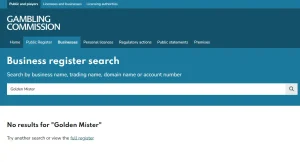
The licensing position matters as much as the payment label. A remote operator offering real-money gambling to customers in Great Britain needs the relevant UK Gambling Commission licence, wherever the business itself is based. Online casino gambling in the UK is lawful through licensed and regulated sites. An offshore casino may be reachable online, but that does not put it inside the UKGC system or make its Bitcoin cashier an approved route for British gambling. I would not treat accessibility as evidence of regulatory status.
This is where “no minimum deposit” can become a distraction. The phrase describes an apparent cashier threshold, not permission to use any funding method. If a site says there is no minimum for Bitcoin, that statement does not override UK payment rules. Nor does a low threshold establish that the operator may lawfully offer real-money gambling to people in Britain. The operator’s licence and the payment route are separate checks, and both have to make sense together.
There is also a difference between a payment service and the source of funds behind it. An e-wallet is an allowed category only when it is funded by debit rather than credit. The wallet name alone is not enough to decide whether a deposit complies. A wallet that permits credit-card funds to be used for gambling cannot be accepted for that purpose by a UK-licensed casino. The practical test is not simply whether the cashier displays a familiar payment logo; it is whether the money reaches the gambling account through a permitted route.
For Bitcoin, that means a direct wallet-to-casino transfer is not an eligible UK deposit method under the stated rules. The word “direct” matters. A claim that a customer owns cryptocurrency, or that a site accepts it in another market, does not answer how the gambling account is funded. The relevant question is the actual payment path. I have found that broad payment claims often omit precisely that distinction.
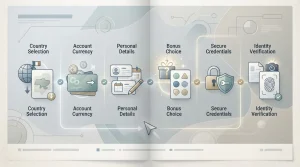
A UK-facing casino also has obligations before money is deposited. Operators must verify a customer’s age before permitting a deposit, and new customers must be prompted to set a financial limit before their first deposit. Those steps are part of the account process, not optional extras that disappear because the deposit is small or because a digital asset is involved. A low cashier figure does not remove them.
When checking whether an online casino with no deposit minimum is genuinely suitable for UK play, the sensible order is therefore regulatory status first, then the payment route shown for the UK account. A current UKGC operating licence is required for a legal online casino serving British players. The deposit must come from a compliant source: debit card, debit-funded e-wallet, or bank account. A Bitcoin badge cannot substitute for either condition.
UK Payment Rules
Direct transfers from a Bitcoin wallet are not permitted deposit routes for UK-licensed gambling accounts.
This does not mean every mention of Bitcoin makes a site unlawful, or that the word alone tells the full story. It means Bitcoin should not be mistaken for an approved direct deposit route in a UK-licensed gambling cashier. Advertising language may compress several markets into one sentence; the account rules do not. Check the route, not the slogan.
What a £1 Real-Money Deposit Actually Does
A £1 deposit is a small amount of cash added to a gambling account. If the operator accepts that amount and the deposit is credited, it becomes a real-money balance available for play under the site’s account rules. The important distinction is that depositing money is not the same as receiving a promotion, a free-play entitlement or access to a particular game.
I have seen “£1 casino” used as if it described the whole experience. It describes only one part: the amount the cashier may accept as an opening deposit. It does not, by itself, say what the account can claim, which games are available, or whether a promotional offer applies. Those are separate conditions, and the cashier’s acceptance of the money settles none of them.
The phrase “real money” matters because the deposited pound is not a bonus. It is the player’s cash balance, subject to the operator’s rules and the ordinary controls on the account. A screen may show a balance after payment, but that does not mean a welcome offer has been added alongside it. Nor does a low minimum deposit promise a particular game, a particular outcome or a particular length of play.
Online Casinos That Accept SMS Deposits in the UK
For a deposit to function as intended, the account must be with an operator legally serving the British market. Remote gambling operators offering services to consumers in Great Britain must hold the relevant UK Gambling Commission licence. Online gambling is legal in the UK for adults aged 18 and over when the operator holds that licence. Licensed operators must verify a customer’s age before allowing deposits, and new customers must be prompted to set a financial limit before their first deposit. These are part of the account process, not optional extras attached to a promotion.
A £1 cashier minimum can still be genuine without making the site a “no minimum deposit” casino in the literal sense. A real-money account needs a deposit to contain cash; the phrase is commonly used loosely for sites with very small opening amounts. In practice, the deposit is the funding step. The player then uses the account according to the casino’s game and account terms. The amount is not a token that unlocks every feature.
The difference becomes clearer when an offer is displayed beside the cashier. A promotion is an arrangement with its own qualifying conditions. A specialist casino review reported welcome offers commonly requiring a qualifying deposit of £5 to £10. That makes the distinction practical: a £1 payment may reach the account as cash while failing to meet the offer’s stated entry amount. The site may accept the deposit and still add no promotional funds or spins. The cashier has done its job; the offer has not been triggered.
That is why I read “deposit accepted” and “offer claimed” as two separate events. Advertising often places them close together because they are both part of registration, but proximity is not eligibility. The terms attached to a promotion determine what counts as a qualifying deposit. A number shown in the cashier cannot silently replace those terms, and a welcome banner does not change the value of cash already deposited.
A £1 deposit is a real-money balance and is not the same as receiving a promotion, a free-play entitlement, or access to a particular game.
A specialist review recorded six UK Gambling Commission-licensed casinos as accepting a genuine £1 minimum deposit. That is a snapshot of a limited set of operators, not a definition of the whole market or a guarantee that every payment route at those casinos will accept the same amount. The useful point is narrower: a £1 real-money deposit can exist as an actual cashier threshold. It remains only a threshold.
From an account perspective, the deposit does not create a special game entitlement. Any game access depends on what the licensed casino offers and the applicable account conditions. The deposit itself does not confer a right to a particular title, a bonus round or free spins. Nor should the label “real money” be read as meaning that every balance shown on screen has the same status: deposited cash and promotional value may be displayed separately and governed by different terms.
The clean way to understand a minimum-deposit casino is to separate three ideas: money entering the account, promotional eligibility and what the account permits the player to do. A £1 payment answers the first question only. It can put cash into a playable account where the cashier accepts it, but it does not turn the deposit into a bonus or an all-access pass.
Small amount. Separate rules.
£1 Casino Sites: The Cashier Minimum Is Only One Threshold
A “£1 minimum” describes one point in the cashier process: the smallest deposit the operator says it will accept under the conditions shown. It does not mean every payment route accepts that amount, that the deposit qualifies for an offer, or that the resulting balance can be withdrawn at the same threshold. I have seen those conditions treated as a single promise in advertising. They are separate rules.
£2 Minimum Deposit Casinos in the UK: How They Work
That distinction matters when comparing online casino sites with a very low entry amount. The cashier may display a minimum that applies to the account in general, while the selected payment method has its own floor. A deposit attempt can therefore be rejected even when the site’s headline says £1. The reverse can also happen: a payment route accepts the amount, but the operator does not treat it as eligible for a welcome promotion.
A specialist review described UK casinos where £1 deposits were not counted towards welcome offers, where some payment methods could not be used at that level, or where the withdrawal minimum was higher than the deposit minimum. These are different restrictions, not contradictory ones. The deposit rule governs money going in; promotion terms decide whether an offer is triggered; withdrawal rules determine when money can come back out. A low cashier minimum settles only the first question.
I would read the cashier wording as a set of conditions, not as a headline figure. The important detail is whether the minimum is stated for all deposits or only for a particular route, and whether the account terms use a separate qualifying deposit for promotions. Then there is the withdrawal threshold: if it sits above the deposited amount, the balance may remain in the account until it meets the cash-out condition. That does not make the original deposit invalid. It does change what “start with £1” means in practice.
Do
- Check the general cashier minimum
- Verify payment-specific restrictions
- Review the withdrawal floor
Don’t
- Rely on a single headline figure
- Confuse deposit limits with promotion terms
- Assume the lowest deposit is cashable
There is also a difference between a technical limit and a usable one. A site might permit an amount at the point of deposit but attach no promotional benefit to it, or make a particular route unavailable at that amount. Promotional eligibility is not a cashier setting, even when both conditions appear close together in the account journey. The wording can be easy to miss because the headline is simpler than the terms behind it. A small threshold is not the whole deal.
A specialist review’s comparison identified NetBet as the only UKGC-listed casino in that particular list with a £1 cashier minimum. That is a finding about the reviewed list, not a permanent claim that no other licensed operator can offer the same threshold. Cashier rules can change, and a list is only useful when its scope and date are clear. The figure should be checked against the operator’s current payment page and terms before relying on it.
Casino instant withdrawals: what the label means
The label “no minimum deposit” needs the same scrutiny. A real-money casino account still requires a deposit before it can be funded for play; the phrase is often used loosely to describe a low minimum rather than a literal zero-cost route. At a UK-licensed casino, the operator must verify age before allowing a deposit, and new customers must be prompted to set a financial limit before their first deposit. Those steps sit alongside the cashier conditions, not in place of them.
When the cashier page and offer terms appear to disagree, they may be answering different questions. One states what can be deposited; the other states what counts for a promotion. A separate withdrawal condition may govern cashing out. Reading only the largest, boldest amount leaves those distinctions hidden. Read the fine print.
That is why a minimum-deposit comparison should record more than the smallest advertised figure. It should separate the general cashier minimum from any payment-specific restriction, promotion qualifying amount and withdrawal floor. I would also treat claims about a “best” or “top” no-minimum casino site cautiously if they collapse those thresholds into one score. For a player seeking a small starting balance, the practical question is not simply whether £1 can enter the account. It is what the operator permits that amount to do, and under which terms.
The UK Minimum-Deposit Picture in 2026
A no-minimum-deposit offer can make it easier to explore a casino without committing to a larger initial payment. Use this list as a starting point, and check each operator’s current terms before deciding.
1. Zombillion
Payout speed: 1-3 business days
Zombillion lists payouts as taking 1–3 business days. That gives readers a concrete detail to consider when looking into its no-minimum-deposit options.
2. SlotoSport
Payout speed: 1-3 business days
SlotoSport lists a payout speed of 1–3 business days. This is the available practical detail for readers considering it.
3. Dieselwin
Payout speed: 1-3 business days
Dieselwin’s stated payout speed is 1–3 business days. Readers can use this information as one point of reference when checking its current terms.
4. WinBeast
Payout speed: 1-3 business days
WinBeast lists payouts at 1–3 business days. That timing is the available detail to keep in mind when assessing its options.
5. Britsino
Payout speed: 1-3 business days
Britsino’s listed payout speed is 1–3 business days. This provides a specific timing detail for readers to consider.
6. Revery Play
Payout speed: 1-3 business days
Revery Play lists a payout speed of 1–3 business days. Readers can factor this stated timing into their checks of its current terms.
7. NightLuck
Payout speed: 1-3 business days
NightLuck lists payouts as taking 1–3 business days. This is the available factual detail relevant to readers comparing their options.
8. NightWin
Payout speed: 1-3 business days
NightWin’s stated payout speed is 1–3 business days. Readers may want to check its current terms alongside this timing.
9. BeOnBet
Payout speed: 1-3 business days
BeOnBet lists payouts at 1–3 business days. This gives readers a concrete detail to consider when reviewing its offer.
10. Chanze
Payout speed: 1-3 business days
Chanze lists a payout speed of 1–3 business days. This stated timing is the available detail for readers evaluating its options.
“No minimum deposit” is a loose phrase in casino advertising. A real-money account still needs a deposit before it can be funded; what the phrase tends to point towards is a particularly low cashier minimum. In the UK market, £1 is the lowest tier identified, but it is not a representative starting point for every casino.
The gap between the lowest advertised figure and the wider market matters. A specialist review of UK payment options puts direct banking’s typical minimum deposit at £10, while recording operators with thresholds of £5 or £20. That gives a more useful picture than treating every casino as a £1-deposit site: minimums vary, and the lowest figure belongs to a limited part of the market.
Some UK casinos do accept a deposit of £1. That is a genuine low entry point, not evidence that the same threshold applies across the market. I have seen small figures do a lot of work in advertising: they make a site sound broadly accessible, while the actual minimum depends on the operator and the route used. The headline is only a starting point.
£1 Tier
An exception at the edge of the market that requires verification.
£5 – £10 Tiers
Common operator thresholds identified in specialist reviews.
£20 Tier
Present at some direct-banking casinos.
For a broad comparison, the useful tiers are therefore £1, £5, £10 and £20. The £1 tier sits at the edge; £5 and £10 appear in the specialist review’s account of operator thresholds, while £20 is also present at some direct-banking casinos. These figures describe a spread, not a universal ladder that every casino follows.
That distinction is why “no minimum deposit” should not be read literally. The phrase may suggest that a casino can be used without putting money in, but it does not establish that. Nor does a low minimum mean the same threshold is available at every operator. The meaningful comparison is the minimum the relevant casino actually accepts, not the wording used to draw attention to it.
I would treat £1 as an exception worth verifying, rather than as the standard UK entry point. A higher cashier minimum does not make a casino unusual, and a £1 figure does not by itself describe the rest of the offer. It says something narrow: that a small deposit may be accepted under the stated conditions.
There is also a basic eligibility boundary. UK players must be at least 18 to gamble online. A low minimum does not alter that requirement; it only changes the amount at which an eligible customer may be able to start funding an account.
So the UK picture is not a market with one standard minimum, nor one where every casino accepts a pound. It is a range, with £1 at the low end and higher thresholds also represented. Small print matters.
£3 Minimum Deposit Casinos in the UK: What It Means
Casino Games, Bonus Spins and the Withdrawal Gap
A game appearing in the lobby does not mean it is playable with every kind of balance. Cash can be available for ordinary play while promotional spins remain restricted to a named slot. The reverse can also happen: a spin offer may be attached to a particular game, but its winnings are held as bonus funds rather than added to the withdrawable cash balance.
I have seen “free” do a lot of work in promotional wording. It describes the cost of the spin, not necessarily the status of anything it wins. The terms determine which game can be played, when the spins expire and what happens to winnings. A specialist review has recorded spin expiry periods from 24 hours to 14 days; that is a reported range, not a promise that every offer follows it. An expired spin is simply no longer available.
The important distinction is between a game being accessible and its proceeds being cashable. A winning spin may create a balance that must meet wagering conditions before withdrawal. A specialist review has reported requirements of 30x to 65x the amount won from free spins. Those figures should not be read as current terms for a UK-licensed offer: since 19 January 2026, UK rules cap wagering requirements on gambling incentives at 10x. Any offer displayed to a British customer must fit that limit. Check the terms attached to the actual promotion, rather than relying on a generic review or an old description.
The wording can also obscure what is being multiplied. A requirement tied to spin winnings is calculated against the winnings amount, not the value of the original spin, and it is not the same thing as cash already cleared for withdrawal. Until the stated play-through condition is met, the displayed balance may not be fully available to cash out. Game restrictions can affect which play counts towards that condition.
Wagering Requirements
Since 19 January 2026, UK rules cap wagering requirements on gambling incentives at 10x.
That is the withdrawal gap: a balance can be visible without being withdrawable. A low or absent entry threshold for a game says nothing by itself about the status of a promotional win. Nor does seeing a cash balance beside bonus funds mean the two have identical rules. The account ledger separates them for a reason.
I treat the promotion’s terms as part of the game, not as small print to inspect after a win. The relevant points are the eligible title, the spin expiry, the treatment of winnings and the wagering condition. UK operators must hold the appropriate Gambling Commission licence, and the rules applying to an offer should be consistent with that UK framework. “Instant” describes neither the clearance of bonus winnings nor their availability for withdrawal. Different stages. Different rules.
What Low-Stake Slots Mean in Practice
A low stake changes the cost of each spin, not the nature of the game. Many online slots allow bets from £0.10 to £0.20 per spin, so a player can choose a smaller debit each time the reels turn. That can make the balance move more slowly than it would at a higher stake, provided the number of spins and any returns are the same.
That last condition matters. A small stake does not guarantee a long session: the balance still falls when spins produce no return, and a run of losses can use it up. Wins may replenish the balance, but they are uncertain. I have seen “more play for less” used as if it were a result. It is only a description of the price of a spin.
£4 Minimum Deposit Casinos in the UK: What to Check
The stake is also separate from the cashier minimum. A casino may accept a small deposit, but the amount available for play depends on the balance after the deposit and on the stake selected. There is no fixed conversion between a low deposit and a particular number of spins. The game’s minimum bet, the chosen stake and the outcomes all affect how quickly the balance changes.
Slot controls can make the difference between a deliberate stake and an accidental one. The displayed bet should be checked before play, especially after changing a game or adjusting its settings. A low default is not a promise that every slot uses the same minimum. Nor does a low stake remove the need to decide in advance how much can be spent: UK-licensed operators must prompt new customers to set a financial limit before the first deposit and provide account-level limit controls.
In Britain, online slot spins must take at least 2.5 seconds, and autoplay is banned. These rules make each spin a separate action rather than an automated sequence. They do not change the stake cost or make a balance last for a predictable period. The practical measure remains the amount put at risk on each turn.
I treat a low stake as a way to cap the cost of an individual spin, not as a way to control the outcome. The distinction is plain. A smaller debit, not a safer result.
PayPal, Cards and Other Routes for Small Deposits
PayPal can be a useful route for a small casino deposit where the operator offers it, but its presence does not guarantee a particular cashier minimum. Payment options are set by each casino, and the amount accepted can depend on the method selected. A search for a PayPal casino with no minimum deposit therefore needs a practical reading: “no minimum” may describe the casino’s lowest available route, not every option in its cashier.
Transaction Costs
Some payment providers charge flat transaction fees between £1 and £3, which can significantly reduce the amount credited to the account on small deposits.
At a given UK operator, the cashier minimum is generally shared across payment methods. There are exceptions: some casinos set a higher threshold for direct banking than for debit cards or e-wallets. That distinction matters when a small payment is the priority. A casino may accept a modest card deposit while requiring a larger amount through its banking route.
Visa and Mastercard debit cards are widely accepted by UK casinos and can support low deposits. The word “low” still leaves the operator’s cashier rule in control; the card network does not set one universal casino minimum. PayPal and other e-wallets work differently from cards at the point of payment, but UK gambling deposits must still be funded through an eligible route. E-wallet funds used for gambling cannot come from a credit card.
Mobile billing is another route that may appear in searches for a casino with no minimum deposit. It is not interchangeable with a card or wallet: the operator must offer it, and any minimum attached to that route is determined by the cashier. A payment method being available in the market does not mean every licensed casino accepts it.
Small deposits also make transaction costs more visible. A specialist payment-method review reported that some providers charge flat transaction fees between £1 and £3. That is a reported range, not a charge that applies to every provider or casino. On a small payment, a fixed fee can take a noticeable share of the amount, so the deposit credited to the account may not feel as small as the figure entered.
Casinos That Accept Instadebit in the UK: What to Check
I have seen payment pages reduce a complicated choice to a row of familiar logos. The logo says the route is available; it does not settle the cashier minimum, any provider charge or the funding source rules. The payment screen is decisive. Before depositing, the operator must also prompt a new customer to set a financial limit, and account-level limit controls must remain accessible. Short version: method first, minimum second.
A £1 Deposit Does Not Automatically Unlock a Bonus
A cashier accepting a £1 payment and a promotion accepting that payment are separate decisions. I have seen the distinction get lost in “£1 bonus” wording: the deposit can reach the real-money balance while the offer has its own qualifying threshold. Some UK casinos exclude the lowest deposit bracket from welcome promotions, as noted in a specialist review. The offer’s terms, not the headline, determine whether the deposit qualifies.
The same applies to free spins. A specialist review described offers linked to a £1 deposit as ranging from 10 to 100 spins. That is a reported spread, not a promise that every qualifying deposit earns spins. The promotion may specify which deposit amount triggers it, whether the player must opt in, and which game the spins apply to. Each condition changes what the offer actually delivers.
“Free” is the advertising word. The useful detail is the rule attached to the reward. Since 19 January 2026, UK Gambling Commission rules cap wagering on bonus funds at 10 times the bonus amount. An offer cannot sidestep that cap by presenting the reward as spins rather than bonus cash; the terms still need to make clear how any resulting bonus funds are treated.
Deposit vs Promotion
The cashier establishes what can be paid in, but the promotion rules determine what qualifies for a bonus.
I used to read the deposit amount first and assume the offer followed it. That was the wrong order. The cashier establishes what can be paid in; the promotion rules establish what qualifies. A low entry point can therefore be genuine without being a route to the welcome deal.
A “no deposit bonus” is different again: its label describes an offer that does not require a qualifying deposit, not a guarantee that every account receives one. Eligibility and activation conditions still matter. Read the offer terms as a separate contract from the cashier display. Small print, real consequences.
When Can a Small Casino Balance Be Withdrawn?
A small balance is not automatically a cashable balance. The cashier minimum controls how much can be deposited; the withdrawal threshold controls the amount an account must reach before a payout request can be made. They are separate rules, and a casino accepting a £1 deposit does not thereby promise to return a £1 balance on demand.
Casinos That Accept MiFinity in the UK: Payment Guide
The figures reported in specialist reviews differ. One review places minimum withdrawal thresholds at many UK casinos in the £10 to £20 range. Another reports minimums from £1 to £5, while noting that debit cards and some e-wallets can handle £1 transactions. These are snapshots, not a single market-wide rule. The operator’s terms and the cashier information for the chosen payment route determine what applies.
That distinction matters when the account contains only a small amount. If the cashout threshold is above the balance, the money may remain in the account until the balance reaches the required level. A low deposit can therefore be accepted while the same sum remains below the withdrawal floor. Small balance, separate gate.
I have seen “no minimum withdrawal” used as a selling point, but the wording needs checking against the actual cashout conditions. It may describe the operator’s stated threshold, not guarantee that every payment method supports a payout of any size. A payment route can also have its own transaction limits, so the cashier’s withdrawal options matter alongside the general account rule.
Withdrawal speed is another question. “Instant” does not mean there is no minimum: it describes processing, while the threshold determines whether a request can be submitted. Without the applicable terms, a small balance cannot be assumed to qualify for immediate payment.
Same-Day Payout Casinos in the UK: How Timing Works
Before treating a deposit as money that can be taken straight back out, the relevant details are the minimum cashout, the payment method’s limits and any account conditions attached to the balance. The deposit figure alone does not answer any of those.
Low Minimums: £5 and £10 Are More Common Than £1
A £5 cashier minimum is still a low entry point, even when it does not qualify for a welcome offer. The distinction matters: the cashier sets the amount needed to fund the account, while the promotion sets its own qualifying deposit. They are separate rules, not competing descriptions of the same threshold.
A specialist review snapshot reported welcome-offer deposit requirements in the £5-to-£10 range. It also noted that some offers require £10 even where the cashier accepts £5. That gap can make a deposit valid for play but ineligible for the advertised promotion. The wording may be prominent on a banner; the qualifying amount tends to sit in the offer terms.
I have seen this treated as a small-print issue when it is really a product boundary. A lower cashier threshold widens access to the account, while a higher qualifying amount keeps the promotion conditional. Neither figure overrides the other.
For someone comparing low minimum-deposit casinos, the useful distinction is therefore not simply which site accepts a small payment. It is whether the intended use is to play with deposited cash or to claim an offer. At a £5 cashier minimum, a £10 qualifying rule can leave the first deposit outside the promotion. At a £10 cashier minimum, the two thresholds may align, but the offer’s own terms still decide eligibility.
A low minimum is a funding feature, not a promise of promotional value. The cashier and the offer have different jobs.
How should players choose a low-deposit casino in the UK?
Choose a UKGC-licensed casino and check the minimum for your intended payment method, as some operators set higher minimums for bank transfers. Also check withdrawal limits and whether a small deposit qualifies for a welcome offer.
Which payment method is best for low-deposit casino players?
Debit cards are a practical option: they are accepted by almost all UK casinos and can support £1 deposits. Some e-wallets also support £1 transactions; check the cashier’s minimum for your chosen method.
What is the minimum deposit at UK casinos accepting direct banking?
The typical minimum is £10, although some operators set it at £5 or £20. Check the cashier, since some casinos set a higher minimum for bank transfers than for cards or e-wallets.
Can players claim a bonus with a small deposit?
A £1 deposit usually adds cash to your account but does not activate a welcome offer, which typically requires a £5 to £10 deposit. Check the offer’s qualifying deposit, as some bonuses require at least £10.
Material created by the team Golden Mister