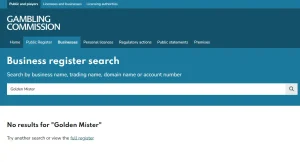


A missing document request at registration does not confirm identity or rule out later checks by a UK-licensed casino.
What “Without ID” Can—and Cannot—Mean in a UK Casino
“Without ID” can describe a sign-up that does not immediately ask for a document upload. It cannot safely be read as a promise that identity will never be checked. Those are different claims, though casino marketing can make them sound like the same thing.
The distinction matters because the first steps in opening an account are not necessarily the same as completing verification. A registration form may ask for basic details and allow an account to be created without an image of a passport or driving licence being attached at that moment. That says something about the sign-up process. It does not establish that the operator has confirmed who the account belongs to, or that it will never ask for documents later.
I have seen how the wording works in practice: “no upload at registration” is a narrower, more defensible statement than “no identity checks”. One describes a step the customer may not have to take immediately. The other suggests a condition that cannot be promised by a UK-licensed casino.
The difference between no upload and no verification
A document upload is one possible part of verification, not a synonym for the whole process. An operator may request evidence to confirm identity or address, and the process at a UK-licensed casino usually involves uploading photo ID and proof of address. A site that does not request those files on the first screen has not, on that basis alone, shown that it operates without identity checks.
This is why the phrase “casino without photo ID UK” needs careful interpretation. It could refer to a site that does not ask for a photograph of an identity document during initial registration. It could also be understood as a casino that never requires photo ID at all. Those meanings are not interchangeable. The first is about timing and method; the second is an assurance about the entire account relationship.
A sign-up without an immediate upload may feel seamless. The account can appear ready before the operator has finished confirming the customer’s details. That appearance is not proof that verification has been waived. A form can be quick; the underlying obligation does not disappear.
What a UK licence means for the claim
A company serving UK players legally needs its own UKGC licence for that activity. The licensing framework also sets standards around fairness, anti-money laundering and responsible gambling. Identity verification belongs to the controls that sit behind a properly operated account, rather than being an optional extra that a headline can remove.
That is the boundary for any “online casino without ID UK” claim. It may be possible to describe a registration route where an ID document is not uploaded at the outset. It is not accurate to turn that limited point into a promise that a UK-licensed operator will never verify the player. In the UK, a licensed operator must verify players.
Age is part of the same practical picture. Operators must confirm a customer’s age before allowing a deposit, and gambling is for adults aged 18 and over. A site cannot treat a lack of paperwork at the opening screen as evidence that these checks no longer matter. The customer-facing sequence may vary; the requirement does not.
There is a difference between an operator confirming details through information already available to it and asking the customer to provide documents. If a document is requested, the customer may need to submit it before the account can move forward. If none is requested at registration, that does not prove no identity process exists. The method and timing can differ from the broad impression created by the word “without”.
Reading the phrase as a limited description
In ordinary language, “without ID” sounds absolute. In a commercial setting, the qualification may be less obvious: no document requested immediately, no manual upload at one particular step, or an account process that begins before a document is needed. Each is narrower than “no verification ever”.
Do
- Interpret “no ID” as a possible variation in the initial sign-up process
- Ask whether “without” applies to the first form or the upload step
Don’t
- Treat a frictionless start as a completed identity check
- Read “no ID” as a promise that verification will never be required
My own mistake was to treat a frictionless start as a completed check. It was not. The account had only moved through one stage. That is the useful distinction when assessing claims about online casinos without ID in the UK: ask what “without” applies to. Is it the initial form, the document upload, or every identity check throughout the account’s use? Only the first two describe a possible variation in process; neither makes the final promise safe.
The wording also should not be confused with a guarantee about withdrawals or continued access. A player may have registered without uploading a document and still face a request for evidence later. The absence of an early request does not determine what the operator may need to establish before handling the account further.
So “no ID at sign-up” can mean less paperwork at the first step. “No identity checks” means something much broader. For a UK-licensed casino, the latter is not a promise to rely on. That distinction is small in the headline and substantial in practice.
Why a No-ID Claim Does Not Remove the Verification Requirement
“No ID needed” sounds like a decision made by the casino: a setting that can be switched off if the registration process is designed to be simple enough. In the UK, that is not how the underlying obligation works. A UKGC-licensed operator must verify its players’ identities. The wording on a promotional page cannot cancel a requirement attached to the operator’s licence.
Jackpot King Slots UK: Amatic Games and Casino Checks
That distinction matters because the phrase can make a legal process sound like a customer preference. A site may describe its sign-up as requiring no document upload at the outset. That does not mean it can promise never to establish who is using the account. The first description concerns how a particular step is presented; the second would mean dispensing with verification altogether. A licensed casino cannot offer that as a guaranteed arrangement.
The rules sit behind the account journey, not just the registration form. Operators must verify a customer’s age before allowing a deposit. Identity checks are also part of the wider process of establishing that an account belongs to the person using it. In practice, verification commonly involves photo ID and proof of address. The exact point at which documents are requested can vary, but the obligation does not disappear because a sign-up page does not ask for them immediately.
I have seen how the wording gets compressed in commercial copy. “No ID needed” is shorter and more attractive than a careful explanation of when documents may be requested. It can describe a frictionless first stage, but it can also leave out the condition that matters most: checks may still follow. That omission changes the impression without changing the operator’s responsibility.
The requirement is not a technical preference or an optional customer-service policy. A licensed operator remains responsible for meeting its obligations even when a player has already registered, deposited or begun playing. A claim that no documents are required at a particular moment cannot be read as permission to ignore verification later. Nor does the fact that a game is a slot alter the operator’s position. Casino games sit within the same licensed service.
Attention: A promotional claim that no documents are required at one moment cannot be read as permission to ignore verification later.
This is why “no ID” language should be treated cautiously when it is framed as an absolute. A casino may be able to describe a process with fewer documents at sign-up, but it cannot turn that description into a promise that identity checks will never occur. The difference is not a matter of fine print alone. It is the difference between delaying or streamlining a request and removing a required control.
The same logic applies to claims about playing without verification. They may be intended to describe a particular stage or experience, but they cannot override the conditions under which a UKGC-licensed operator is allowed to serve customers. If the claim means that the operator will not verify a player at all, it conflicts with the licensing requirement. If it means that no upload is asked for immediately, the words need to be understood more narrowly.
There is a commercial reason for keeping the wording broad: less friction can make a service sound easier to join. But ease at the front end is not evidence that compliance has been waived. The operator still has to carry out the checks required of it. That remains true whether the headline says “no ID”, “no documents” or “instant play”.
A responsible reading therefore separates the promise from the regulatory reality. A sign-up page can tell a player what happens at the start of registration; it cannot guarantee that verification will never be requested across the life of the account. The operator’s duty remains in place. The slogan does not move it.
Nolimit City Slots at UK Online Casinos
That is the boundary. “No upload at sign-up” may describe a process. “No identity checks ever” cannot be a reliable promise from a UK-licensed casino. The wording may be brief. The obligation is not.
Reading No-ID Casino Claims Without Mistaking Them for a Guarantee
“No ID” looks like a complete promise. On a casino site, it may be doing much narrower work: describing one step of registration, a particular payment route, or the documents a business expects to request in ordinary cases. The phrase alone does not say which of these meanings is intended.
I have seen promotional wording turn a limited operational convenience into a broad impression. “No photo ID” may sound like no identity checks at all, while the small print may reserve the right to ask for documents later. “No checks” is broader still, but without a clear explanation of what checks are covered, it remains a headline rather than a dependable description of how an account will be handled.
Read the whole claim, not just its boldest words. Look for nearby qualifiers such as “at registration”, “in most cases” or “for selected customers”. Each narrows the promise. A statement that no document upload is needed to open an account does not necessarily describe what may happen before deposits, during account use, or when funds are requested. The wording should identify the stage and the process. If it does not, the uncertainty remains.
Process Description
Describes a method or specific point in the journey, such as "verification may be completed electronically."
Outcome Promise
Purports to predict every future case, such as claiming a player will "never be asked for ID."
Limited Claim
Refers to a specific stage, such as stating no documents are required specifically at sign-up.
A useful distinction is between a process description and an outcome promise. “Verification may be completed electronically” describes a method, but does not establish that no information will be checked. “No documents required at sign-up” refers to a point in the customer journey. “Never asked for ID” purports to predict every future case. These are not interchangeable claims. The broader the promise, the more carefully its scope should be explained.
The same applies to “no ID casino sites for UK players”. The phrase can be read as a category, but it does not tell what a particular site means by “no ID”, when that treatment applies, or whether exceptions are described elsewhere. A page may use the wording prominently and then qualify it in its account terms, verification policy or payment information. Those sections are part of the claim, not separate fine print that can be ignored.
I would also separate “no deposit” from “no ID”. The first describes an offer or a way to start playing without making a deposit; the second appears to describe identity handling. Putting both ideas in one promotional line does not show that either applies without conditions. A “no ID, no deposit” headline might attract attention, but the words do not explain what documents could be requested later, or which part of the offer is available to a particular customer. Keep the two claims distinct.
A similar caution applies to “no ID slots”. A game label cannot, by itself, establish how the casino handles an account. The presence of a slot or a particular game category does not explain the operator’s identity process. The relevant wording is the site’s account and verification information, not a tag attached to its games.
Online Casino Tournaments UK: Formats and Rules
The most useful wording is specific about what is and is not meant. It identifies whether the claim concerns document upload, automated checks, or a particular account stage, and it explains whether later requests remain possible. Vague reassurance does the opposite: it leaves the customer to supply a generous meaning that the text has not actually promised.
There is a reason responsible operators spell out procedures rather than relying on a slogan. UKGC requirements include standards for fairness, anti-money laundering and responsible gambling. A short promotional label cannot explain how an operator meets those obligations, nor can it remove the need for processes described elsewhere. That does not mean every headline is deliberately misleading. It means the headline has a job: attract interest. The policy has a different job: set out what happens.
When evaluating a casino no-ID check claim, the key question is not whether the phrase appears on the page. It is whether the supporting wording defines its boundaries. A clear, limited statement can be assessed on its own terms. An absolute phrase backed only by vague qualifications should not be treated as an assurance that no request will ever arise.
Marketing language is not a procedure.
What a “Best” No-ID Casino Claim Leaves Out
If you’re looking for an online casino without ID in the UK in 2026, check the available payment details before choosing. This list gives a concise reference to the payout speed provided for each operator.
1. Zombillion
Payout speed: 1-3 business days
Zombillion lists a payout speed of 1–3 business days.
2. SlotoSport
Payout speed: 1-3 business days
SlotoSport lists a payout speed of 1–3 business days.
3. Dieselwin
Payout speed: 1-3 business days
Dieselwin lists a payout speed of 1–3 business days.
4. WinBeast
Payout speed: 1-3 business days
WinBeast lists a payout speed of 1–3 business days.
5. Britsino
Payout speed: 1-3 business days
Britsino lists a payout speed of 1–3 business days.
6. Revery Play
Payout speed: 1-3 business days
Revery Play lists a payout speed of 1–3 business days.
7. NightLuck
Payout speed: 1-3 business days
NightLuck lists a payout speed of 1–3 business days.
8. NightWin
Payout speed: 1-3 business days
NightWin lists a payout speed of 1–3 business days.
9. BeOnBet
Payout speed: 1-3 business days
BeOnBet lists a payout speed of 1–3 business days.
10. Chanze
Payout speed: 1-3 business days
Chanze lists a payout speed of 1–3 business days.
“Best” sounds like a result, but it is only a label until the criteria behind it are visible. A page can use it to describe a casino that avoids asking for an ID document at the point of registration; that does not establish that the operator will never request identity information. The distinction matters because a headline can make a limited sign-up feature look like a broader promise.
When I assess a ranking claim, I look for what it measures and what it leaves out. Does it explain how the sites were compared? Does it distinguish between a quick registration process and a promise about later checks? Are the terms attached to the advertised feature available before an account is opened? Without that detail, “best” tells little about the service being judged. It may simply mean that a site fits the page’s chosen description.
A useful comparison would need to make its criteria clear, rather than relying on a badge or a list position. Even then, a polished review is not a substitute for the operator’s own terms. The practical conditions are usually in the wording around registration, account use and payments, not in the promotional label. Read the claim literally. If it says that no document is needed to sign up, that is narrower than saying no checks will ever take place.
The legal boundary still applies: an operator must hold a separate UKGC licence to offer services to UK players. A “best” label cannot turn an operator’s claim into proof of that status, nor does it change what the claim means. Two separate questions are being compressed into one phrase: what the site says about its process, and whether it is entitled to serve the UK market.
The same care applies to “no deposit” wording. It may describe an offer presented without an initial payment, but the headline alone does not explain who qualifies, what actions are required, or what conditions apply to any resulting funds. Those details belong in the offer terms. A no-deposit promotion is not evidence that a casino has relaxed its identity process, and it should not be treated as an assurance about account checks.
UK Online Casinos with Big Jackpot Slots: Rules
“Bitcoin casino” is another feature label, not a shortcut around the other questions. A page that pairs bitcoin with no-ID language may be describing two separate selling points, while leaving unclear what each one means in practice. The payment reference does not establish that the operator is suitable for UK play, or that it will not ask for documents. Marketing joins phrases readily. The underlying conditions remain separate.
I have seen how a strong adjective can do more work than the evidence beneath it. A ranking may look definitive while offering no transparent basis for its order; an offer may sound simple while its terms supply the real qualifications. That is not automatically misleading, but it is not a guarantee either.
Look for specific, testable statements rather than a superlative: what is available at registration, what the offer requires, and what the operator is actually claiming. If those points are blurred together, the “best” label adds little.
Red Tiger Slots at UK Online Casinos: How to Choose
Not a promise.
Live Casino and the Limits of “No Verification”
Live casino changes how a game is presented, not the operator’s obligations. A streamed table, a human dealer and interaction during play may make the experience feel different from a standard online game, but they do not create a separate route around UK requirements. An operator offering services to UK players must hold a UKGC licence, and that licence comes with standards covering fairness, anti-money laundering and responsible gambling.
That distinction matters when a site suggests that live play is available without identity checks. The wording can blur two separate things: the format of the game and the checks attached to the gambling account. A live table is not, by itself, evidence that the operator can accept a player without verifying them. Nor does choosing live games change the regulatory position.
I have seen how product labels can make a claim sound more specific than it is. “Live” describes the game experience. “No verification” is a claim about account checks. Putting the two together does not establish that one cancels the other. It may simply make a broad promise sound tailored to a particular type of play.
Divine Fortune at UK Online Casinos: Facts to Check
For anyone comparing live casino without ID verification, the useful distinction is between a site allowing access to a page or game lobby and an operator allowing gambling under its UK licence. Those are not the same point. A visible table or playable preview does not demonstrate that real-money play can continue without the operator carrying out required checks.
The same applies to claims that checks happen only at a later stage. The presence of a live dealer does not explain when checks will occur, what information may be requested, or whether a particular account has been cleared. Those details depend on the operator’s process; the game format does not settle them.
There is also a reason the boundary cannot be treated as a minor technicality. UKGC requirements include controls intended to support fair gambling, prevent money laundering and promote responsible gambling. Identity checks sit within that regulated environment. A live interface may make the interaction more immediate, but it does not remove the need for the operator to meet its obligations.
Amatic Slots in UK Casinos: How Access Works
So the phrase “online casino with no ID verification” should not be read as a live-casino feature. Live play is not an exemption. The label describes a game format; the licence governs the operator. Different questions.
No-ID Casino Searches and the UK Licence Check
A casino’s claim about identification and its authority to serve customers in the UK are separate matters. “No-ID” describes a marketing position about sign-up or checks; it does not establish that the business holds permission to offer gambling here. The licence question has its own answer, and it needs to be checked independently.
Remote gambling operators selling into the British market must hold the relevant licence from the UK Gambling Commission. A business being accessible online, accepting registrations or displaying games is not evidence of that permission. Nor does a low-friction registration process tell anything reliable about the operator’s regulatory status. Different questions; different evidence.
Licence Check
If a site serving UK players does not prominently display its UKGC licence number in the footer, close the tab immediately.
I have seen the licence detail treated as footer furniture: present somewhere on the page, but easy to overlook. That is not a detail to skim past. A site serving UK players should prominently display its UKGC licence number in the footer. If that number is not displayed there, close the tab immediately. A polished design, a familiar payment logo or a confident claim about identity checks cannot substitute for it.
The number also needs to match the operator on the UK Gambling Commission’s public register. Checking the register before depositing helps establish whether the named business holds the relevant authorisation; a logo or licence statement on the casino’s own site is only the operator’s assertion. The name matters as well: the registered entity may not be the same as the brand shown on the page, so the relationship between them should be clear rather than assumed.
This is why “no ID online casino” language cannot serve as a shortcut to a legal conclusion. It says nothing by itself about a UKGC licence. A site may describe its registration process in one way while its regulatory position remains a separate issue. The licence check comes first, not because it predicts whether a player will be asked for documents, but because it addresses whether the operator is authorised to serve the market.
The same distinction applies across online gambling, not just casino games. Online bingo is legal in the UK and heavily regulated; an operator must hold a separate UKGC licence to legally offer services to UK players. The product label does not remove that requirement. A casino, bingo room or other real-money product cannot turn a claim about sign-up into proof of permission.
Keep the checks distinct. The wording on identity is a claim about a process. The UKGC licence number and public register concern the operator’s authority. One does not establish the other. Read the licence detail as a regulatory check, not as part of the sales pitch. A missing number is a stop sign.
Megaways Slots at UK Casinos: What to Check
Crypto, Real-Money Play and Game Claims
A payment label and a game label describe different parts of a casino offer. “Crypto” refers to a claimed way of moving value; “real-money” describes play in which funds with monetary value are at stake. Neither label, by itself, says whether identity checks can be avoided or whether the operator may legally serve people in the UK.
I have seen these ideas run together in promotional copy, as though paying with cryptocurrency creates a separate route around ordinary account rules. It does not establish that. A payment method cannot replace the operator’s obligation to hold the correct UK licence when it offers gambling services to UK players. That obligation is about the service being provided, not the name of the currency or the technology used to transfer funds.
The same separation applies to games. A casino may describe a particular game as crypto-friendly, instant, or available without identity checks. Those are claims about the product or customer journey, not proof that a UK player can use it without checks. A game format does not create a licensing exemption. Nor does a claim that a game can be played for real money establish that the operator is authorised to offer it in this market.
This is why I read the wording in two passes. First, what is being claimed about the payment or game? Then, separately, what does the claim establish about the operator’s right to serve UK customers? Often, the first part is explicit while the second is left unsaid. A prominent crypto logo may explain a preferred payment route, but it is not a UKGC licence.
The practical distinction matters because a site can use familiar casino language while operating under a different regulatory arrangement. To legally offer services to UK players, an operator needs a separate UKGC licence. A crypto payment option does not supply that licence, and a game’s availability does not prove that one exists.
Online American Roulette in the UK: Rules and Format
“Real money” can also be used loosely in advertising. The phrase alone does not tell the reader how a game is funded, what conditions apply, or whether the operator is licensed for the UK market. Those are separate matters to establish from the relevant terms and licence information.
So the useful conclusion is narrow: crypto, cash play and game selection do not answer the identity-check question. They are not substitutes for licensing, and none is evidence that verification can be bypassed. Different claims. Different tests.
When “No Verification” Meets UK Licensing Rules
A promise to play without verification runs into a practical limit as soon as the operator is serving customers legally in the UK. A casino offering services to UK players must hold a UKGC licence, and every UKGC-licensed operator must verify a player’s identity. The wording on a sign-up page cannot remove that obligation.
In practice, “no verification” cannot mean that a licensed casino will let a player use a real-money account indefinitely without confirming who they are. Operators must establish a customer’s age before allowing a deposit. Identity checks are part of the operating requirements, not an optional extra that can be switched off to make registration sound easier.
I have seen the distinction get blurred in promotional language. A site can make registration appear simple, but that does not settle what happens when the account is used. A short sign-up is not the same thing as an exemption from checks. The promise has a ceiling.
There is a reason these controls sit alongside other licensing standards. UKGC requirements cover fairness, anti-money laundering and responsible gambling. Identity verification supports that framework; it is not merely a request for paperwork that an operator can waive because a page advertises a smoother route.
That does not mean every check has to look identical at every operator or at every point in an account’s life. But a claim that an account will never be verified is incompatible with the requirements on a UK-licensed casino. If a site’s wording suggests otherwise, the wording should not be treated as a guarantee of how a compliant operator can behave.
Regulatory Reality
A phrase on a banner cannot remove the legal obligation of a UKGC-licensed operator to verify its customers.
The practical question is therefore not whether a headline says “no verification”. It is whether the service is operating within the UK licensing system and can meet its obligations to verify customers. A phrase on a banner cannot change those obligations.
No exemption by slogan.
Withdrawals Are Not Proof That Checks Can Be Avoided
A fast cash-out claim describes a stage in the payment process; it does not establish what happened before that stage. The distinction matters. A withdrawal may be shown as pending while an operator reviews the account, then move to payment processing once the funds are released. A short processing time after release says nothing about whether identity checks were requested earlier, or could be requested later.
I have seen promotional wording make those separate events sound like one promise. “No ID withdrawal” can suggest that money will leave without documents, but a smooth payment experience is not proof that an operator will never verify the account. Nor does one completed withdrawal settle what may happen on another request. A review can depend on the account and transaction; the payout headline does not disclose every step.
A specialist review has reported that e-wallet withdrawals can process within 24 hours after an operator releases the funds. That is a specific timing claim about e-wallets, and its clock begins at release—not necessarily when a withdrawal is first requested. It is not a general casino cash-out standard and does not describe a no-ID casino withdrawal. The key condition is easy to miss.
For a UK-licensed casino, identity verification remains part of operating the account. A withdrawal claim cannot override that requirement. If documents are requested, the relevant issue is whether the operator explains the check and handles the account under its stated process, not whether an advert used “instant” or “no ID” language.
Mega Moolah Casinos in the UK: What to Check
I treat payout timing and verification as separate questions. The first concerns how quickly released funds reach a payment method; the second concerns whether the operator has confirmed the customer’s identity. A claim about one does not answer the other. Fast is not exemption.
Free Spins and the Conditions Behind Promotional Claims
A headline promising free spins can make an offer look simple: spins are added, a game is played, and any win appears ready to use. The terms determine what the promotion actually provides. I have seen the headline do the selling while the conditions define the limits.
For a casino promotion, the written terms should explain which games qualify, when the spins can be used, whether winnings are subject to a wagering requirement, and what restrictions apply before withdrawal. Those details cannot be inferred from the words “free spins”. Nor does adding “no ID” change the meaning of the offer: a promotional label is not a statement that identity checks will never take place.
Bingo promotions are a separate product. Free bingo tickets are not casino free spins, and conditions attached to one should not be treated as rules for the other. A specialist review describes cash-bonus wagering requirements in the range of 30x to 40x, but that is not a universal casino free-spin condition. The terms of the specific offer are what matter.
Timing also needs careful reading. A specialist review describes a 30-day wagering window for bonuses, with the period beginning when the bonus is credited. That does not establish a deadline for every casino promotion or every free-spin offer. The offer’s own terms must state its applicable period.
The useful comparison is therefore not between a large headline and a small one. It is between the promise and the conditions that govern use and withdrawal. If the promotion does not clearly explain those conditions, its advertised value cannot be assessed from the headline alone.
The wording is not the offer.
How long do online casino withdrawals take in the UK?
E-wallet withdrawals typically take up to 24 hours to process after the operator releases the funds.
How do I know if an online bingo site is safe?
Check that the operator holds a UK Gambling Commission licence for serving UK players. Licensed operators must meet standards covering fairness, anti-money laundering and responsible gambling.
Are online bingo winnings taxable in the UK?
No. Recreational players in the UK do not pay tax on online bingo winnings.
When is the best time to play for smaller prize pools?
Try playing outside peak hours, which are typically 7pm to 11pm; bingo operators schedule their largest prize pools during that period.
Material created by the team Golden Mister