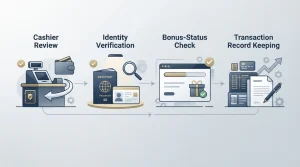


Crash is a broad game format, so the title’s own rules—not the category label—define how play and uncertain stakes work.
What a Crash Casino Game Means in Practice
A crash casino game is best understood as a particular style of casino entertainment, not as a separate kind of gambling licence or a promise about how a session will unfold. The label groups games that share a broad presentation, but it does not, by itself, explain the rules of an individual title. Those rules have to be read game by game.
That distinction matters because a name can make a format sound more precise than it is. “Crash” is a useful description of a game family; it is not a complete account of the experience. I have seen players treat a familiar label as shorthand for familiar conditions, then discover that the wording on the actual game screen is what governs play. Familiar category. Different details.
At its core, casino gambling means putting money or chips at risk on an outcome, or on a combination of outcomes, whose result is uncertain. The player is not simply watching a game or testing a skill in isolation. There is a stake attached to an uncertain result, and that makes the activity a casino game in the practical sense. A crash title sits within that broad context when it is offered as gambling for money.
When choosing a crash casino game in the UK for 2026, payout speed is one practical detail to check alongside the game itself. The entries below provide a concise reference on the payout information available for each operator.
1. Zombillion
Payout speed: 1-3 business days
Zombillion lists a payout speed of 1–3 business days.
2. SlotoSport
Payout speed: 1-3 business days
SlotoSport lists a payout speed of 1–3 business days.
3. Dieselwin
Payout speed: 1-3 business days
Dieselwin lists a payout speed of 1–3 business days.
4. WinBeast
Payout speed: 1-3 business days
WinBeast lists a payout speed of 1–3 business days.
5. Britsino
Payout speed: 1-3 business days
Britsino lists a payout speed of 1–3 business days.
6. Revery Play
Payout speed: 1-3 business days
Revery Play lists a payout speed of 1–3 business days.
7. NightLuck
Payout speed: 1-3 business days
NightLuck lists a payout speed of 1–3 business days.
8. NightWin
Payout speed: 1-3 business days
NightWin lists a payout speed of 1–3 business days.
9. BeOnBet
Payout speed: 1-3 business days
BeOnBet lists a payout speed of 1–3 business days.
10. Chanze
Payout speed: 1-3 business days
Chanze lists a payout speed of 1–3 business days.
The phrase “crash casino” can also blur two different things: the game format and the place where it is offered. A game is the entertainment product; a casino is the operator or setting that makes games available. The same label may be used in discussion of a game, a group of games, or a site that carries them. Those meanings are related, but not interchangeable. A title does not tell the whole story about the operator, and the operator’s name does not explain a game’s rules.
This is why a crash game should not be judged from its label alone. A short title, a bold visual design or a prominent button can make the product appear simple. In practice, the relevant questions are more basic: what counts as a result, how a stake is placed, what the game says happens next, and how any return is calculated. These are not details that can safely be inferred from the word “crash”. The interface and the published rules need to carry that information.
The same caution applies to the phrase “crash casino game UK 2026”. It identifies a subject and a time context, but it does not establish that every game using the term has identical mechanics or conditions. Casino games can be grouped by broad format, yet the player’s actual exposure comes from the particular rules and terms attached to the game being played. Category labels help with orientation. They do not replace the detail.
There is also a financial feature common to casino gambling that is easy to overlook when a game is presented as a quick, self-contained experience. Casino games are generally structured to give the operator a predictable advantage over the long run. That does not mean a player cannot come out ahead in an individual spell of play; short-term gains remain possible. It means that a favourable result on one occasion does not reverse the underlying long-run balance. A win can be real, and the house advantage can still be real.
Crazy Time Live Casino Game Show: UK Guide
I find that distinction more useful than treating a game’s name as a forecast. The label describes a format, not a likely personal result. A sequence of favourable outcomes can feel persuasive while it lasts, but it is not evidence that the game has changed its basic financial structure. Nor does an individual loss prove that a particular session was unusual. Casino outcomes are uncertain; the operator’s long-term advantage is a feature of the design, not a prediction about the next result.
In ordinary conversation, “crash games” may sound like one tightly defined product. It is safer to regard the wording as a broad category and then separate that category from the specific game rules, the money at risk and the casino offering it. That keeps the essentials in view without reading more into the name than it can support. A format label is a starting point. The terms decide the rest.
Online Crash Casinos and the UK Market Divide
An online crash casino is part of the wider online-casino setting: casino games are offered through a digital service rather than at a physical venue, where gambling is permitted by law. The screen can make the location of the operator feel remote or unimportant. Legally, it is central. A site’s ability to load for a UK visitor and its right to offer gambling to that visitor are separate questions.
A specialist review describes the UK online casino market in 2026 as divided between UKGC-regulated operators and offshore platforms outside that system. That is a useful description of the landscape, provided the two sides are not mistaken for equivalent legal options. The UKGC framework is the regulatory space for legal online gambling in Great Britain. Offshore casinos may accept players from the UK, but they do not hold a UKGC licence and operate beyond that framework.
The distinction is easy to blur in ordinary browsing. A crash game may appear on a site alongside other casino games, and the page may be available to a UK user. Neither fact establishes that the operator is authorised to serve the British market. In practice, the interface shows what the operator makes accessible; it does not settle the legal status of the service.
Casino Dice Games in the UK: How They Work
Access is not authorisation
For operators selling remote gambling into Great Britain, the rule turns on the market they serve, not simply the country where the business is based. Remote operators serving Great Britain consumers must hold the relevant Gambling Commission licence. The Gambling Act 2005 governs gambling in England, Wales and Scotland, while Northern Ireland is outside that Act’s scope. The general point for the British market is straightforward: an overseas address does not remove the licensing requirement when an operator offers gambling to customers in Great Britain.
That is why “non GamStop” is a market label, not a synonym for a legal alternative. It may describe a platform outside the UKGC system, but it does not grant that platform permission to provide online gambling to British customers. An offshore service can be practically reachable while still being outside the rules that apply to a UKGC-licensed casino. Access and authorisation remain different matters.
I have found that this is where the online format changes people’s assumptions. A physical venue has a visible location; an online service can present itself as a polished, locally relevant casino while operating from elsewhere. The branding may feel familiar. The regulatory status does not follow from the branding.
Two systems, not two licence types
The phrase “parallel worlds” can sound as though there are two recognised routes to serving UK players. That is misleading. There is the UKGC-licensed sector, and there are offshore platforms that accept UK players without being part of that sector. The latter are not a second class of UKGC licence. They sit outside the UKGC regulatory system.
For a legal online casino serving players in Great Britain, a current UKGC operating licence is required. This requirement applies to real-money gambling, including casino games delivered online. In other words, the fact that a crash game is a particular format does not create a separate licensing exception. The relevant issue is the operator’s authority to offer gambling in the market.
Legal Warning
Remote operators serving Great Britain consumers must hold a relevant Gambling Commission licence; offshore platforms operating without one are outside the UKGC regulatory framework.
The wording matters. Saying that offshore platforms “operate outside UKGC” describes their position in relation to the regulator; it should not be read as saying that they are an approved or equivalent option for British customers. A platform’s willingness to accept a UK player does not establish compliance with the British licensing requirement. A working account or accessible game screen cannot serve as proof of that.
What the divide means for an online crash game
The market structure affects how an online crash game is encountered, but it does not change what the word “online” establishes. It indicates that play is offered digitally. It says nothing by itself about whether the operator is licensed for the UK, or whether the service falls under UKGC oversight.
That distinction is especially relevant because offshore casinos do accept UK players. Their availability can make the market appear broader than the lawful UKGC sector. Yet availability is a practical observation, not a legal endorsement. The position is not resolved by the game being popular, by the site being easy to reach, or by the casino presenting its offer in English.
A useful way to read the landscape is to keep three ideas separate: where an operator is based, whether its site can be accessed from the UK, and whether it holds the licence required to serve Great Britain. Only the last of these establishes UKGC authorisation. The rest may explain how a site appears in the market, but they do not replace the licence.
Mines Casino Game in the UK: How It Works
That is the divide behind online crash casinos in the UK: the regulated sector and offshore services can both be visible to players, but visibility does not put them on the same legal footing. The screen is not the regulator.
Choosing a Crash Casino Without Chasing a “Best” Label
“Best” is a verdict, not a regulatory category. In a headline about a crash casino, it may mean the reviewer prefers the interface, the available promotions or some other feature. It does not, by itself, establish that an operator is licensed to serve people in Britain, that a bonus is suitable for every player or that a particular game will produce a better result.
I separate the operator from the game. A casino can offer a crash-style title without that fact saying anything about the operator’s standing or the terms attached to an offer. Likewise, a list of games is not a licensing check. The first question is whether the business offering real-money gambling to customers in England, Scotland and Wales holds a current UK Gambling Commission (UKGC) licence. Since the Gambling (Licensing and Advertising) Act 2014, operators taking bets from British residents have been required to hold a licence; the obligation applies to businesses selling into the market, not only those based in Britain.
Licensing Requirement
Since the Gambling (Licensing and Advertising) Act 2014, operators taking bets from British residents are required to hold a licence, regardless of where the business is based.
That distinction matters when a site presents itself as a UK option but operates outside UKGC regulation. A polished page or a prominent “UK” label does not substitute for the required licence. A ranking can still be useful as a starting point for research, but its position is not proof of regulatory status. I treat the licence as a threshold check, not a feature to be traded against a generous-sounding offer.
What a “best” claim leaves out
Promotional language is designed to make an offer legible at a glance. The operational terms sit below it: what counts as eligible play, which funds must be wagered, whether a bonus is restricted to a product, and what must happen before winnings can be withdrawn. A headline amount tells little about those conditions.
Wagering requirements are where the difference between a headline and a usable offer becomes concrete. For instance, £100 in bonus funds subject to a 35x wagering requirement calls for £3,500 in total stakes before cash-out. That is turnover, not a prediction of how much a player will lose or win. The distinction is easy to miss when an offer is presented as extra money rather than as funds with attached conditions.
Since 19 January 2026, incentives cannot require wagering above 10x the bonus funds. A specialist review also describes the rule that one incentive cannot combine different gambling product types, such as casino play and betting. Those restrictions set boundaries; they do not make every promotion equally clear or attractive. The wording still matters, and a lower wagering requirement is not the only term that determines how an offer works.
Chicken Road Game Casino UK: What to Know
I read the conditions as a sequence: what is credited, what play qualifies, what wagering must be completed, and what restrictions apply to withdrawal. If the headline is easy to understand but those steps are hard to locate, the headline is doing more work than the offer explanation. Fine print is still part of the price.
Compare conditions, not adjectives
A crash game may be the reason someone is considering a casino, but a “best crash game casino” label cannot establish the quality of the offer attached to it. It can describe an editorial preference; it cannot show that all terms suit every player. Nor does the word “slot” in a promotional description settle how a particular game is classified or what rules apply to it. The terms and the licensed operator remain the practical checks.
I look for claims that can be tested against something specific. “Best bonuses” is vague unless the page explains which terms support the judgement. “Easy to withdraw” is similarly incomplete without clear conditions around the funds. A review that discusses a welcome incentive should make the wagering requirement and product restrictions understandable, rather than relying on a large headline figure to imply value.
This is not a demand for one universal winner. A player focused on a particular game may weigh the offer differently from someone who does not want promotional funds at all. The useful comparison is between verifiable features: whether the operator has the required UKGC licence, whether the bonus conditions are visible, and whether the promotion stays within the rules that apply in 2026.
Do
- Check for a current UKGC licence
- Inspect the specific wagering requirements
- Verify the product restrictions
Don’t
- Trust a “best” label as a regulatory verdict
- Assume a headline bonus is without conditions
- Rely on a ranking as proof of status
A ranking can narrow attention. It cannot do the checking. In my view, the soundest approach is to treat “best” as an invitation to inspect the reasons behind the label, then judge the operator and the terms separately. No adjective changes the licence requirement; no bonus headline removes its conditions. Plain terms matter more.
Crash Sites, Slots and the Wider Casino Game Mix
A casino lobby can place crash-style games beside slots, live tables and number-based games, but proximity is not classification. I learned to separate the format from the marketing label: a tile marked “crash” does not become a slot merely because it sits in a slots menu, and a casino offering both does not make them the same kind of game.
The useful distinction is how a game is organised. Gambling machines are generally designed for one person to play at a time, without a croupier or other casino employee running each round. That broad category includes familiar machine-style play. Slots are the most recognisable example, with play centred on a machine interface rather than a dealer-led table. The word “crash” may appear alongside slot titles on a site, but that placement alone says little about the underlying format. Labels are navigation, not proof.
Where crash-style games fit
Crash-style casino games are best treated as a separate format unless the casino clearly identifies them as machine games or another established category. The name may suggest a particular style, but the category should not be inferred from a picture, a short description or the menu heading. A site’s selection can mix formats; that does not erase their differences.
Aviator Casino Game UK: Labels, Offers and Checks
This matters when comparing casino slots with crash games. Slots belong to the machine-style side of the lobby, while crash-style titles may be presented in a distinct section. Some casinos with crash games also carry a broad slots catalogue, but the shared venue is not a shared game structure. “Crash slots” can be a convenient label in a lobby or review, yet it should not be read as a technical classification without supporting detail.
The same caution applies to phrases such as “best casinos with crash games”. A ranking label does not explain whether the games are grouped with slots, tables or another format, and it does not establish how they operate. Category first. Promotion second.
Tables and number-based games
Table games have a different social and operational structure. Players compete against the casino rather than against one another, and a croupier or dealer usually conducts the game. The table is part of the experience: a person manages the play, rather than a solitary machine interface handling each turn.
Random number games are distinguished by their source of outcomes. Selected numbers are generated by a computer or other gaming equipment. That description concerns how numbers are produced; it should not be stretched into a claim about every game that happens to look digital. A screen is not enough to classify a game.
Poker is a useful contrast to games played against the house. Players compete with other players, while the casino commonly earns through a commission known as a rake. The operator’s role is therefore different from its role in a table game where the house is the opponent. Different arrangement, different business model.
JetX Casino Game in the UK: What to Check
Crash games and slots can both appear in the same online casino, but the menu does not settle what either one is. I look for the game’s stated category and structure, rather than treating “casino game” as a single format. That keeps a machine, a dealer-led table and a number game from being blurred together by a shared lobby. Simple distinction.
Crypto Crash Casinos and Payment Options
A crypto casino offering crash games may present a different cashier from a conventional online casino, but the payment menu is an operator-level detail, not a feature guaranteed by the game itself. Bitcoin, Ethereum and Litecoin are among the currencies that alternative platforms may accept. Some also list conventional cards and e-wallets. A specialist review describes these as options found on some platforms; availability should not be treated as universal.
The distinction matters at the point of deposit. A crypto payment uses a digital asset, while a card or e-wallet follows its own payment process and terms. The cashier should make clear which methods are available, what currency an account uses and whether a chosen route can also be used for withdrawals. A familiar logo is not enough. The conditions attached to that specific method are what count.
Crypto can make the balance less straightforward to interpret. A deposit is made in an asset, while the game balance may be displayed in that asset or converted to another currency, depending on the platform. That affects how a balance is understood; it does not change the nature of gambling or make a crash casino game less risky. The payment route is plumbing. The stake remains money at risk.
Processing claims deserve the same scrutiny as bonus language. Some specialist reviews report that many platforms offer instant deposits and withdrawals completed within hours rather than days. That describes a reported service pattern, not a promise applying to every transaction. The advertised speed may not explain what happens if an account check or payment review is required, so the published cashier terms matter more than a headline about rapid payouts.
Alternative platforms may operate under licences from Curaçao, Malta or Gibraltar. The jurisdiction named in a licence and the payment method offered are separate details: accepting cryptocurrency does not, by itself, establish anything about a platform’s oversight or the handling of a withdrawal. Nor does a crypto option make a platform equivalent to a UK-licensed casino. Keep the payment question narrow: which methods are accepted, how withdrawals are handled, and what conditions apply to each route.
I have seen payment pages do the quiet work that promotional banners avoid: they define the practical route in and out. A crypto crash casino may suit someone who already uses digital assets, while another person may prefer an e-wallet or card. “Fast” is a claim to verify against the stated process, not a feature to infer from the coin logo. No shortcut.
Live Baccarat Online Casinos in the UK: How They Work
Crash Game Providers, Randomness and Fairness Claims
A game provider and a casino have different roles. The provider is associated with the game itself; the casino makes games available as part of its offering. Seeing a provider’s name beside a crash-style title identifies a commercial relationship, not a guarantee about how every outcome is produced or checked.
That distinction matters because “fair” can mean several things in promotional language. It may refer to a game being presented as random, to a provider’s reputation, or to a specific method of checking results. Those are not interchangeable claims. A polished interface and a familiar provider label do not, on their own, show that a particular result was independently verifiable.
Casino games can use random numbers generated by a computer or other gaming equipment. That describes a way of producing outcomes in casino gaming generally. It does not establish that every crash game uses the same approach, nor does it verify the operation of a particular title. A statement about randomness needs to be tied to the actual game and the evidence offered for it.
Relax Gaming Online Casinos in the UK: Provider Checks
I have seen “provably fair” used as if the phrase settled the matter. It does not, by itself. The wording is a claim, not the verification. To assess it, the relevant question is what evidence is available and whether it lets an independent party check the claimed process and outcome. Without that, the label cannot be treated as proof. A technical-sounding description is still a description.
The same care applies when a title appears across several casinos. Its presence in multiple places does not independently confirm its randomness or fairness. Nor does a casino’s decision to offer it amount to a test of its underlying software. Provider, operator and verification are separate parts of the picture.
This is where provider-focused descriptions can become misleading. They may explain who supplies a game, but they do not necessarily tell the player how its outcomes are generated or what checks are possible. A name is useful for identification. It is not a certificate.
For a crash casino game, the sensible distinction is between what is stated and what can be demonstrated. Random-number generation is a recognised basis for casino outcomes, but a general fact about casino games cannot establish the details of one specific crash title. Likewise, calling a game “provably fair” does not make it so without accessible, meaningful verification.
The wording should carry its proper weight. A provider attribution identifies a source; a fairness claim remains a claim until substantiated. No more than that.
Free Crash Games: What “Free” Can Mean
“Free” is a word with more than one job in casino advertising. It can describe a bonus that arrives without an initial payment, or it can imply that a game itself can be played without risking money. Those are different claims. A free crash game is not established merely because a page uses the word “free”.
The precise meaning that can be attached to a no-deposit bonus is narrow: it is a casino bonus made available without the player first spending money. That says how the bonus is obtained; it does not, by itself, explain what games it covers, whether winnings can be withdrawn, or what conditions apply. Those details sit in the offer’s terms. “No deposit” is not the same as “no conditions”.
Attention: A no-deposit bonus means no spending is needed to receive the bonus, but it is not the same as "no conditions" and is still governed by rules regarding use and withdrawal.
I have seen promotional wording blur these distinctions because “free” is easier to notice than the qualification beside it. The useful question is what the offer actually provides. A bonus may be described as available without a payment, while still being governed by rules about use and withdrawal. The headline cannot answer those questions on its own.
Nor does a free bonus prove that a particular crash title has a free-play option. It may fund eligible play, but that is not the same as a separate version of the game that carries no financial stake. The availability of such a mode has to be stated for the specific title; the general label “free crash casino games” is not confirmation.
There is also a difference between “free” and “fair”. The former concerns cost or promotional funding; it does not establish how a game produces outcomes or demonstrate that its operation has been independently verified. Treating the terms as interchangeable turns a vague label into a claim it never made.
In Britain, online gambling is legal only through operators licensed and regulated for the market, and gambling is for people aged 18 and over. A bonus being available without an initial payment does not change that framework.
Read the label literally. A no-deposit bonus means no spending is needed to receive that bonus. Nothing more follows automatically.
Crash Casino Demos and the Limits of Practice Play
A crash casino demo, where offered, is a way to view a game without placing a real-money stake. The word “demo” describes the mode, not a guarantee that every crash title has one. Availability can differ between games and casinos, and a page describing a crash game does not by itself establish that a practice version is accessible.
I treat a demo as a limited inspection, not a rehearsal that predicts what happens with money involved. It can show how a particular game is presented and let someone become familiar with its controls. It cannot establish that later results will match the practice session, or that an approach that appeared successful there will work with cash at stake. Different stakes do not turn a past result into a forecast.
Best Online Casino Game Shows in the UK: Search Guide
There is also a distinction between a demo and a no-deposit bonus. A no-deposit bonus is promotional value that can be received without spending money; it is not the same thing as a game running in practice mode. The word “free” can blur those two arrangements. One concerns the terms of an offer, the other the way a game is played.
Online casinos make casino games available where the law permits them, but that does not mean every game appears in every format. A crash game may be listed without a demo option, while another may provide one. The relevant point is the game’s actual presentation at the casino, rather than a general claim that crash games can always be practised first.
I once treated a demo as a useful preview of the experience. That remains fair, provided the limits are kept in view: it previews the interface, not the financial consequences of real-money play, and it offers no dependable guide to future outcomes. Practice has boundaries.
How to Approach Crash Casino Play
Playing a crash casino game is still gambling, even when the screen looks more like a quick visual challenge than a traditional casino table. The essential transaction is familiar: cash or chips are put at risk against possible outcomes. A result may be random, or involve a combination of outcomes, but the visual presentation does not change the financial nature of the activity.
Inspired Gaming Online Casinos in the UK: Slot Checks
I have seen presentation do a lot of work. A simple interface can make a wager feel like a small decision rather than part of gambling. That is why I treat the game’s rules and the money involved as separate things to understand before play begins. A clear explanation of the rules describes how the game operates; it does not make the outcome predictable.
The phrase “easy to play” can describe the controls, not the risk. Knowing where to click is not the same as knowing what a result will be. I would not infer a reliable method or expected result from a game’s pace, animation or recent outcomes. Those are not a basis for treating a wager as a sure thing.
In the UK, online gambling is legal at sites licensed and regulated by the UK Gambling Commission, and participation is for people aged 18 or over. A licensed operator must verify age before allowing deposits. Those requirements establish a basic legal boundary; they do not turn gambling into income or remove the possibility of losing money.
Barcrest Online Casinos UK: What Can Be Verified
My practical approach is deliberately plain: understand what is being staked, know what the rules say, and keep gambling within a limit that does not affect essential spending. If play stops feeling optional, stepping away matters more than trying to recover a result. No elaborate system is needed.
A simple rule. Stop when the limit is reached.
Crash Games for Real Money: The House Edge and the Stakes
The difference between discussing a crash game and playing it for money is not a change in the subject; it is a change in what is at risk. With real-money play, a stake can be lost, and any amount returned depends on the outcome and the game’s terms. That makes the balance of risk more important than the excitement of a possible win.
Casino games are generally structured to give the casino a predictable advantage over the long term. This does not mean every player loses every session. Short-term gains remain possible, and a player can finish ahead on a particular occasion. The distinction is between an individual result and the pattern the game is designed to produce over time. One winning session does not remove the underlying advantage.
I learned to separate those two ideas when looking at gambling from the commercial side. A headline tends to foreground the possibility of a payout; the less visible counterpart is that the operator’s business depends on outcomes favouring it across many plays. That is not a forecast of what happens next. It is the financial structure behind the offer.
For anyone considering a real-money crash casino, the stake is therefore not just a route to a possible return. It is money exposed to loss. A budget can limit how much is put at risk, but it cannot turn the game into a source of reliable income or change its long-term economics. The same caution applies when a session begins with a win: money won in one stretch does not establish that the next result will favour the player.
I would not treat a dramatic result as evidence of a dependable strategy. Nor would I read the possibility of short-term gains as a promise. The house edge is a long-run feature, not a guarantee about any single session. Short term, outcomes vary. Over time, the advantage matters.
Material created by the team Golden Mister