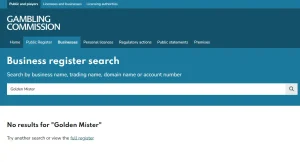
A site’s Curaçao branding does not establish its UK regulatory status or determine whether a self-exclusion arrangement applies.
What “Online Curacao Casino” Means for a UK Player
“Online Curacao casino” is a label about a site’s claimed connection to Curaçao, not a description of what a UK player’s self-exclusion covers. It may appear as “Curaçao-licensed” in a site’s own wording or in a search for casinos based there. Those phrases can suggest a straightforward category. They do not, by themselves, explain the site’s status under British gambling rules or determine whether an exclusion applies.
The distinction matters because two different questions are often blended together. One concerns how a casino presents its licensing. The other concerns whether a person can access gambling accounts after choosing to self-exclude. The name used in an advert or website address does not settle the second question. Self-exclusion is about access to gambling with the businesses covered by the arrangement, not about whether a site uses “Curacao” in its branding.
GAMSTOP is Great Britain’s national online self-exclusion scheme. A player can use it to exclude themselves from gambling with UK-licensed online casinos. UK law also requires gambling businesses to offer self-exclusion. Those points give the term “non-GamStop” its practical context: it is commonly used to describe sites presented as outside that scheme, but the phrase is not a separate kind of self-exclusion and does not change the terms of an existing one.
I have seen how a label can do more work in an advert than it does in practice. “Online Curacao casino” may sound like a clear assurance about where a company is licensed, yet the phrase alone tells a player little about the conditions governing their account. It is not proof that a site is suitable for someone who has excluded themselves, nor does it remove the need to take that exclusion seriously.
For a UK player, the relevant legal boundary is not simply the location named in a casino’s marketing. Remote gambling operators serving customers in Great Britain must hold the relevant UK Gambling Commission licence. An offshore casino operates outside that UK regulatory system. A claim about a Curaçao licence is therefore not the same as a UK licence, and it should not be read as one. The detail of any individual operator’s status needs to be kept separate from the broad label.
Non-UK-Registered Casinos: How Regulation Works
This is why searches for a “new” or “best” Curaçao casino can lead to a category that appears more definite than it is. The words may describe a site’s own presentation, a third party’s description, or a general idea of where an operator is based. They do not establish the terms of a player’s self-exclusion. A newly launched site is not automatically covered or excluded from an individual agreement merely because it is new, and a site described as licensed in Curaçao is not automatically outside every obligation that may apply to a UK-facing operator.
The practical point is narrower and more important: a self-exclusion should not be treated as a branding puzzle to solve by opening an account somewhere else. Do not create another account elsewhere to get around an exclusion. Gambling at a non-GamStop casino could breach the terms of that self-exclusion, even where the site advertises itself as outside the scheme. The label does not make the decision harmless.
Self-exclusion is intended to prevent gambling with the businesses included in the agreement. It is sensible to exclude from all places where a person may be tempted to gamble, rather than relying on a single label to identify every risk. That is a matter of the scope chosen and the sites involved, not of whether a casino calls itself “Curacao”.
There is also a legal distinction behind the wording. Online gambling in the UK is legal only through licensed and regulated sites, and a remote operator serving Great Britain needs the relevant UKGC licence. Curaçao wording cannot stand in for that requirement. Nor can a general category name tell a player what recourse or protections apply to a particular account. Those are questions about the operator and the applicable rules, not the marketing phrase.
Attention: A claim about a Curaçao licence is not the same as a UK licence and does not remove the need to take self-exclusion seriously.
The term is useful as a starting point for understanding how a site describes itself. It is not a shortcut to deciding whether a site is lawful for the British market, whether it is covered by a particular exclusion, or whether opening an account would respect that exclusion. The account relationship is what matters. The label comes second.
Why Non-GamStop Sites Sit Outside the UK Scheme
GAMSTOP is organised as a multi-operator self-exclusion scheme. It blocks access across participating licensed online gambling websites and apps, so one registration can apply across the operators within that scheme. It is not a universal internet filter and does not control every gambling website a person might be able to reach.
That boundary matters when a site is described as a Curacao casino not on GamStop. The wording may refer to a site that is outside the group of operators connected to the scheme. It does not mean GAMSTOP has assessed the site, approved it, or granted it an exemption. The scheme’s reach follows participation by operators; it does not expand simply because a website is accessible from Britain or uses a particular label in its marketing.
There is also a separate boundary: the rules governing who may legally offer remote gambling to people in Great Britain. Operators selling into the British market must hold the relevant UK Gambling Commission licence, regardless of where they are based. A foreign location or a Curacao licensing claim does not replace that requirement. GAMSTOP participation and UK licensing are related in practice, but they are not the same thing: one is a self-exclusion arrangement, the other is the regulatory framework for operators serving the market.
Non-GamStop European Casinos: UK Exclusion Rules
The Commission made GAMSTOP participation compulsory for online operators from 31 March 2020. That requirement means UK-licensed online operators must be part of the scheme; it is not a voluntary badge that each operator can choose to display or omit. For customers using those operators, the scheme is intended to block access across the participating sites and apps.
From inside an operator’s process, that distinction is consequential. A self-exclusion instruction has to be reflected in account access and customer handling, not merely noted in a policy page. The scheme coordinates the exclusion across participating businesses. It does not, by its design, govern an unrelated website outside that network. That is the mechanical reason people search for non-GamStop Curacao casinos: they are looking for sites that may sit beyond the scheme’s participating network. The phrase describes a boundary, not a safeguard.
It should not be read as permission to continue gambling elsewhere. Self-exclusion is a formal agreement, and using a non-GamStop site while that agreement remains active could breach its terms. Opening another account elsewhere to get around an exclusion is not a safe workaround. A person who has chosen self-exclusion should exclude themselves from every place where they may be tempted to gamble, rather than treating the scheme’s technical reach as a map of acceptable alternatives.
Gambling businesses are required by law to offer self-exclusion. That obligation applies to the businesses covered by the relevant rules; it does not turn a site outside the UK regulatory system into a participant in GAMSTOP. The difference is easy to blur in advertising. “Not on GamStop” can sound like a product feature, when in operational terms it may simply mean the site is not connected to the UK scheme.
Self-Exclusion Breach
Using a non-GamStop site while a self-exclusion agreement remains active could breach the terms of that exclusion.
A Curacao casino not on GamStop therefore cannot be treated as a route that preserves the protection of a UK-wide exclusion. GAMSTOP’s block applies to participating licensed websites and apps. A website outside that network may not be stopped by the scheme itself, but that does not cancel the player’s agreement or make gambling there consistent with it. The scheme’s technical limit is not a recommendation.
The distinction also matters if money is lost. The regulator cannot provide refunds for money spent gambling. That is another reason not to treat access to a site outside GAMSTOP as a way to reverse or sidestep an exclusion. Once the scheme and the operator’s obligations are understood, the remaining question is not which label appears on a site, but whether gambling is compatible with the exclusion already in place.
The system has a defined perimeter. Within it, participation is mandatory for UK online operators and the scheme blocks access across participating sites and apps. Beyond it, the scheme itself cannot supply the same block. That gap is a limit of coverage, not a loophole designed for self-excluded customers.
What “Not Registered with GamStop” Does—and Doesn’t—Tell You
“Not registered with GamStop” is a narrow description, not a verdict on a casino. In practice, the phrase is used to say that a site is outside the access block created by a person’s GAMSTOP registration. It does not tell me, by itself, who operates the site, what rules apply to it, or whether it is suitable for someone to use.
British Casinos Not on GamStop: How It Works
There is also a wording trap. A casino described as “not registered” may mean that the business is not covered by the scheme; it does not necessarily mean that a particular player has no GAMSTOP registration. Those are different statements. A player registered with GAMSTOP is blocked from UKGC-licensed gambling platforms for the selected fixed period. The label attached to another site does not cancel that personal exclusion.
This is where the wording can do more work than the underlying fact. “Not covered” sounds like a technical description. “Not affected” can sound like reassurance. “Not blocked” may be read as an invitation. None of those phrases establishes that playing there is consistent with an existing self-exclusion agreement. A person who has excluded themselves from certain venues or websites should expect those businesses to refuse service during the exclusion. Going elsewhere to gamble could breach the terms of that commitment.
I have seen how a short label can flatten an important distinction: whether a site participates in a scheme is one question; whether gambling there is appropriate for a self-excluded person is another. The first is about coverage. The second is about the purpose and scope of the exclusion. Treating the first answer as permission to ignore the second is a mistake.
Do
- Treat “not registered with GamStop” as a limited statement about coverage
- Exclude yourself from every place where temptation may arise
Don’t
- Treat a non-GamStop label as a quality mark or recommendation
- Open another account elsewhere to bypass an active exclusion
Nor should “Curacao casino not part of GamStop” be treated as a quality mark. It says nothing reliable about safer-gambling tools, customer service, withdrawals or the handling of personal information. It is not a recommendation and does not certify that a site is legitimate. The term “independent” may sound attractive in an advert, but it can simply describe a site outside the scheme’s coverage. That is all.
The same limit applies to payment names. A page mentioning Neteller or Skrill does not establish that either service is available at a particular casino, and a payment option would not tell me whether the casino is covered by GAMSTOP. Payment branding and exclusion status are separate matters. No shortcut there.
A person who wants to stop gambling should not open another account elsewhere to get around an exclusion. Gambling businesses are required by law to offer self-exclusion, and the exclusion should cover every place where that person may be tempted to gamble—not just the best-known account or venue. A label on a site cannot make an existing commitment disappear.
I would read “not registered with GamStop” as a limited statement about scheme coverage, then stop there. It does not establish a licence, a safety standard or permission to gamble despite an active exclusion. For someone who has self-excluded, that distinction is practical, not semantic. The wording may be brief. The consequences are not.
A Curacao Licence Is Not a UK Licence List
A Curacao licence claim and permission to serve customers in Great Britain are different things. A casino may describe itself as licensed in Curaçao, but that description does not establish that it holds the UK Gambling Commission licence required to offer remote gambling to people in Great Britain. The operator’s location does not remove that requirement.
Online Casinos With No Sister Sites in the UK
That distinction matters when a list presents casinos as “licensed” without saying which regulator the licence comes from or what market it covers. The word can sound like a complete answer; in practice, it identifies only a claim about licensing. It does not, by itself, show that a site is authorised to serve British customers under UK rules.
Nor does a Curacao licence establish whether a site is covered by GAMSTOP. These are separate questions: one concerns the regulator whose licence an operator claims to hold; the other concerns participation in a UK-wide self-exclusion scheme for licensed online operators. Treating one as proof of the other mixes two different checks.
For UK-licensed online operators, the position is clear. Since GAMSTOP became compulsory for UKGC-licensed operators in 2020, regulated casinos in the UK have been required to block people who have self-excluded. A foreign licensing claim does not turn an operator into a UKGC licensee, and it does not put the operator inside that requirement.
This is why a “Curacao licence casino list” cannot be treated as a list of UK-authorised casinos. The title might tell what kind of licence the listed sites claim; it cannot establish that they meet Britain’s licensing requirements. A licence label is not a UK licence list.
From the other side of the counter, this is where promotional wording can do more work than the underlying detail. “Licensed” sounds reassuring, but without the jurisdiction being made clear, it leaves the central British-market question unanswered. A Curacao licence check, even if it confirms a claim, would not establish that the operator has a UK Gambling Commission licence. Two different tests.
Since 31 March 2020, GAMSTOP participation has been compulsory for all UKGC-licensed online operators.
The same separation applies to self-exclusion. GAMSTOP’s requirement concerns UKGC-licensed operators, not every site that uses the word casino or advertises a foreign licence. A player’s exclusion does not become irrelevant because a site describes itself as licensed elsewhere. Playing at a non-GamStop casino could breach the terms of an active self-exclusion. Opening another account elsewhere to get around that exclusion is not a safe workaround.
Gambling businesses must offer self-exclusion by law. An exclusion is intended to prevent gambling across the places covered by it; it should not be treated as a prompt to find a different account. For someone who has chosen to stop, the practical course is to exclude themselves from all places where they may be tempted to gamble, rather than infer that a foreign licence changes the status of the exclusion.
A Curacao licence claim, therefore, answers neither whether a casino is UK-authorised nor whether using it is compatible with an individual’s self-exclusion. Those distinctions are less marketable than a licence badge. They are more important.
“Best” Is Not a Verifiable Ranking Here
Choosing a non-GamStop casino site requires checking the details that matter to you, including how withdrawals are handled. This list notes the stated payout timeframe for each operator.
1. Zombillion
Payout speed: 1-3 business days
Zombillion lists a payout speed of 1–3 business days.
2. SlotoSport
Payout speed: 1-3 business days
SlotoSport lists a payout speed of 1–3 business days.
3. Dieselwin
Payout speed: 1-3 business days
Dieselwin lists a payout speed of 1–3 business days.
4. WinBeast
Payout speed: 1-3 business days
WinBeast lists a payout speed of 1–3 business days.
5. Britsino
Payout speed: 1-3 business days
Britsino lists a payout speed of 1–3 business days.
6. Revery Play
Payout speed: 1-3 business days
Revery Play lists a payout speed of 1–3 business days.
7. NightLuck
Payout speed: 1-3 business days
NightLuck lists a payout speed of 1–3 business days.
8. NightWin
Payout speed: 1-3 business days
NightWin lists a payout speed of 1–3 business days.
9. BeOnBet
Payout speed: 1-3 business days
BeOnBet lists a payout speed of 1–3 business days.
10. Chanze
Payout speed: 1-3 business days
Chanze lists a payout speed of 1–3 business days.
“Best” sounds like a conclusion drawn from a comparison. In practice, it needs a defined basis: which operators were assessed, what was checked, and how the evidence supports the order. Without that, a page calling certain sites the best Curacao casinos is making a promotional claim, not presenting a verifiable ranking.
I have seen how easily a label does the work of an argument. A site can be placed first because it suits the commercial purpose of the page; the word itself does not establish that it is safer, better run, or more suitable for a particular player. That applies whether the phrase is “best Curacao casino”, “best Curacao casinos UK”, or a list presented as current for 2026. Repeating the label does not make the comparison real.
There is a more important limit than ranking criteria. If someone has self-excluded from a gambling venue or website, that business should refuse service to them. The exclusion concerns the businesses it covers; it is not a review score or a preference that can be set aside because another site is described as “best”. A non-GamStop casino may not be covered by the same scheme, but choosing one to gamble while an exclusion is active could breach the terms of that self-exclusion.
Non-Gamban Casinos in the UK: What the Label Means
Opening an account elsewhere to get around an exclusion is not a safe solution. It turns an advertising claim into a reason to disregard a protective commitment. No ranking can make that consequence disappear. Exclude from every place where gambling may be tempting, rather than treating a list as a route around the restriction.
In Great Britain, gambling businesses must provide self-exclusion as a legal requirement. For UK-licensed online operators, that sits within a regulated system; it is not an optional feature that a “best” badge can replace. Self-excluded customers are to be refused service by the venues and websites from which they excluded themselves. The practical point is plain.
A ranking also cannot promise recovery of money already spent. The regulator cannot provide refunds for gambling losses. That is worth separating from the language used to sell a site: neither a prominent placement nor a favourable description changes what an exclusion does, or reverses past play.
So a claim about the best Curacao casinos not on GamStop should be read for what it is: a claim, not proof of a dependable order. The useful test is not which name appears at the top, but whether gambling would conflict with an active exclusion. If it would, the ranking is beside the point. No workaround.
Casinos & Safety: UK Licensing and Player Checks
Bitcoin Payments Do Not Change a Self-Exclusion
Bitcoin is a payment method, not a change to a self-exclusion agreement. A casino’s references to cryptocurrency, Curacao or a new season of offers do not tell a player whether their existing commitment still applies. The agreement concerns gambling; changing how money is transferred does not rewrite it.
I have seen payment options presented as if they define the whole experience. They do not. A Bitcoin button can tell a customer that a site claims to accept Bitcoin. It cannot establish that the site is suitable for someone who has self-excluded, that the exclusion has ended, or that the operator is outside the terms the person agreed to. Payment branding is not permission.
Self-exclusion is a formal agreement not to gamble, and the person who made it remains responsible for keeping to it. That responsibility does not disappear because a site advertises itself as a Curacao Bitcoin casino, or because a deposit might be made without a familiar bank transfer. For someone who excluded themselves from gambling, playing at non-GamStop casinos could breach the terms of that self-exclusion.
Online Slots Not on GamStop: Rules and Risks
The practical mistake is to treat a different payment route as a workaround. Opening an account elsewhere to get around an exclusion does not resolve the underlying commitment. It adds another gambling account while the reason for excluding remains. If gambling is tempting in more than one place, the protective step is to exclude from all places where that temptation may arise, rather than looking for a different way to pay.
Nor does a Bitcoin deposit prove anything about a casino’s standing in the UK. A payment option cannot substitute for the regulatory position of the operator or show that a particular account is covered by a particular exclusion arrangement. Those are separate questions. The presence of cryptocurrency tells only part of the story, and often the least important part for someone who has chosen to stop gambling.
The same applies to claims about Curacao casinos in 2026. A date, a licence reference or a cryptocurrency logo does not cancel an agreement made by a player. It is easy for marketing to make a site sound like a fresh category with different rules. The essential point remains unchanged: the player agreed not to gamble, and a new payment brand does not alter that agreement.
I would read payment claims narrowly. They may describe a deposit route; they cannot certify that gambling is compatible with an active self-exclusion. No workaround.
Payment Methods
A change in payment method, such as using Bitcoin, does not alter or cancel a self-exclusion agreement.
Safety Starts with the Exclusion, Not the Payment Brand
A Paysafecard logo, or any other payment option, says nothing about whether a gambling business will honour a self-exclusion. The protective measure is the agreement itself: a person asks a gambling company to stop accepting their bets for a chosen period. In the UK, gambling businesses must offer self-exclusion by law. The payment brand is beside the point.
The operational steps matter because self-exclusion is not just a preference saved in an account menu. Once the agreement is in place, the business must close the customer’s account, return any funds left in it and remove their details from marketing databases. Each step addresses a different route by which gambling could continue: access to the account, money held there, and promotional contact that might prompt a return.
That is the mechanism behind a claim of “safe” casino play. The word is not a substitute for the exclusion process. A Curacao casino safety claim, or a Paysafecard option shown on a payment page, does not establish that a particular business is bound by the UK requirements. For people who have excluded themselves, playing at a non GamStop casino could breach the terms of their exclusion.
The practical boundary is personal as well as administrative. Exclusion should cover every place where someone may be tempted to gamble, rather than only the account that first prompted the decision. A second account elsewhere is not a workaround; opening one to get around an exclusion undermines the purpose of the agreement and may breach its terms.
No-account casinos in the UK: rules and payments
I see the distinction as straightforward: a payment method describes how a transaction might be made; self-exclusion is a request to stop gambling with a business. One cannot stand in for the other. Nor does an exclusion restore money already spent. The Gambling Commission cannot provide refunds for gambling losses.
A self-exclusion period is agreed for a defined duration, commonly ranging from six months to five years. The essential obligation is what follows the agreement, not the wording of a casino’s promotional page. Account closure, the return of remaining funds and removal from marketing records are concrete duties. “Safer payments” is not the same thing.
Crypto Licensing Claims: What the Available Facts Can’t Confirm
A casino’s use of cryptocurrency and its licensing status are separate questions. A Curacao licensing claim does not establish that an operator holds the licence required to offer real-money gambling to customers in Great Britain. Remote operators serving this market must hold a UK Gambling Commission licence, regardless of where the business is based.
That distinction matters because a licence associated with another jurisdiction is not a UK licence. Nor does the word “licensed” on a casino page, by itself, explain which authority issued a licence or what permission it covers. The licensing claim and the operator’s right to serve British customers should not be treated as interchangeable.
The same restraint applies to payment claims. A reference to crypto does not establish which digital currencies a casino accepts, how deposits or withdrawals work, or what conditions attach to transactions. Those details depend on the operator’s actual terms; a licensing label cannot fill in the blanks.
UK Licensing Requirements
Remote gambling operators serving customers in Great Britain must hold a relevant UK Gambling Commission licence, regardless of their base of operations or any foreign licensing claims.
GAMSTOP is a separate matter. The Gambling Commission required online operators to join the scheme from 31 March 2020. That requirement concerns participation in the UK self-exclusion system; it is not a test of whether a casino accepts crypto, and crypto use does not establish anything about an operator’s licence.
In practical terms, “Curacao-licensed crypto casino” combines two claims, not one. The first concerns an asserted licensing connection; the second concerns a payment method. Neither phrase alone confirms that the operator is authorised to serve customers in Great Britain or establishes the payment terms. Labels are not proof.
Trustly, “Without GamStop” Claims, and Individual Exclusion
Trustly is a payment name, not an exclusion mechanism. A claim that a Curacao-branded casino accepts Trustly cannot establish whether an individual customer can use it; Trustly availability at such casinos cannot be confirmed. More importantly, a deposit route does not alter an existing self-exclusion. Payment and access are separate questions.
For online gambling, self-exclusion can be requested through GAMSTOP or directly from an individual casino. For a single website or app, the operator’s Responsible Gambling or Safer Gambling page should give the process. If those instructions are not available, customer services can be contacted instead. Gambling businesses must offer self-exclusion by law.
I have seen how a payment option can draw attention away from the account status that matters. A non-GamStop label does not cancel an exclusion already made elsewhere, and gambling at a non-GamStop casino could breach its terms. Opening another account somewhere else to get around an exclusion is not a safe workaround; the exclusion is there to prevent access, not to redirect activity to another cashier.
The practical scope matters. Self-exclusion should cover every place where a person may be tempted to gamble, not only the site that is easiest to contact. An individual request applies to the business contacted; GAMSTOP is the route for exclusion across participating UK online gambling operators.
If an operator fails to handle an exclusion properly, the issue is with access and the business’s obligations, not the brand on a payment button. The Gambling Commission cannot refund money spent gambling. That boundary is important: a payment service does not reverse gambling losses or remove an exclusion.
A casino’s Trustly claim and its handling of self-exclusion are distinct matters. I would not treat one as evidence of the other. No shortcut.
Why There Is No Verifiable “Top Curacao Casinos” List
A “top” list is not just a collection of names. It implies that the entries have been compared against stated criteria and that the order means something. Without a clear, checkable basis for that comparison, placing casinos in ranked positions would make a label look like a finding. I would not treat a Curacao association, by itself, as evidence that one site is better than another.
The same applies to product claims. A list that names games, payment options or account features needs details that can be checked, not promotional wording standing in for them. Otherwise, the reader is left with an endorsement but no way to tell what it rests on. That is a poor trade.
For a UK player, the distinction matters beyond presentation. Remote gambling operators serving Great Britain consumers must hold the relevant UK Gambling Commission licence; an offshore label does not establish that status. And where a self-exclusion applies, gambling businesses must take reasonable steps to prevent the excluded customer from gambling with them. A ranked list should not suggest that a site is an appropriate way around that protection.
I have seen how easily a neat table can make a commercial claim look settled. The format carries authority, even when the evidence beneath it does not. A list of “top” Curacao casinos would therefore promise more than it can substantiate. No ranking. No implied endorsement.
How does self-exclusion work?
You choose the gambling businesses or venues to exclude yourself from, provide information to confirm your identity, select a period and receive confirmation. The businesses you exclude yourself from must refuse service, close your account, return any funds and remove you from their marketing lists.
How do I return from self-exclusion?
To end a GAMSTOP exclusion, contact GAMSTOP directly and request removal. A 24-hour waiting period applies; you can cancel the request during that time, and it may take operators a further 24 to 48 hours to update your status.
How does Gamstop benefit me?
GAMSTOP lets you block access to current accounts and prevent new accounts with UK-licensed online gambling operators across its scheme, free of charge. It provides a single way to self-exclude from participating sites and apps.
How long does it take for GamStop to become active after sign-up?
The 24-hour cooling-off period starts after your identity has been verified, and your exclusion remains active during that period.
What self-exclusion options are available at non-GamStop casinos?
You can request self-exclusion from an individual gambling business. Check its Responsible Gambling or Safer Gambling page for instructions, or contact customer services.
What are casinos outside GamStop, and are they legal for players in the UK to use?
“Outside GamStop” generally describes sites that are not part of the scheme; it does not mean GAMSTOP has approved or exempted them. Remote operators serving Great Britain need the relevant UK Gambling Commission licence, and a Curaçao licensing claim is not a substitute for one.
How does a non-GamStop casino handle self-exclusion?
You can ask an individual gambling business to exclude you through its Responsible Gambling or Safer Gambling page, or by contacting customer services. A business must take reasonable steps to prevent a self-excluded customer from gambling with it.
Can a self-excluded player use a non-GamStop casino?
Do not use another casino to get around a self-exclusion. A non-GAMSTOP label does not make gambling harmless or establish that opening an account respects your exclusion, and doing so could breach its terms.
Material created by the team Golden Mister